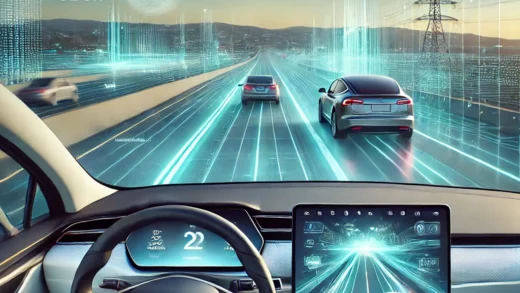
In-car navigation has come a long way from clunky GPS devices and paper maps. Today, advancements in 3D mapping and augmented reality (AR) are revolutionizing how drivers in the United States navigate roads, enhancing convenience, safety, and overall driving experience. These technologies are not just about getting from point A to point B; they’re about creating a smarter, more intuitive way to interact with the road.
As 2025 ushers in even greater technological integration, let’s explore how 3D maps and AR are reshaping navigation systems and the future of driving.
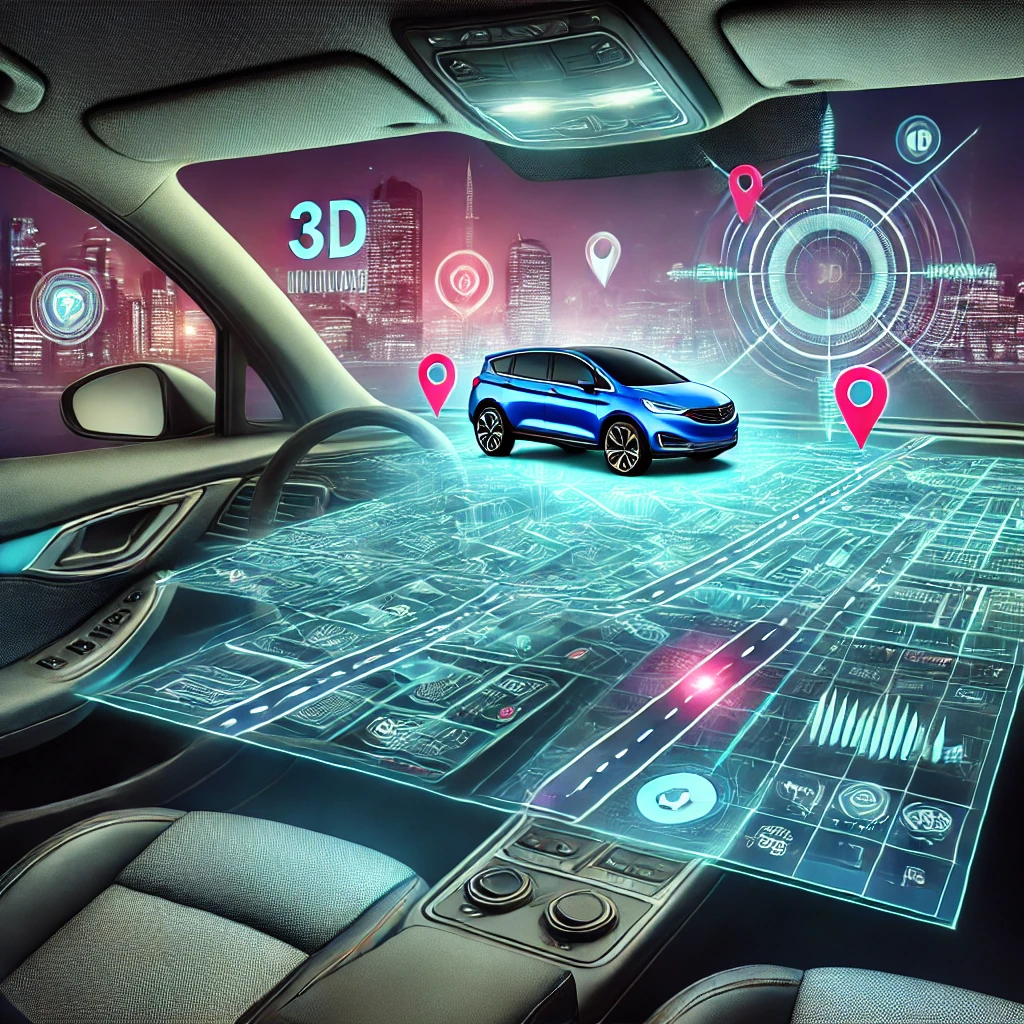
The Rise of 3D Maps in Navigation
3D maps bring a new level of precision and realism to in-car navigation. Unlike traditional 2D maps, which present a flat representation of routes and landmarks, 3D maps offer detailed visualizations of the environment. Drivers can see a near-true-to-life rendering of buildings, terrain, and roads, making it easier to identify landmarks and navigate complex intersections.
In the US, where urban landscapes are varied and sprawling, 3D maps are particularly useful. Major cities like New York, Los Angeles, and Chicago are dense with skyscrapers and intricate road networks. 3D mapping technology helps drivers visualize their surroundings more accurately, reducing confusion and enhancing confidence behind the wheel.
This technology also plays a key role in managing traffic congestion. With real-time data integration, 3D maps provide updates on road closures, accidents, and detours. This feature is invaluable for American drivers, especially in states like California, where traffic snarls are a daily challenge.
Augmented Reality: Taking Navigation to the Next Level
Augmented reality is another game-changer in the world of in-car navigation. AR overlays digital information onto the real-world view, creating an immersive experience that makes directions clearer and more intuitive. Imagine driving through a busy street and seeing virtual arrows projected onto the windshield, guiding you to your next turn or exit. That’s the power of AR in action.
One of the most exciting applications of AR in navigation is its ability to reduce driver distraction. Traditional GPS systems require drivers to glance at a screen to follow directions, taking their eyes off the road. AR eliminates this issue by integrating navigation cues directly into the driver’s line of sight. This hands-free guidance system makes driving safer and more seamless.
In the US, AR is particularly beneficial for suburban and rural areas where road signs may be sparse or unclear. By projecting virtual information, such as street names and upcoming turns, AR helps drivers stay on track without needing constant references to a map.
The Role of Technology Giants in Shaping the Future
Tech companies like Google, Apple, and Tesla are driving innovation in 3D mapping and AR navigation. Google Maps and Apple Maps have already incorporated 3D visualization features, making it easier for users to explore destinations before hitting the road. Tesla, known for its cutting-edge electric vehicles, is integrating AR into its autopilot system, offering enhanced navigation for semi-autonomous driving.
Startups are also playing a crucial role. Companies like WayRay and Navdy are developing AR-based head-up displays (HUDs) that are compatible with a range of vehicles. These HUDs provide real-time navigation cues while displaying information like speed, fuel levels, and road hazards, all without diverting the driver’s attention.
US vs. Global Adoption: Leading the Charge
The United States has been a key player in adopting 3D mapping and AR navigation, but it’s worth noting the global competition. Countries like Japan and South Korea are investing heavily in AR for smart cities and autonomous vehicles. In Europe, carmakers such as BMW and Mercedes-Benz are integrating AR systems into their latest models, offering a premium navigation experience.
However, the US stands out for its focus on integrating AR navigation into electric and autonomous vehicles. As the country ramps up its EV infrastructure and innovation in self-driving cars, 3D mapping and AR will become essential tools for ensuring safety and efficiency on the road.
A Smarter, Safer Future for Drivers
The combination of 3D maps and augmented reality is setting the stage for a smarter and safer driving experience in the US. Whether you’re navigating through the bustling streets of Manhattan or embarking on a scenic road trip along Route 66, these technologies ensure that every journey is as smooth as it is enjoyable.
As automakers and tech companies continue to refine these tools, drivers can look forward to an era of navigation that’s not only more accurate but also more interactive. The future of in-car navigation is here, and it’s transforming how Americans connect with their roads, one mile at a time.