

Tesla has long been synonymous with innovation in the automotive industry, and its strides in artificial intelligence (AI) are no exception. Among its many technological advancements, Tesla’s focus on real-time multi-modal navigation has been a game-changer for drivers in the U.S. and Europe. By leveraging AI, Tesla has created a navigation system that seamlessly integrates various transportation modes, adapts to dynamic conditions, and prioritizes safety, efficiency, and convenience.
Let’s take a closer look at how Tesla’s AI-driven navigation system works and why it’s setting a new benchmark for intelligent mobility.
What is Multi-Modal Navigation?
Multi-modal navigation refers to combining different modes of transportation into a unified system, creating an optimal route based on real-time conditions. For Tesla, this means integrating various types of travel—such as driving, walking, public transportation, or even bike-sharing—into a cohesive experience that prioritizes efficiency and sustainability.
Tesla’s AI elevates this concept by making real-time adjustments based on traffic patterns, weather, road conditions, and user preferences. Whether you’re planning a long road trip across the U.S. or navigating through the winding streets of a European city, Tesla’s AI ensures your journey is smooth, fast, and stress-free.
AI at the Core of Tesla’s Navigation
Tesla’s real-time multi-modal navigation is powered by advanced neural networks trained on billions of miles of driving data. These neural networks process information from Tesla’s fleet of vehicles as well as external sources like traffic systems and weather reports. The result is a navigation system that not only charts the fastest route but also anticipates potential disruptions and offers alternative options.
One of the standout features of Tesla’s AI is its ability to predict traffic flow. In densely populated cities like Los Angeles or London, rush hour can turn a simple commute into a logistical nightmare. Tesla’s system analyzes traffic patterns in real time, rerouting drivers to avoid congestion while considering factors like fuel efficiency and estimated time of arrival.
Seamless Integration Across Transportation Modes
While Tesla is best known for its electric vehicles, its multi-modal navigation goes beyond just cars. In Europe, where public transportation is an integral part of daily life, Tesla’s AI integrates train schedules, bus routes, and even bike-sharing options into its navigation platform. For example, if a quicker route involves parking your Tesla at a train station and completing the journey by rail, the system will present this option, complete with real-time updates on train departures and arrivals.
In the U.S., where suburban sprawl often necessitates car travel, Tesla’s navigation focuses on maximizing efficiency during long drives. Its AI system takes into account charging station locations and provides real-time updates on availability and wait times. This is particularly useful for road trips, as Tesla’s system ensures drivers spend as little time as possible charging their vehicles while optimizing the overall travel plan.
Enhancing the Driver Experience
One of the most significant benefits of Tesla’s AI in multi-modal navigation is its ability to simplify decision-making for drivers. Tesla’s navigation system doesn’t just provide directions; it offers intelligent recommendations tailored to individual preferences. For instance, if you prefer routes with fewer tolls or prioritize scenic drives, Tesla’s AI remembers these preferences and adjusts its suggestions accordingly.
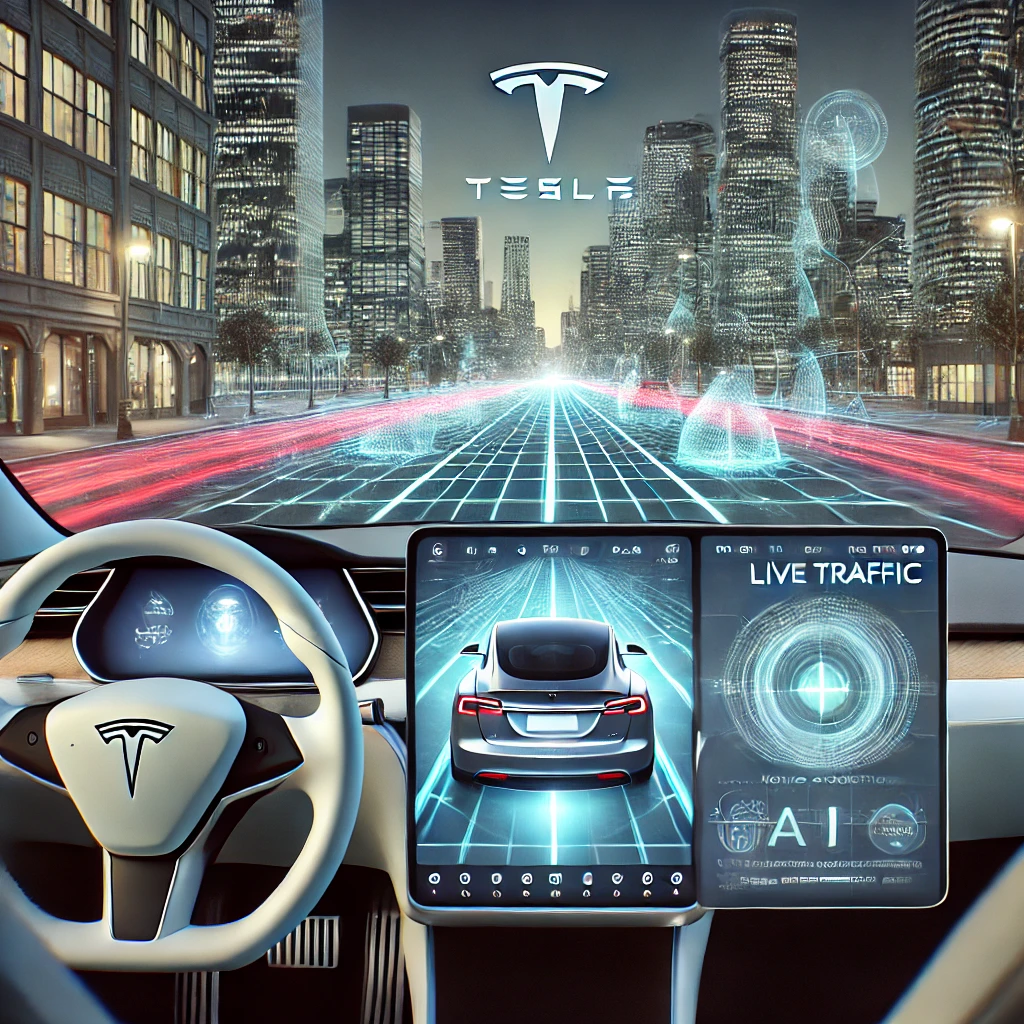
Tesla’s in-car interface makes it easy to interact with the navigation system. The large touchscreen display provides a clear overview of the route, with real-time updates on traffic conditions, weather, and points of interest. Drivers can even use voice commands to modify routes or request specific information, keeping their focus on the road.
A Sustainable Solution for Modern Mobility
Tesla’s multi-modal navigation aligns with its broader mission to promote sustainable transportation. By integrating public transit and cycling options, the system encourages users to minimize their carbon footprint. In urban areas, this approach can reduce traffic congestion and improve air quality, supporting environmental goals in both the U.S. and Europe.
Additionally, Tesla’s AI optimizes energy use for electric vehicles. For example, it calculates routes based on charging efficiency, factoring in elevation changes, speed limits, and regenerative braking opportunities. This ensures that drivers get the most out of their battery while minimizing energy consumption.
Challenges and Future Prospects
Despite its many advantages, Tesla’s multi-modal navigation system is not without challenges. Infrastructure differences between the U.S. and Europe, such as the availability of public transportation and the density of charging networks, can affect the system’s effectiveness. Tesla must also continue refining its AI algorithms to account for edge cases, such as unplanned road closures or sudden changes in public transit schedules.
Looking ahead, Tesla’s navigation system has the potential to integrate even more transportation modes, such as autonomous ride-sharing or drone-based delivery systems. As cities invest in smart infrastructure, Tesla’s AI could become a central component of connected ecosystems, further streamlining mobility for users.
The Road Ahead
Tesla’s AI-powered multi-modal navigation represents the future of intelligent mobility. By combining cutting-edge neural networks with real-time data, Tesla has created a system that goes beyond traditional navigation, offering a comprehensive solution for modern travel.
Whether you’re navigating the sprawling highways of the U.S. or the intricate urban networks of Europe, Tesla’s AI ensures that your journey is as efficient and enjoyable as possible. With a focus on sustainability, convenience, and innovation, Tesla is not just changing how we drive—it’s redefining how we move through the world.


