Diesel cars, once the pride of European automakers, are witnessing a steep decline in popularity due to stringent emission regulations. With governments across Europe prioritizing sustainability and imposing stricter standards, the automotive landscape is rapidly evolving. Diesel engines, long valued for their fuel efficiency, are now grappling with rising scrutiny over their environmental impact.
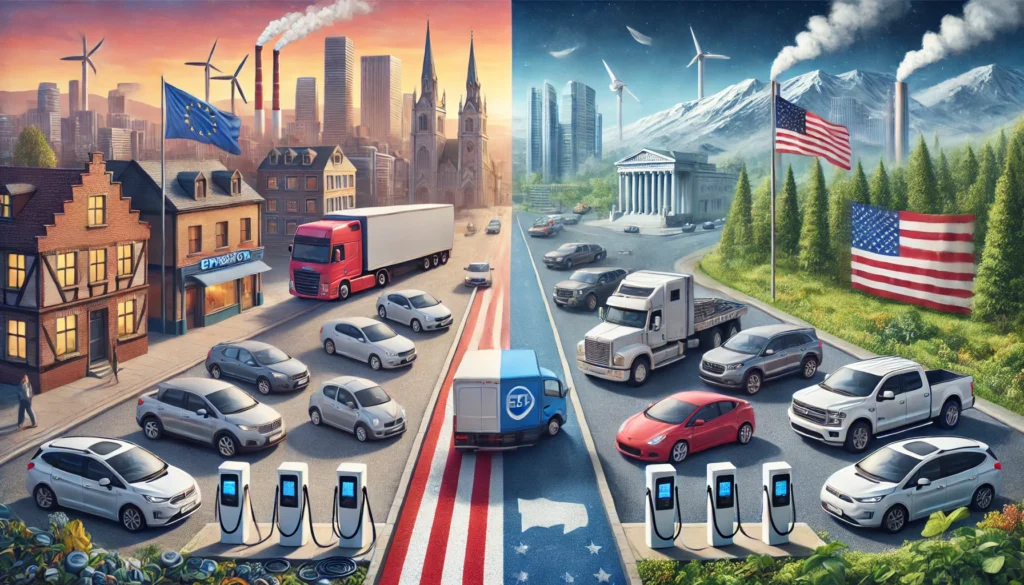
In contrast, the United States has experienced a different trajectory in diesel car sales and emission policies, influenced by its distinct regulatory framework and consumer preferences. Let’s explore how Europe’s strict emissions regulations are reshaping diesel car sales and what lessons the US can draw from this transformation.
Europe’s Crackdown on Diesel
Europe has been a stronghold for diesel vehicles, with countries like Germany, France, and Italy historically favoring them for their fuel economy and performance on long highways. However, the tide began to turn in recent years, especially after the Volkswagen “Dieselgate” scandal, which exposed emissions cheating practices. This incident triggered widespread distrust in diesel technology and brought government regulations into sharper focus.
The European Union has implemented progressively stricter emissions standards, with the Euro 7 regulation set to take effect in 2025. These rules mandate significant reductions in nitrogen oxide (NOx) and particulate emissions, posing a substantial challenge for diesel engines, which traditionally produce higher levels of these pollutants. Compliance requires costly upgrades in technology, making diesel vehicles less competitive in terms of price.
Additionally, several major European cities, including Paris, Madrid, and Berlin, have announced plans to restrict or ban diesel cars from their urban centers. This has further discouraged consumers from purchasing diesel vehicles, accelerating their decline. The result is a sharp drop in diesel car sales, with many automakers shifting their focus to electric and hybrid models to align with the changing market dynamics.
The Shift in Consumer Behavior
The impact of these regulations is evident in consumer behavior. European drivers are increasingly turning to cleaner alternatives, such as electric vehicles (EVs) and plug-in hybrids. Government incentives, including subsidies and tax breaks for EVs, have made these options more appealing, further eroding the market share of diesel cars.
For automakers, this shift represents both a challenge and an opportunity. On one hand, they face the high costs of transitioning production lines and meeting new standards. On the other, the growing demand for eco-friendly vehicles opens doors for innovation and brand repositioning. Companies like Volkswagen and BMW, once synonymous with diesel excellence, are now investing heavily in EVs to stay competitive.
The US Perspective on Diesel and Emissions
In the United States, diesel cars have always occupied a niche market, primarily favored for heavy-duty trucks and commercial vehicles. Passenger diesel cars have struggled to gain traction due to consumer preferences for gasoline-powered vehicles and the relatively low cost of fuel. Unlike Europe, where fuel economy is a significant selling point, US drivers have historically prioritized performance and affordability.
Emission regulations in the US, while stringent, have focused more on greenhouse gases like CO2 rather than NOx emissions, which are the primary challenge for diesel engines. This difference in regulatory focus has allowed diesel to maintain a foothold in certain segments, particularly among trucks and large SUVs. However, the adoption of stricter standards by states like California and the rise of electric alternatives signal a potential shift in the US diesel market.
Lessons from Europe for the US
The rapid decline of diesel in Europe offers valuable lessons for the US as it navigates its own transition to cleaner transportation. One key takeaway is the importance of a balanced regulatory approach. Europe’s stringent rules have accelerated the adoption of cleaner technologies but have also placed significant financial pressure on automakers. The US can avoid some of these pitfalls by combining strict standards with support for industry innovation.
Another lesson lies in consumer incentives. Europe’s success in promoting EVs stems in part from generous subsidies and tax breaks, which make clean vehicles more accessible. For the US, expanding federal and state-level incentives could play a crucial role in accelerating the transition away from fossil fuels, including diesel.
The Road Ahead
As 2025 unfolds, the future of diesel cars in Europe looks increasingly uncertain. With emission regulations tightening and consumer preferences shifting, the dominance of diesel is giving way to a new era of electric and hybrid mobility. For the US, where diesel has never reached the same heights, the changes in Europe offer a glimpse into what may come.
While the US is taking a different path, the global momentum toward sustainability is undeniable. By learning from Europe’s experiences, the US has the opportunity to craft policies that drive innovation while addressing environmental concerns. Whether through stricter emissions rules, incentives for clean vehicles, or investments in infrastructure, the transition to a cleaner automotive future is a journey that both regions are embarking on—each in their own way.