Tesla’s Full Self-Driving (FSD) technology is revolutionizing how we think about road safety. With its advanced capabilities, Tesla aims to minimize human error, which is responsible for the majority of road accidents worldwide. In both the U.S. and Europe, the deployment of Tesla FSD has sparked discussions about its potential to make roads safer and transform the driving experience.
As we explore how Tesla FSD impacts road safety across these regions, it becomes clear that its influence goes beyond just reducing accidents—it’s shaping the future of transportation.
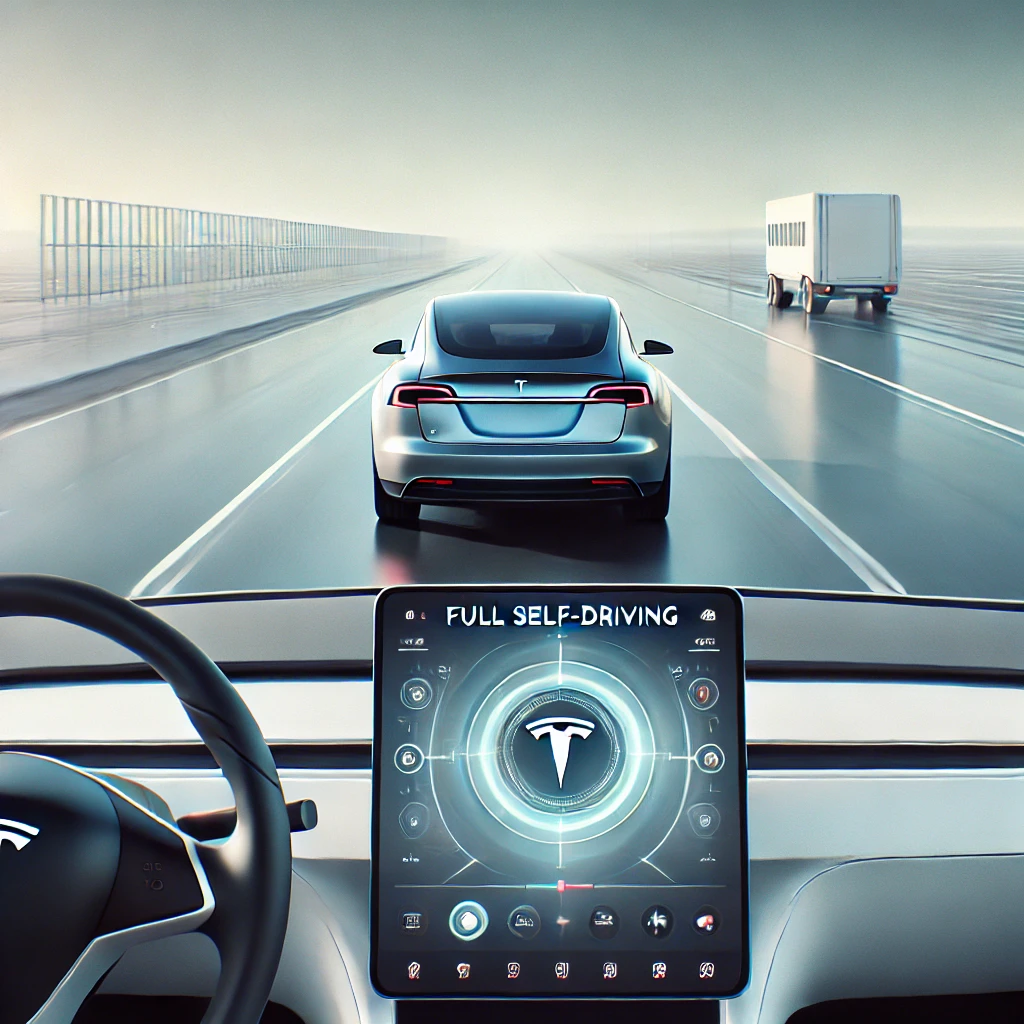
Reducing Human Error on the Roads
Human error is a leading cause of traffic accidents, with distractions, fatigue, and poor decision-making contributing to millions of crashes every year. Tesla’s FSD technology is designed to address these issues by handing over critical driving tasks to an AI-driven system.
In the U.S., where long highway stretches and busy urban areas present different challenges, Tesla FSD has shown promise in improving road safety. Features like automatic emergency braking, lane-keeping, and advanced object detection help prevent collisions in real-time. The system’s ability to process vast amounts of data instantly ensures quicker reactions than a human driver, reducing the likelihood of crashes.
In Europe, where driving conditions are often more complex due to narrow streets, roundabouts, and varied road regulations, Tesla FSD’s real-time adaptability becomes even more crucial. Its ability to navigate tight urban spaces and respond to unpredictable scenarios such as pedestrian crossings and cyclists makes it an essential tool for enhancing safety.
Enhancing Pedestrian and Cyclist Safety
One of the standout benefits of Tesla FSD is its capability to protect vulnerable road users like pedestrians and cyclists. In Europe, where urban environments prioritize walkability and cycling, this is a game-changer. Tesla’s advanced sensors and neural networks are designed to detect and predict the movements of pedestrians and cyclists, even in crowded or low-visibility conditions.
For example, in European cities where streets are shared by vehicles, cyclists, and pedestrians, Tesla FSD can identify potential hazards earlier than a human driver might. This early detection allows the system to take preventive measures, such as slowing down or stopping completely, to avoid accidents.
In the U.S., where pedestrian fatalities are a growing concern, Tesla FSD offers similar benefits. Its ability to detect and respond to jaywalkers or unexpected obstacles on suburban roads or city streets enhances overall safety for all road users.
Improving Safety on Highways
Tesla FSD is particularly effective on highways, where consistent speeds and predictable patterns make autonomous driving more reliable. In the U.S., where highway travel is common for long-distance commutes, Tesla’s Autopilot and FSD capabilities significantly reduce the risks associated with fatigue and inattention during long drives.
Features like Navigate on Autopilot, which handles lane changes, merges, and exits, ensure smoother and safer highway driving. Tesla’s FSD also excels at maintaining safe following distances, reducing the likelihood of rear-end collisions caused by sudden stops or slow reaction times.
In Europe, where highways often include variable speed limits and more aggressive driving styles, Tesla’s FSD adjusts seamlessly. The system’s ability to adapt to dynamic speed limits and navigate complex highway interchanges makes it a reliable companion for safer long-distance travel.
Challenges and the Path Forward
While Tesla FSD holds significant potential for improving road safety, challenges remain. In both the U.S. and Europe, Tesla FSD is not yet at Level 5 autonomy, meaning it still requires driver supervision. This dependency on human intervention can sometimes lead to misunderstandings about the system’s capabilities, which could undermine its safety benefits.
Additionally, varying regulations across regions complicate the rollout of Tesla FSD. Europe’s stringent safety and privacy laws, for instance, require Tesla to adapt its technology to meet specific standards. In the U.S., the patchwork of state-level regulations creates inconsistencies in how autonomous driving systems are tested and deployed.
Tesla continues to address these challenges through continuous software updates and enhanced training for its neural networks. Over-the-air updates allow Tesla vehicles to improve their FSD capabilities over time, ensuring that safety features remain cutting-edge and aligned with regional requirements.
A Future with Safer Roads
Tesla FSD is already making a measurable impact on road safety in the U.S. and Europe, and its potential continues to grow. By reducing human error, enhancing pedestrian and cyclist safety, and improving highway travel, Tesla is paving the way for a future where accidents are significantly reduced.
In the U.S., Tesla FSD’s capabilities align with the need for safer suburban and highway driving, while in Europe, its adaptability to complex urban environments makes it a valuable tool for accident prevention. As the technology evolves and regulatory frameworks adapt to support its deployment, the dream of safer roads becomes more tangible.
Tesla’s commitment to innovation, combined with its emphasis on safety, ensures that FSD technology will remain at the forefront of autonomous driving. For drivers, pedestrians, and policymakers alike, the promise of safer roads powered by Tesla FSD is a vision worth pursuing.