

As the world races toward a greener future, electric vehicles (EVs) have become a key solution in addressing climate change and reducing carbon emissions. Both California and Europe are at the forefront of this transformation, each crafting policies to accelerate EV adoption. While their goals align, the approaches taken by California and European countries highlight differences in priorities, infrastructure, and market strategies.
By comparing California’s EV policies to Europe’s regulatory framework, we can better understand how these regions are shaping the global EV landscape and what lessons they offer.
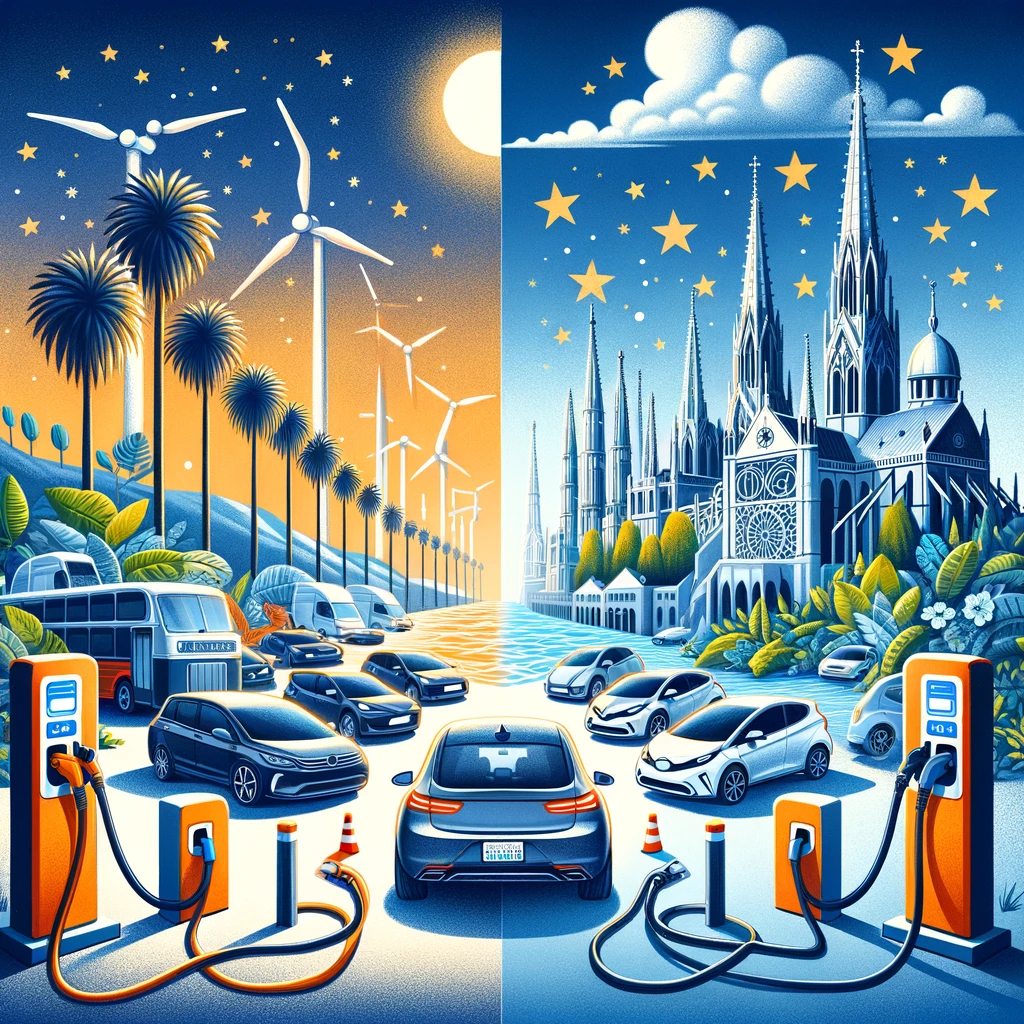
California’s Bold EV Ambitions
California has long been a trailblazer in environmental policy, and its leadership in EV adoption is no exception. As of 2025, the state remains committed to achieving its ambitious target of banning the sale of new gasoline-powered vehicles by 2035. This policy, backed by the California Air Resources Board (CARB), reflects the state’s aggressive stance on reducing emissions and combating air pollution.
To support this transition, California offers substantial incentives to both manufacturers and consumers. Rebates, tax credits, and grants make EVs more accessible to a wider audience. Moreover, the state has invested heavily in building a comprehensive charging network, aiming to install 250,000 public chargers by 2025. These efforts ensure that EV owners can travel long distances without worrying about range anxiety.
California’s EV policies are also designed to support equity. Programs such as the Clean Cars 4 All initiative help low-income residents access cleaner vehicles, including used EVs. This inclusive approach ensures that the benefits of green transportation are shared across different communities, addressing both environmental and social justice concerns.
Europe’s Comprehensive Regulatory Framework
Across the Atlantic, Europe has taken a more holistic and unified approach to EV adoption. Unlike California, which operates within a federal system, Europe’s policies are guided by the European Union (EU). This creates a standardized framework that applies across member states, although individual countries can implement additional measures to support local priorities.
Europe’s EV push is anchored by the European Green Deal, which aims to achieve net-zero emissions by 2050. As part of this plan, the EU has set strict CO2 emission targets for automakers, requiring them to reduce the average emissions of new vehicles sold. Automakers that fail to comply face significant fines, incentivizing rapid innovation in EV technology.
To further accelerate adoption, many European countries offer generous subsidies and tax breaks for EV buyers. Cities like Oslo, Amsterdam, and Paris have gone a step further by introducing zero-emission zones, where only electric and hydrogen-powered vehicles are allowed. This combination of incentives and restrictions creates a powerful motivation for consumers to make the switch.
Europe has also invested heavily in charging infrastructure, supported by initiatives like the Connecting Europe Facility. By 2025, the EU aims to have at least one charging station every 60 kilometers along major highways, ensuring seamless EV travel across the continent.
Key Differences in Approach
One of the most striking differences between California and Europe lies in their focus areas. California’s policies emphasize innovation and market-driven solutions, with a strong reliance on the private sector to expand charging networks and develop new technologies. Europe, on the other hand, uses regulatory pressure to drive change, holding automakers accountable for meeting stringent emission standards.
Infrastructure deployment also varies. California’s vast geography and car-centric culture mean that public chargers are essential to fostering confidence in EVs. Europe, with its compact cities and extensive public transport systems, places equal emphasis on reducing private vehicle use and promoting shared mobility.
Another distinction is the treatment of automakers. While California offers incentives for clean vehicle production, Europe imposes penalties for non-compliance. This stick-versus-carrot approach reflects differing regulatory philosophies but achieves similar outcomes in driving the shift to EVs.
Lessons for the Global EV Movement
California and Europe offer complementary lessons for regions looking to embrace EVs. California’s focus on equity and innovation demonstrates how targeted programs can make EVs accessible to a broad demographic. Europe’s regulatory framework highlights the importance of holding automakers accountable while providing consumers with clear incentives to adopt cleaner vehicles.
As other U.S. states and countries consider their EV policies, they can draw from both California’s entrepreneurial spirit and Europe’s unified approach. By balancing incentives with regulations, fostering infrastructure growth, and addressing social equity, the global EV movement can continue to gain momentum.
A Shared Vision for a Greener Future
Despite their differences, California and Europe share a common vision: a cleaner, greener future powered by electric vehicles. Their efforts are not only transforming their respective regions but are also setting a precedent for the rest of the world. By adopting policies that reflect their unique contexts, both are proving that the road to sustainability can take many paths—all leading to a better planet.
In 2025 and beyond, California and Europe remain shining examples of how ambitious policies and collaborative efforts can drive the EV revolution. Whether you’re navigating California’s highways or cruising through European city centers, the future of transportation is unmistakably electric.


