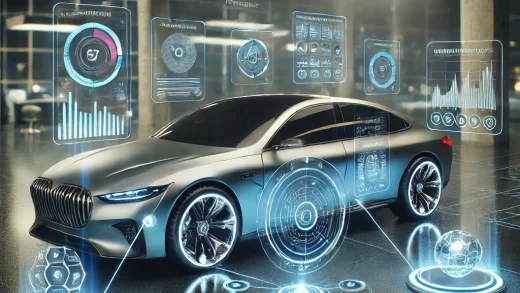
The automotive world is changing fast, and nowhere is that transformation clearer than in the rise of the software-defined car. Instead of relying on hundreds of separate electronic components and traditional wiring networks, tomorrow’s vehicles will be built around two powerful ideas: zonal architecture and centralized computing. These technologies are reshaping how cars are designed, built, updated and experienced in the U.S. and European markets. They form the invisible backbone that makes next-generation vehicles smarter, safer and easier to upgrade.

Understanding the shift from traditional ECUs to zonal architecture
For decades, vehicles used a distributed electronic system made up of dozens or even hundreds of ECUs, each responsible for a single function. This worked when cars were relatively simple, but it becomes inefficient as vehicles gain advanced driver-assistance systems, connected-car features, electrified powertrains and AI-powered software.
Zonal architecture reorganizes the entire electrical structure of a vehicle. Instead of placing ECUs based on function, automakers group the electronics by the physical zones of the car, such as front, rear or cabin. Each zone is managed by a powerful zone controller, which handles sensors, actuators and communication within its area. These controllers then connect to the vehicle’s main computing platform through high-speed communication links.
This new structure dramatically cuts down the amount of wiring needed, which is especially important for electric vehicles in the U.S. and Europe. Lighter weight means more range for EVs, lower material costs and more efficient manufacturing. Just as importantly, zonal architecture reduces complexity. With fewer independent modules to manage, automakers can update, diagnose and secure vehicles more easily. It also helps build a stable foundation for future features that rely heavily on software.
The rise of the vehicle “central brain”
Alongside zonal architecture comes the shift to centralized compute units—sometimes described as the vehicle’s “central brain.” Traditional cars split computing power across many ECUs. In a software-defined vehicle, several of those tasks converge into one or a handful of high-performance computers.
These central units handle everything from infotainment and connectivity to driver-assistance features and energy management. Because the compute platform is extremely powerful and centrally located, the vehicle can run complex software stacks that support real-time decision-making, continuous updates and AI-driven features.
For U.S. and European automakers, this approach unlocks the ability to treat the car as a long-term digital product. Instead of being “fixed” at the time of sale, the vehicle can gain safer driving features, updated interfaces, improved battery management, and new comfort or convenience options through over-the-air software updates. Consumers are increasingly expecting this level of flexibility and digital convenience, making centralized computing essential for meeting market expectations.
How zonal architecture and centralized brains work together?
A zonal layout alone would not create a truly software-defined vehicle. Likewise, a central brain would struggle without an efficient, modern hardware structure. The real magic happens when the two concepts work together.
Zonal controllers act as smart gateways, managing all the electronics within their specific zones and sending essential data to the main computing platform. The central computer then processes this information, makes decisions, updates functions and distributes commands back to the zones. This relationship makes the entire vehicle feel unified and responsive, almost like a single digital system instead of a patchwork of separate parts.
For the U.S. and European automotive markets, this unified architecture enables new driving experiences. Cars become easier to update, safer to manage, and more capable of running complex ADAS and autonomous-driving algorithms. The design also brings huge advantages to manufacturing, since shared computing platforms and zonal wiring can be reused across multiple models and vehicle segments.
Benefits for consumers and automakers
One of the biggest advantages of zonal and centralized systems is that they prepare the vehicle for life-cycle updates. Drivers can expect regular improvements, better security patches and new features delivered wirelessly. This keeps vehicles feeling fresh and modern much longer than traditional cars.
For automakers, the benefits run even deeper. Engineering teams can develop software faster because it is no longer tied directly to specific hardware components. They can also use the same electrical backbone across entire families of vehicles, reducing development time and cost. Manufacturing becomes simpler, as zonal wiring is cleaner, easier to install and more modular. This efficiency is especially valuable in the EV segment, where production costs are already tight.
The shift also opens the door to new business models. Automakers can offer optional digital features, subscription upgrades and personalized add-ons, all delivered through software. This creates a long-term relationship between drivers and brands, extending value beyond the initial purchase.
The challenges on the road ahead
Despite the clear benefits, transitioning to zonal architecture and centralized brains is not easy. Automakers in the U.S. and Europe must invest heavily in cybersecurity, since the central computer becomes a critical target for potential attacks. They must also redesign development workflows to blend hardware engineering with fast-paced software development cycles. Integrating safety-critical systems with consumer-facing software requires new standards, testing methods and cross-functional teams.
There is also a major talent shift underway. Traditional automakers are hiring more software engineers, cloud specialists and AI developers. They are partnering with chipmakers and tech companies to build hardware platforms capable of supporting scalable software. The companies that adapt fastest will shape the future of mobility.
A new era of vehicle intelligence
The rise of zonal architecture and centralized computing marks the beginning of a new chapter in automotive evolution. The U.S. and European markets are already seeing this shift, with upcoming models built on cleaner, smarter and more flexible electronic foundations. These architectures unlock the promise of the software-defined car: one that evolves over time, offers personalized experiences and supports advanced digital technologies that once seemed futuristic.
The car is no longer just built—it is programmed. And with the backbone of zonal and centralized systems in place, the road ahead is more connected, more intelligent and more exciting than ever.