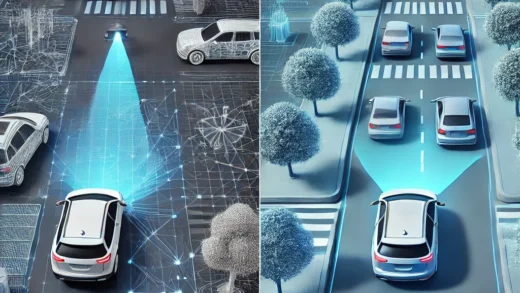
Modern vehicles in the US and EU are becoming rolling data centers. From advanced driver assistance systems to predictive maintenance alerts, connected cars now generate terabytes of telemetry every day. Brands like Tesla, Ford, and BMW rely heavily on vehicle data to improve software, safety, and user experience. But behind the innovation headlines lies a growing challenge: the cost of storing, transmitting, and processing this data is rising sharply.
In markets such as the United States and Europe, regulatory requirements also add to the data burden. Compliance with safety reporting, emissions tracking, and cybersecurity monitoring means automakers cannot simply reduce data streams without careful planning. Cloud storage costs, edge compute hardware, SIM connectivity fees, and data engineering teams all add up. As fleets grow and electric vehicles become more software-defined, telemetry bills scale faster than many executives expected.

The shift toward software-defined vehicles and over-the-air updates makes telemetry even more central to business strategy. Automakers no longer collect data just for diagnostics; they use it to train AI models, refine autonomous features, and build new revenue streams. However, without a smart data strategy, telemetry can quickly become a financial liability. The key question is not whether to collect data, but how to collect it efficiently while still extracting meaningful insights.
Smarter Sampling: Collect Less, Learn More
One of the most effective ways to control telemetry costs is intelligent sampling. Instead of streaming every sensor reading continuously, automakers can design systems that collect data selectively. For example, high-frequency logging may only activate when a safety-critical event occurs, such as hard braking or sudden steering input. During normal driving, the system can reduce sampling rates significantly without losing valuable context.
Edge computing plays a critical role in this approach. By processing data directly inside the vehicle, only relevant summaries or anomalies need to be transmitted to the cloud. This reduces bandwidth consumption and lowers cloud ingestion costs. In the US and EU, where mobile connectivity fees vary by region and carrier, optimized data transmission can deliver substantial savings across large fleets.
Sampling strategies can also be personalized by geography and vehicle usage patterns. A vehicle operating in dense urban traffic may require different telemetry rules than one primarily used on highways. By analyzing usage trends, automakers can design adaptive telemetry policies that respond dynamically. This ensures that engineers still receive high-quality datasets for analytics and machine learning, while unnecessary raw data stays inside the vehicle.
Compression and Edge Intelligence: Making Data Leaner
Beyond sampling, compression technologies are transforming telemetry economics. Raw sensor data, especially from cameras and radar, consumes massive storage and bandwidth. By using advanced compression algorithms and event-based encoding, automakers can significantly reduce file sizes before transmission. This is especially important for features related to driver assistance and automated driving.
Edge AI models can further refine what gets sent to central servers. Instead of uploading full video streams, vehicles can transmit metadata, extracted features, or flagged incidents. For example, rather than storing hours of uneventful highway driving, the system may only preserve segments that include unusual objects or system interventions. This dramatically lowers storage costs while still supporting safety investigations and product improvements.
Cloud providers in the US and EU offer scalable infrastructure, but even scalable systems have cost thresholds. Data egress fees, long-term archival storage, and analytics processing all contribute to rising expenses. By combining compression with intelligent filtering, automakers can design lean telemetry pipelines. The result is a more sustainable data architecture that supports innovation without overwhelming IT budgets.
Learning Without Drowning in Data
Collecting less data does not mean learning less. In fact, well-structured datasets often produce better results for analytics teams. Machine learning models perform more efficiently when trained on curated, high-signal data rather than massive volumes of redundant information. By focusing on edge cases, anomalies, and representative samples, engineers can improve algorithm performance while reducing compute requirements.
Regulatory environments in Europe, particularly under GDPR, also encourage thoughtful data collection. Minimizing unnecessary personal or location data reduces privacy risks and compliance costs. Automakers that design telemetry systems with privacy by design principles can strengthen consumer trust. In competitive markets, trust is becoming just as important as technical performance.
Collaboration across departments is essential to make this work. Data engineers, product managers, legal teams, and finance leaders must align on clear telemetry goals. When every dataset has a defined purpose, storage and transmission decisions become more strategic. This alignment transforms telemetry from a technical afterthought into a core business discipline.
Turning Telemetry Into a Competitive Advantage
The future of automotive innovation depends on smart data, not just big data. As electric and connected vehicles dominate US and EU roads, telemetry will remain essential for software updates, safety improvements, and new digital services. However, companies that fail to manage telemetry economics risk eroding margins in an already competitive market.
Forward-thinking automakers are now treating telemetry as a product strategy rather than a pure engineering function. They evaluate return on data just as carefully as return on investment. By balancing sampling, compression, and edge intelligence, they create data systems that scale sustainably. This approach ensures that insights continue to flow without runaway infrastructure costs.
In the coming years, telemetry optimization will separate market leaders from followers. The brands that master efficient data pipelines will innovate faster, respond to issues sooner, and deliver better customer experiences. Telemetry costs may be exploding, but with the right design philosophy, automakers can control expenses, protect privacy, and still learn everything they need to build the cars of tomorrow.