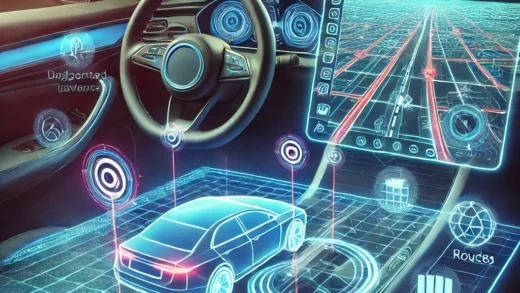
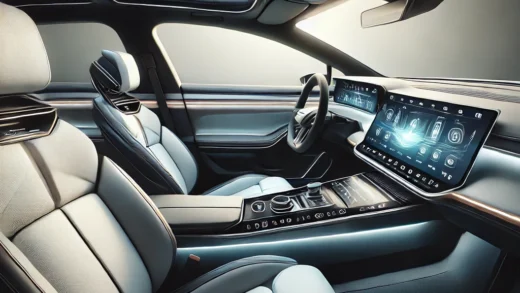
The automotive world is shifting gears faster than ever. Cars are no longer defined by horsepower or chrome—they’re defined by code. The rise of the Software-Defined Vehicle (SDV) marks a new era where software determines how a car drives, updates, and connects. Globally, automakers are racing to master this transformation. Leading the charge are Tesla, Volkswagen, Toyota, Mercedes-Benz, and General Motors, each building next-generation platforms designed to make vehicles smarter, safer, and more adaptable than ever before.

Tesla: Setting the Software Standard
When it comes to SDVs, Tesla is the brand everyone watches. It built its vehicles from the ground up around a centralized computer architecture and a unified software platform. This setup allows Tesla to deliver over-the-air (OTA) updates, adding new features and improving performance long after a car leaves the factory.
Tesla’s strength lies in treating every car as a connected digital product. From its Autopilot driver-assistance system to in-car entertainment and energy management, nearly everything is controlled by software. The company’s vertically integrated approach—building its own software, chips, and operating system—has made it the global benchmark for SDV innovation. In many ways, Tesla turned the car into a smartphone on wheels, setting expectations for the rest of the industry.
Volkswagen: Scaling Up for the SDV Era
Volkswagen, one of the world’s largest automakers, is determined to close the gap. It is developing a Scalable Systems Platform (SSP) that will unify its vehicle architectures across multiple brands, including Audi, Porsche, and Skoda. This platform aims to support both electric and hybrid drivetrains, with a shared software backbone running through them all.
Volkswagen’s software arm, Cariad, has faced challenges delivering on its ambitious goals, but the company is doubling down by collaborating with technology partners and startups to speed up development. Its new partnership with Rivian signals a shift toward a more agile, software-driven culture. By combining German engineering discipline with Silicon Valley innovation, VW hopes to deliver a cohesive SDV ecosystem that spans millions of vehicles globally.
Toyota: Reinventing the World’s Biggest Automaker
Toyota’s reputation for reliability and efficiency is unmatched, but in the software era, it is reinventing itself. Through its software subsidiary Woven by Toyota, the company has created “Arene,” a new operating system platform designed to integrate software across vehicle functions—from powertrain to infotainment.
Toyota recently introduced Arene in its refreshed RAV4, marking a major milestone in its transition toward software-defined mobility. The company’s goal is to make cars as easy to update as smartphones, delivering new features and safety improvements remotely. While Toyota acknowledges that it is still catching up to EV-first competitors, its massive scale and global reach give it a powerful foundation to roll out SDV capabilities worldwide.
Mercedes-Benz: Luxury Meets Code
Mercedes-Benz is proving that luxury and software go hand in hand. The brand is developing its own MB.OS (Mercedes-Benz Operating System), which will underpin all future models. Unlike traditional car software, MB.OS is designed for seamless OTA updates, AI-based personalization, and advanced driver-assistance integration.
Mercedes is also partnering with leading tech firms, including Nvidia and Tata Elxsi, to accelerate SDV development. Its new MMA platform, launching with compact electric models, will combine flexible powertrain options with fully integrated digital features. For Mercedes, software isn’t just about functionality—it’s about creating a refined digital experience that matches the brand’s premium heritage. In a world where technology defines luxury, MB.OS could become the new symbol of sophistication.
General Motors: Redefining the American Powerhouse
General Motors is betting big on digital transformation with its Ultifi software platform and next-generation electrical architecture. The system centralizes computing power, allowing for faster updates, enhanced data management, and AI-driven features. GM’s vehicles are designed to evolve over time through software, just like Tesla’s.
In a bold move, GM has decided to phase out Apple CarPlay and Android Auto from future models. Instead, it’s building its own infotainment ecosystem, aiming to control the customer experience and capture revenue from connected services. This signals GM’s commitment to becoming a software-driven company, not just a car manufacturer. As SDV adoption spreads globally, GM’s approach positions it as a major contender in connected mobility.
The Global SDV Race
The SDV revolution isn’t just a technology shift—it’s a business transformation. According to recent industry analyses, the global EV and SDV platform market is growing rapidly, with automakers investing billions to develop modular architectures capable of supporting multiple models and powertrains.
The move toward centralized computing, OTA updates, and connected ecosystems means vehicles will increasingly be defined by their software capabilities rather than mechanical parts. This change also opens up new revenue streams, such as subscription features, digital services, and data-driven insights. Consumers worldwide now expect cars that improve over time, offer personalization, and connect seamlessly to their digital lives.
However, the transition is far from easy. Legacy automakers must rethink decades of hardware-first design and develop new skills in software, AI, and cybersecurity. Partnerships with tech firms and cloud providers are becoming essential to keep up with Tesla’s pace.
Conclusion
The race to build the world’s best software-defined vehicle is reshaping the global automotive landscape. Tesla may have started the revolution, but Volkswagen, Toyota, Mercedes-Benz, and General Motors are rapidly transforming to compete. Their success will determine not only the future of their brands but also how the next generation experiences mobility.
As automaker platforms evolve, cars are becoming living, learning digital machines—constantly updating, improving, and adapting. In this new world, the most valuable component under the hood isn’t the engine or the battery—it’s the code that drives them both.