The automotive industry is rewriting its DNA. For decades, vehicles were powered not just by engines and fuel, but by an intricate network of over a hundred Electronic Control Units (ECUs)—each a tiny computer managing one part of the car. This setup worked beautifully in the mechanical age, but as vehicles evolve into connected, intelligent machines, this web of ECUs has become a burden. The new star of the show is the Software-Defined Vehicle (SDV)—a system that replaces dozens of specialized controllers with powerful centralized computers running flexible software. Across the global market, automakers are embracing SDVs because software-first design is proving faster, smarter, and far more future-ready than the legacy ECU model.

The Legacy of ECUs: Hardware that Stopped Scaling
In traditional automotive architecture, every major function had its own ECU—engine management, braking, steering, infotainment, airbags, and so on. Each ECU had its own microchip, firmware, and communication path. This worked fine when vehicles had simple electronic functions. But today, cars need to handle advanced driver-assistance systems, real-time connectivity, OTA (over-the-air) updates, and data-driven safety intelligence. Suddenly, a web of 100+ ECUs becomes a complex, fragile ecosystem.
Every additional ECU adds wiring, weight, and cost. Engineers must integrate hundreds of software stacks, coordinate updates, and test endless combinations of versions. A single change in one ECU can ripple through dozens of others. This slows innovation dramatically. Most importantly, traditional ECUs are static—they’re built for one job and rarely change after production. In an age when consumers expect their cars to improve through updates like smartphones, that rigidity no longer works.
The Rise of Software-Defined Vehicles
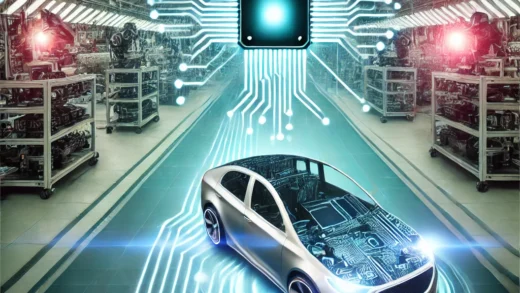
Enter the Software-Defined Vehicle, the modern response to decades of hardware complexity. SDVs consolidate those dozens of ECUs into a few powerful domain or zonal controllers connected to a centralized computing platform. Instead of relying on dedicated hardware for every feature, the vehicle’s intelligence lives in software layers that can be updated and upgraded anytime.
The SDV architecture decouples hardware and software, making it possible for automakers to innovate faster. Features like autonomous driving, energy optimization, and advanced infotainment no longer depend on adding new ECUs—they can be rolled out as software updates. This flexibility makes SDVs more like digital ecosystems than mechanical machines.
Tesla proved the concept early by designing its vehicles around a centralized computer. Now, automakers such as Volkswagen, Mercedes-Benz, Toyota, and General Motors are following suit. They are investing billions to move from fragmented ECU systems to unified computing platforms capable of running millions of lines of code efficiently.
Why Software-First Wins Over ECU-First?
The difference between ECU-based and software-defined architecture is more than just design—it’s a philosophical shift.
A software-first vehicle is built to evolve. Automakers can deploy new features through over-the-air updates, personalize driving modes, or even sell post-purchase software upgrades. With ECUs, every improvement required physical recalls or hardware replacement. The SDV eliminates that limitation, enabling continuous innovation over the vehicle’s lifetime.
A second advantage is reduced complexity. Instead of managing hundreds of control units, manufacturers work with a smaller set of high-performance computing zones. This simplifies wiring, reduces vehicle weight, and improves reliability. It also shortens development cycles, cutting costs globally.
Third, software scalability allows global manufacturers to unify platforms across markets. A single SDV architecture can support multiple brands, regions, and regulations, saving millions in engineering costs. Hardware differences between models become minor—software defines the personality of each vehicle.
Finally, data management and security improve dramatically in SDVs. Centralized computing makes it easier to apply cybersecurity updates, analyze sensor data, and ensure compliance with safety standards. In an increasingly connected world, that capability is not optional—it’s essential.
Global Market Acceleration
The shift to SDVs is reshaping the global automotive landscape. Research firms estimate that the EV and SDV platform markets are growing at over 20% annually as automakers pour resources into next-generation architectures. Europe and North America are leading the push, while China’s automakers are rapidly building their own software-defined ecosystems.
This transition is also transforming supply chains. Traditional Tier-1 suppliers that once built ECUs are now evolving into software and systems integration partners. Semiconductor companies are producing powerful automotive-grade chips capable of running AI-driven operating systems. Governments are updating safety and cybersecurity frameworks to regulate OTA updates and data usage.
For consumers, the benefits are tangible. Vehicles can receive new driver-assistance features, performance boosts, or energy-efficiency improvements without visiting a dealership. Globally, this creates new business models based on subscriptions, digital add-ons, and data-driven services. In developing markets, SDV platforms also make it easier to offer advanced features at lower cost by reusing software across multiple models.
The Road Ahead
Transitioning from 100+ ECUs to a software-first SDV is not easy. It demands rethinking vehicle architecture, retraining workforces, and restructuring partnerships. Automakers must act more like tech companies—adopting agile development, building cloud infrastructure, and treating software as the core product. But the payoff is clear: lower complexity, faster innovation, improved safety, and stronger lifetime value.
The legacy ECU era built the foundation for modern vehicles. The SDV era will define what they become next. As the global market accelerates toward electrification and automation, the real competition won’t be over who builds the best engine or battery—it will be over who builds the smartest, most adaptable software platform.
In this race, one truth stands out: software-first design doesn’t just beat 100+ legacy controllers—it redefines what a car truly is.
(Approx. 705 words – SEO-optimized keywords: software-defined vehicle, SDV architecture, electronic control units, ECU vs SDV, automotive software, connected cars, OTA updates, global automotive industry, digital mobility)