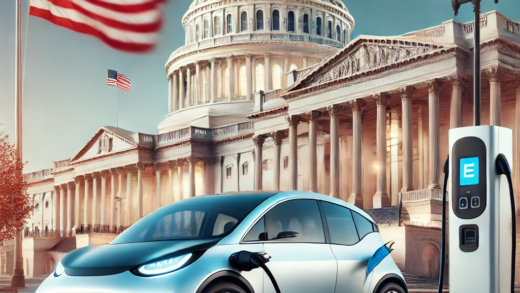
The European Union’s Green Deal is reshaping industries across the continent, and the automotive sector is at the heart of this transformation. As Europe sets ambitious goals to become carbon-neutral by 2050, the Green Deal has introduced sweeping reforms that are revolutionizing how cars are designed, manufactured, and powered. This policy is not only pushing European automakers to innovate but is also influencing the global automotive landscape, including the United States. In 2025, the EU’s Green Deal offers valuable insights into the future of sustainable transportation and its potential impact on the U.S. auto market.

Understanding the EU’s Green Deal
The EU’s Green Deal is a comprehensive strategy aimed at addressing climate change and environmental degradation while fostering economic growth. Key targets include a 55% reduction in greenhouse gas emissions by 2030 compared to 1990 levels and achieving net-zero emissions by 2050. The automotive sector, as a significant contributor to CO2 emissions, is central to these goals.
To meet these targets, the Green Deal has introduced stricter emissions regulations, incentives for electric vehicle (EV) adoption, and investments in charging infrastructure. Automakers are now required to reduce the average CO2 emissions of their fleets, with heavy penalties for non-compliance. These measures have accelerated the transition to electric and hybrid vehicles across Europe.
The Green Deal’s Impact on the European Automotive Sector
The Green Deal has been a game-changer for the European automotive industry. Major automakers like Volkswagen, BMW, and Stellantis are committing billions of euros to electrify their fleets. By 2025, many of these companies have pledged to phase out internal combustion engines entirely in favor of electric models. This shift has spurred innovation in battery technology, lightweight materials, and energy-efficient manufacturing processes.
The policy has also encouraged the development of robust EV infrastructure. European cities are rapidly expanding their charging networks, making EV ownership more convenient and accessible. Governments are providing subsidies for EV purchases, reducing the upfront cost for consumers and boosting demand.
Small and medium-sized enterprises (SMEs) in the automotive supply chain are also feeling the effects. While some face challenges in adapting to the new standards, others are thriving by producing components for EVs or developing green technologies that align with the Green Deal’s goals.
How Does the U.S. Compare?
In the United States, the approach to sustainable transportation has been less centralized than in Europe. While the Biden Administration has introduced ambitious climate goals, including a target for EVs to account for 50% of all new car sales by 2030, there is no equivalent to the EU’s Green Deal in terms of scope and enforcement.
The U.S. relies on a combination of federal initiatives, state-level policies, and private sector investments to drive change in the automotive sector. States like California are leading the way with strict emissions regulations and incentives for EV adoption. However, other states have been slower to adopt similar measures, creating a fragmented landscape.
American automakers are making strides in electrification, with companies like Tesla, Ford, and General Motors investing heavily in EV production. Yet, without a unified national strategy akin to the Green Deal, the pace of change is less consistent across the country.
Challenges and Opportunities
The EU’s Green Deal presents both challenges and opportunities for the automotive sector. In Europe, the financial burden of meeting strict emissions standards can be significant, especially for smaller companies. However, the emphasis on innovation and sustainability is opening new markets and driving technological advancements that benefit the entire industry.
For the U.S., observing the Green Deal’s implementation offers valuable lessons. A coordinated approach to EV adoption, emissions reduction, and infrastructure development could accelerate the transition to sustainable transportation. Additionally, American automakers can benefit from collaborating with European companies to share knowledge and technologies.
The Road Ahead
As we look to the future, the EU’s Green Deal is likely to remain a benchmark for sustainable policymaking in the automotive sector. By setting clear goals and providing strong incentives, the Green Deal demonstrates how governments can drive significant change while supporting economic growth.
In the U.S., the growing emphasis on sustainability and the rising popularity of EVs indicate that similar transformations are possible. While the regulatory landscape may differ, the core principles of innovation, collaboration, and consumer incentives are universal. The challenge lies in creating a cohesive strategy that addresses the unique needs of the U.S. market.
Conclusion
The EU’s Green Deal is reshaping the automotive sector, pushing companies to innovate and consumers to embrace greener options. Its impact extends beyond Europe, offering a blueprint for sustainable transportation that other regions, including the United States, can adapt to their own contexts. As the automotive industry evolves in 2025 and beyond, the lessons from the Green Deal will continue to inspire a cleaner, more efficient future for mobility worldwide.