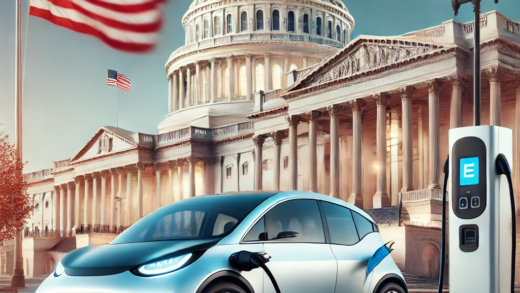
The electric vehicle (EV) revolution is in full swing across the United States, driven by growing concerns about climate change, government incentives, and advancements in battery technology. While EVs are undeniably the future of transportation, there’s one challenge that continues to hold back their mass adoption: battery efficiency. Enter quantum computing, a groundbreaking technology that is poised to reshape the way we solve some of the most complex problems in EV innovation.
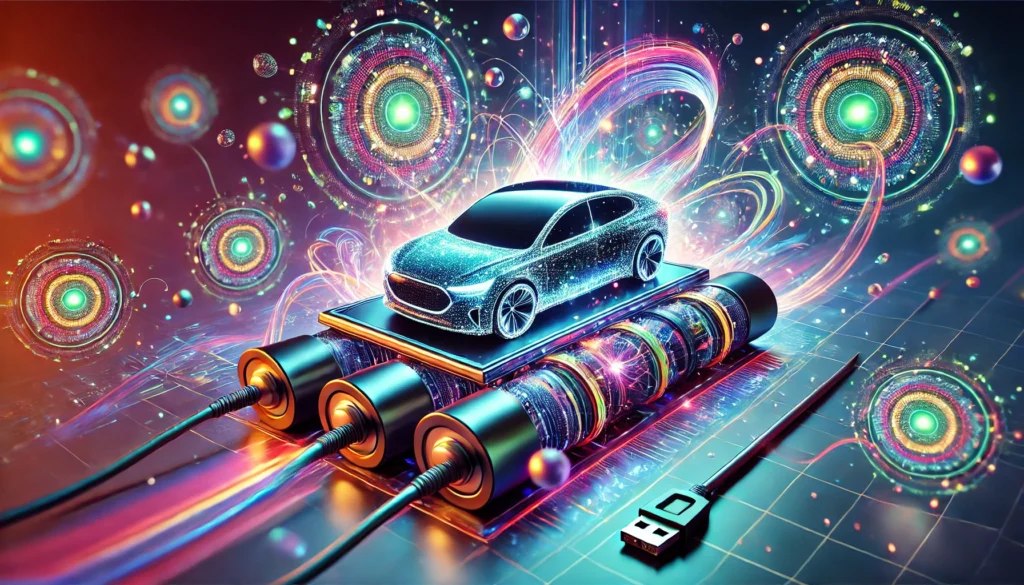
The EV Battery Conundrum
In 2024, the demand for EVs in the U.S. is surging, but challenges with range anxiety, long charging times, and limited battery life remain pressing concerns for both manufacturers and consumers. EV batteries, typically lithium-ion based, require precise chemical formulations to optimize their performance. Yet, current methods of researching and developing these materials rely on classical computing, which, despite its power, has its limitations.
Classical computers can only process a limited number of variables simultaneously, making it difficult to simulate the complex quantum mechanical interactions within battery materials. As a result, developing a new, more efficient battery can take years of trial and error. This is where quantum computing steps in, offering a faster, more efficient path to battery innovation.
What is Quantum Computing?
Unlike classical computers, which process data in binary (0s and 1s), quantum computers use quantum bits, or qubits, which can exist in multiple states simultaneously. This ability to perform complex calculations at lightning speed enables quantum computers to solve problems that would take classical computers centuries. It’s this unparalleled computational power that makes quantum computing a game-changer for EV battery research.
Quantum Computing and Battery Chemistry
In the race to develop more efficient EV batteries, quantum computing is being used to model and simulate chemical reactions at the atomic level. These simulations help researchers identify the ideal combinations of materials to create batteries that are not only more energy-dense but also safer and longer-lasting. For example, quantum computers can help scientists discover solid-state batteries, which are lighter, more efficient, and less prone to overheating compared to traditional lithium-ion batteries.
Major automakers and battery manufacturers in the U.S. are already investing in quantum computing partnerships to accelerate this process. Companies like Ford and GM are collaborating with quantum computing firms to explore the potential of quantum simulations in improving battery design, reducing development costs, and shortening time-to-market.
Solving Supply Chain Challenges
Another significant challenge facing EV battery production in the U.S. is the dependence on scarce and expensive materials like cobalt and nickel. Quantum computing can aid in the search for alternative materials that are both more abundant and environmentally sustainable. By simulating thousands of potential materials in mere seconds, quantum computing helps identify viable substitutes that maintain or even enhance battery performance.
This capability is particularly important as the U.S. government pushes for domestic EV production and reduced reliance on foreign supply chains. Quantum computing offers a way to achieve these goals while ensuring EVs remain cost-competitive.
The Impact on Sustainability
Sustainability is at the heart of the EV movement, and quantum computing is playing a critical role in advancing this mission. By optimizing battery designs, quantum computing reduces waste and energy consumption during the manufacturing process. Additionally, it contributes to the development of recycling-friendly battery materials, which will be essential as millions of EVs on the road eventually reach the end of their lifecycle.
In 2025, the integration of quantum computing into EV research is not just about creating better batteries; it’s about creating a more sustainable future. The ability to reduce environmental impact while simultaneously enhancing performance makes quantum computing a cornerstone of the EV industry’s growth.
The Road Ahead
While quantum computing is still in its infancy, its potential to solve EV battery efficiency challenges is immense. The U.S., with its robust automotive industry and commitment to innovation, is well-positioned to lead this transformation. As quantum computing technology matures and becomes more accessible, the breakthroughs we’re seeing today are just the beginning.
In the near future, quantum computing could help EV manufacturers achieve the ultimate goal: a battery that charges in minutes, lasts for decades, and powers vehicles for hundreds of miles on a single charge. For consumers, this means less time worrying about range and charging infrastructure and more time enjoying the benefits of a cleaner, greener mode of transportation.
As we move deeper into 2025, it’s clear that quantum computing is not just a futuristic concept; it’s a practical tool that is shaping the present and future of electric vehicles in the U.S. From improving battery chemistry to addressing supply chain issues and enhancing sustainability, quantum computing is driving the EV revolution forward at an unprecedented pace.
For EV enthusiasts and skeptics alike, this is an exciting time to witness how technology and innovation are converging to redefine transportation in America. The question isn’t if quantum computing will solve EV battery challenges—it’s how soon.