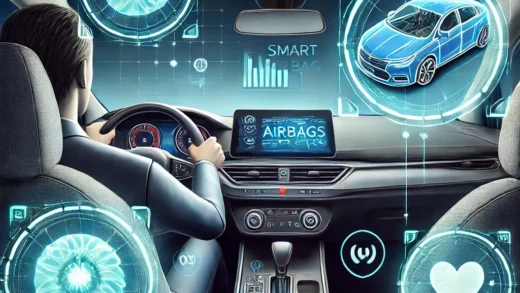
In 2025, the automotive world is on the brink of a revolution driven by a single, game-changing technology: 5G. This next-generation wireless network is not just about faster internet speeds for your smartphone. For software-defined vehicles (SDVs), 5G represents a seismic shift in how cars communicate, operate, and interact with their surroundings. Across the US and Europe, this technology is poised to transform everyday driving into an experience defined by seamless connectivity, advanced safety, and unmatched convenience.

Redefining Connectivity in Software-Defined Vehicles
Software-defined vehicles are a marvel of modern engineering, with their core functionality built around software that can be updated and improved over time. Unlike traditional cars, which rely heavily on static hardware, SDVs depend on constant connectivity to unlock their full potential. This is where 5G comes in. With its ultra-fast speeds, low latency, and ability to connect millions of devices simultaneously, 5G is the key to enabling SDVs to operate at their peak.
In the US and Europe, the expansion of 5G networks means that cars are no longer standalone machines. They become integrated into a digital ecosystem where they can receive real-time data, communicate with other vehicles, and interact with smart city infrastructure. This connectivity creates an entirely new level of functionality and convenience, paving the way for smarter and safer roads.
Real-Time Communication for Smarter Driving
One of the most exciting benefits of 5G in SDVs is its ability to support vehicle-to-everything (V2X) communication. With 5G, vehicles can exchange information with other cars, traffic lights, and even pedestrians. Imagine driving through a busy city in the US or Europe, where your car receives instant alerts about road closures, changing traffic lights, or a pedestrian crossing ahead. These real-time updates allow your vehicle to make split-second decisions, reducing the likelihood of accidents and improving traffic flow.
This connectivity is also essential for autonomous driving. For self-driving cars to operate safely and efficiently, they need to process vast amounts of data in real time. 5G ensures that these cars can communicate with their surroundings at lightning speed, enabling them to react faster and navigate more accurately than ever before. Whether you’re on a highway in California or navigating a narrow street in Paris, 5G connectivity ensures that autonomous vehicles perform at their best.
Enhancing Over-the-Air Updates
Another major advantage of 5G for SDVs is its ability to deliver over-the-air (OTA) software updates. These updates allow car manufacturers to add new features, fix bugs, and enhance performance without requiring a visit to the dealership. While this capability already exists, 5G makes it faster and more reliable.
For drivers in Europe and the US, this means their vehicles can evolve over time, staying up-to-date with the latest advancements. Whether it’s improved navigation, enhanced safety systems, or better energy management for electric vehicles, 5G ensures that OTA updates are seamless and uninterrupted. It’s like having a constantly improving car that adapts to your needs and the demands of modern roads.
Revolutionizing the In-Car Experience
5G doesn’t just make SDVs smarter; it also makes them more enjoyable. The in-car experience is being transformed into something akin to a mobile living room or office, with 5G powering high-definition streaming, gaming, and even virtual reality applications. Passengers can enjoy ultra-fast internet connectivity, whether they’re streaming a movie on a road trip across the US or conducting a video conference on their commute in Europe.
For drivers, 5G enables features like augmented reality navigation, which overlays real-time directions onto the windshield for safer and more intuitive driving. Voice assistants and AI-powered systems also become more responsive, understanding and executing commands with lightning speed. This level of connectivity ensures that every journey, no matter how routine, feels elevated and convenient.
5G and Sustainable Mobility
As the US and Europe continue to push for greener transportation solutions, 5G plays a vital role in supporting sustainable mobility. For electric vehicles (EVs), 5G enables smarter energy management by providing real-time data on battery health, charging station availability, and optimal routes to conserve energy. It also helps EVs integrate into smart grids, allowing them to contribute to energy storage and distribution during peak demand periods.
This interconnected approach not only enhances the efficiency of EVs but also contributes to the broader goal of reducing emissions and creating a more sustainable transportation system. In this way, 5G is not just about making cars smarter; it’s about making mobility better for the planet.
Looking Ahead to 2025 and Beyond
As 2025 progresses, the rollout of 5G across the US and Europe will accelerate the adoption of software-defined vehicles, bringing us closer to a future of fully connected, autonomous transportation. From real-time communication to enhanced in-car experiences, 5G is transforming what we expect from our cars, making them smarter, safer, and more responsive.
This isn’t just a technological shift; it’s a cultural one. As 5G-enabled SDVs become more common, the way we think about driving, commuting, and even owning a car will evolve. The future of connectivity is here, and with 5G at the wheel, it’s driving us toward a smarter, more sustainable, and more connected world.