

In 2025, the way we think about cars is changing, and Tesla sits at the forefront of that shift. As traditional automakers focus on engine performance and design tweaks, Tesla views the automobile as a digital platform. The company is determined to show that what makes a car truly remarkable today is not just its horsepower or range, but how its software defines its capabilities, character, and potential for continuous improvement.
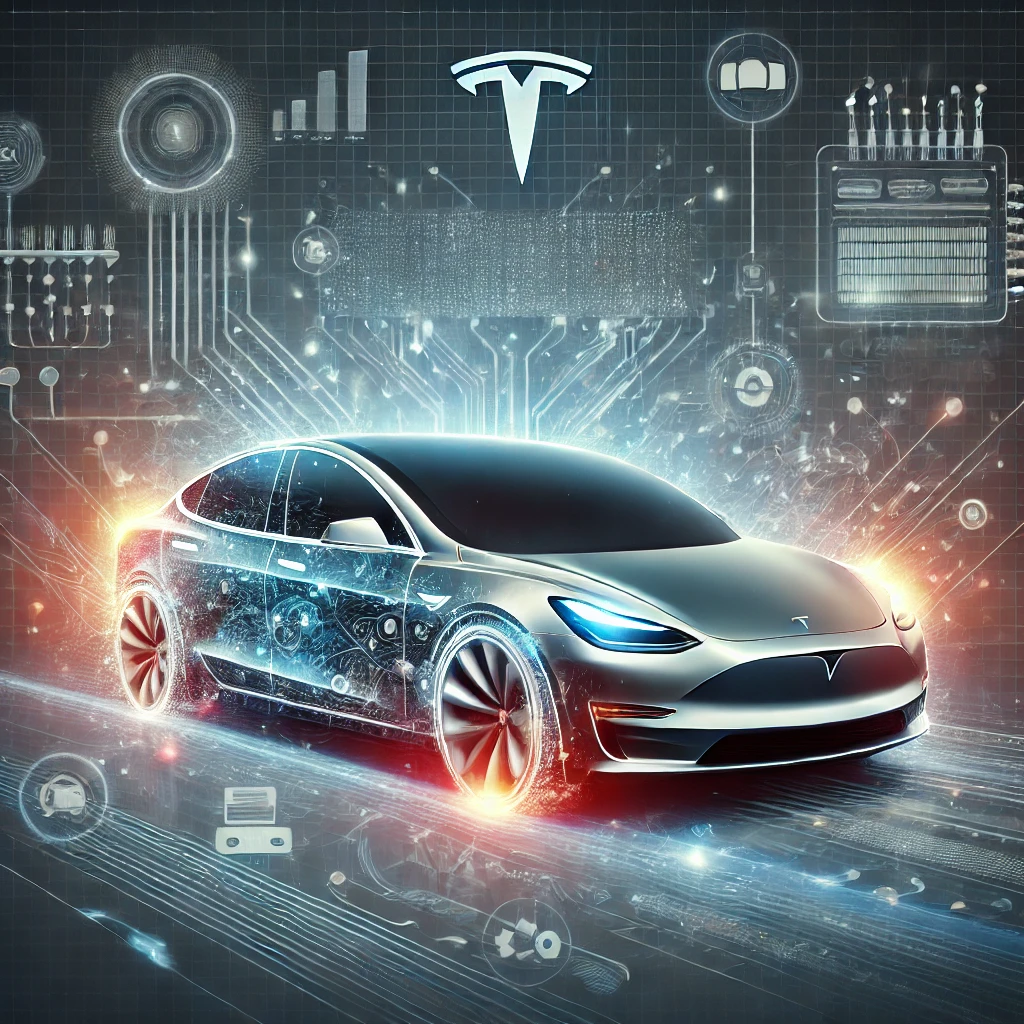
Tesla Vision – Seeing the Car as a Digital Platform
For much of automotive history, a car’s identity was set at the factory. Drivers accepted that the vehicle they purchased would remain fundamentally the same for its entire lifespan. Tesla’s vision turns that notion upside down. Its software-defined vehicles can receive over-the-air updates, adding new features, refining existing ones, and enhancing safety measures without a single trip to the dealership. For drivers in the US and Europe, this means cars can improve as technology advances, adapting to new regulations, roads, and user preferences in real-time.
This approach makes it possible to deliver a richer driving experience. Owners of Tesla models like the Model 3, Model S, or Model Y often wake up to find that their vehicles can now park more smoothly, accelerate more efficiently, or even navigate complicated intersections with greater ease. Every piece of software code that Tesla sends out is a stepping stone toward a smarter, safer, and more intuitive car.
Empowering the Driver – Tesla Software
By putting software at the center of the experience, Tesla gives drivers a sense of control and personalization. The sleek touchscreen and intuitive interface create a direct dialogue between driver and machine. It is more than just adjusting seats or climate controls. As artificial intelligence learns from the driver’s habits, it tailors navigation suggestions, adjusts battery management strategies for better EV range, and refines how autonomous driving features behave in various environments.
The result is that Tesla’s vehicles feel alive and responsive, constantly learning from the world around them. This feedback loop makes every journey feel like part of a grand experiment, where Tesla’s entire global fleet contributes data to improve performance. Drivers know they are not purchasing a car that grows outdated with time, but one that evolves and matures alongside them.
Over-the-Air Innovation
Tesla’s over-the-air updates are the engine of this evolution. Instead of waiting years for a new model to appear, Tesla owners enjoy continuous improvements. The company’s engineers can respond swiftly to emerging safety standards in Europe or new highway rules in the US. They can deploy AI-driven tweaks to autonomous driving features within hours, refining how the car handles complex traffic patterns or tricky weather conditions.
This level of agility keeps Tesla ahead of competitors who are still tied to traditional production cycles. It also ensures that the brand can harmonize with local expectations and rules. Whether it is fine-tuning navigation data for European roads or adjusting certain features to meet American regulations, Tesla can adapt rapidly. This creates a global sense of trust that the car you drive in Berlin or New York is finely tuned to your region’s demands.
AI at the Core – Tesla’s Innovation
Central to Tesla’s software-defined approach is artificial intelligence. AI powers autonomous driving features, making sense of millions of miles of driving data collected from Tesla’s global fleet. The more vehicles on the road, the better the system becomes. It learns from real-world scenarios, continuously refining how it interprets signs, recognizes pedestrians, and reacts to unpredictable situations. By 2025, this learning has helped Tesla stand out as a leader in autonomous driving technology, offering a level of sophistication that traditional carmakers struggle to match.
A Sustainable, Adaptive Future
By enhancing EV adoption through smarter, software-driven improvements, Tesla is pushing sustainable transportation forward. Its vehicles not only offer emissions-free travel, but they continuously optimize battery usage, refine charging strategies, and even adjust driving dynamics to improve efficiency. This blend of electrification and software-driven intelligence helps the brand set a new standard for what it means to be truly innovative.
As more drivers in the US and Europe embrace these advanced machines, Tesla’s vision for software-defined vehicles becomes a guiding light for the rest of the industry. The car’s identity is no longer limited to its hardware; instead, it is sculpted by software updates that give it room to grow and evolve.
The Road Ahead
In 2025, Tesla proves that defining a car by its software is not just possible—it is the new normal. Its vehicles stand apart by bridging the gap between machine and digital platform, enabling drivers to benefit from continuous improvement, personalized experiences, and AI-driven intelligence. As Tesla refines its technology and the world becomes more comfortable with software-centered mobility solutions, the journey toward a smarter, safer, and more adaptive automobile experience continues at full speed.


