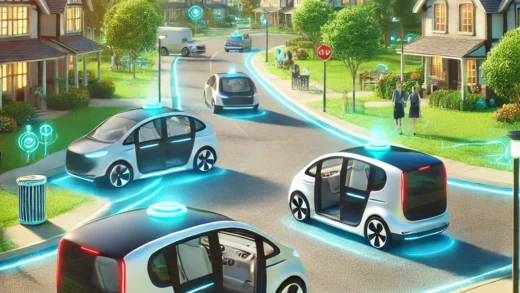
Dubai has always had its eyes on the future. From flying taxis to smart roads, the city is constantly reimagining transportation. The next chapter in that story is unfolding fast — the rise of robotaxis. With the Roads and Transport Authority (RTA) targeting a quarter of all trips to be autonomous in the coming years, Dubai is opening its streets to some of the most advanced self-driving technologies in the world.
Among the early movers was Cruise, the autonomous vehicle (AV) subsidiary of General Motors. Cruise’s partnership with Dubai’s RTA marked one of the first major international robotaxi deals outside the United States. However, as the market matured, a new wave of partnerships emerged — this time led by Chinese AV companies like Baidu, Pony.ai, and WeRide. These players are now setting the pace in Dubai’s race toward a driverless mobility ecosystem.

Cruise’s Early Entry and Evolving Role
When Cruise first entered the Dubai market, the collaboration was a milestone for both sides. Dubai gained access to advanced AV technology from Silicon Valley, and Cruise gained a gateway into a city eager to implement smart-mobility solutions. The partnership aligned perfectly with Dubai’s Smart City vision and the RTA’s goal to reduce traffic congestion, improve safety, and lower emissions.
But as the AV industry evolved, so did Dubai’s strategy. Instead of relying on a single foreign partner, the RTA began diversifying its alliances to include several global leaders. This approach aimed to foster competition, innovation, and scalability. While Cruise remains a symbolic pioneer, the spotlight is now shifting toward a new generation of technology partners — particularly from China — who are accelerating deployment at remarkable speed.
The Rise of Chinese Robotaxis in Dubai
China’s AV industry has become a powerhouse, with companies such as Baidu Apollo Go, WeRide, and Pony.ai already operating large-scale robotaxi services in Chinese cities. Dubai saw an opportunity to bring this proven experience into its ecosystem.
WeRide, for example, was among the first to receive a self-driving vehicle license from the UAE authorities. This regulatory milestone allowed the company to begin pilot testing in Dubai’s urban areas. Pony.ai followed closely, signing an agreement with the RTA to deploy its seventh-generation robotaxi fleet in Dubai. Baidu, meanwhile, announced plans to launch Apollo Go, its autonomous ride-hailing service, with the aim of offering fully driverless rides through Dubai’s existing ride-hailing platforms.
These partnerships highlight a clear trend — Dubai is betting on Chinese AV expertise to make autonomous taxis part of everyday mobility. The cost efficiency, advanced sensor technology, and AI-driven navigation systems of Chinese robotaxis make them well-suited to Dubai’s ambitious mobility roadmap.
Building a Multi-Partner Ecosystem
Dubai’s approach to robotaxis isn’t about exclusivity — it’s about building a collaborative ecosystem. Instead of giving one company control, the RTA has opted for a multi-vendor strategy. This means that Cruise, Baidu, Pony.ai, and WeRide can all contribute their technology, vehicles, and operational models to help Dubai meet its AV adoption goals.
In practical terms, this allows Dubai to diversify its technology base and reduce operational risk. The city’s mobility platforms, including Uber and Careem, are expected to integrate robotaxi services directly into their apps, creating a seamless experience for passengers.
Initially, these autonomous vehicles will operate with safety drivers or remote supervisors, ensuring public comfort and regulatory compliance. Over time, the plan is to transition to fully driverless operations once the systems demonstrate consistent safety and reliability in real-world traffic.
What Robotaxis Mean for Dubai’s Market?
For Dubai residents and visitors, robotaxis represent more than just futuristic transportation — they symbolize convenience, sustainability, and progress. Imagine being able to hail a self-driving car that picks you up within minutes, drives efficiently through city traffic, and drops you at your destination without any human intervention.
From a business standpoint, this transformation will reshape the automotive, insurance, and mobility industries. Fleet operators, technology providers, and infrastructure developers will all benefit from the demand for smart transport systems. Moreover, Dubai’s focus on autonomous mobility aligns with its Net Zero and Smart City goals, helping reduce congestion and carbon emissions while improving road safety.
The city’s modern infrastructure — with its advanced road sensors, 5G connectivity, and digital mapping systems — provides the perfect environment for AV testing and deployment. For global AV companies, Dubai is an ideal showcase market, combining strong government backing with a tech-savvy population and a world-class tourism sector.
Challenges and Road Ahead
Despite the enthusiasm, the road to full robotaxi adoption isn’t entirely smooth. Safety validation, cybersecurity, public acceptance, and operational scalability remain key challenges. Dubai must ensure that data privacy and passenger safety are maintained, and that autonomous systems are resilient under varied weather and traffic conditions.
Economically, companies must also balance high R&D and fleet costs with the promise of future profitability. For that reason, most robotaxi operations will begin in limited zones — such as downtown districts or specific residential areas — before expanding citywide.
Still, Dubai’s regulatory flexibility and openness to innovation make it one of the few global cities capable of overcoming these challenges quickly. The government’s willingness to collaborate with both Western and Asian AV pioneers ensures continuous technological progress and healthy market competition.
Looking Toward a Driverless Tomorrow
The arrival of robotaxis from Cruise and Chinese AV leaders marks the beginning of a new transport era in Dubai. It reflects a global shift toward smarter, cleaner, and more connected mobility. The success of these partnerships could position Dubai as a global hub for autonomous transportation — a model for other cities in the Middle East and beyond.
Every successful robotaxi ride will bring the city closer to its vision of a fully integrated, autonomous mobility network. Whether it’s Cruise’s early groundwork or China’s cutting-edge robotaxi fleets, one thing is clear — Dubai is driving confidently into a driverless future, and the journey has already begun.