For more than a century, horsepower defined automotive performance. Bigger engines meant faster acceleration and stronger towing capability. But in today’s software-defined vehicle era, performance is no longer measured only in mechanical output. It is increasingly defined by how fast a vehicle can process data. In this new reality, memory bandwidth has become the digital equivalent of horsepower.
Across the US and European markets, vehicles are evolving into rolling computers. Advanced driver assistance systems, immersive digital cockpits, connected services, and over-the-air updates are transforming the driving experience. Behind all of this innovation lies a critical technical factor that rarely makes headlines but shapes everything: memory bandwidth.
The Shift to Software-Defined Vehicles
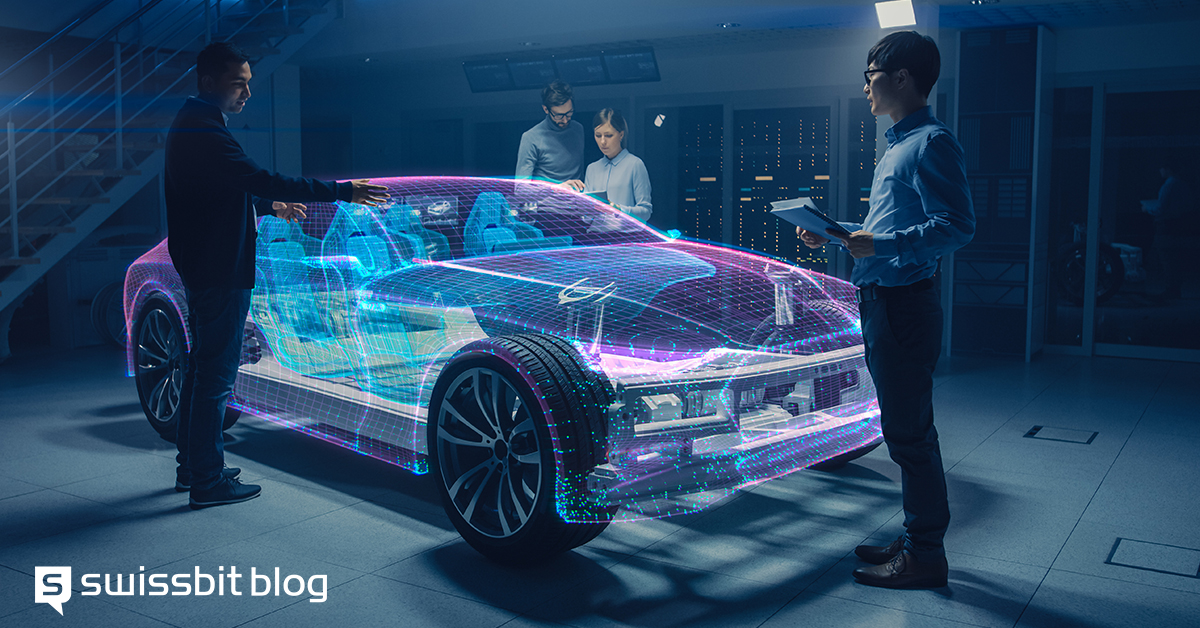
Software-defined vehicles, or SDVs, rely on centralized compute platforms that manage everything from safety systems to infotainment. Instead of dozens of isolated control units, modern architectures consolidate functions into high-performance computing domains. This shift enables faster updates, smarter features, and more flexible vehicle platforms.
However, centralization also means enormous data flow. High-resolution cameras, radar sensors, lidar systems, and driver monitoring technologies constantly stream information into the vehicle’s compute core. Processing that data in real time requires not only powerful processors but also a memory system capable of feeding them at high speed.
In the US and EU, regulatory pressure for advanced safety features and consumer demand for seamless digital experiences are accelerating this transformation. As vehicles take on more complex workloads, memory bandwidth becomes a defining performance metric.
What Memory Bandwidth Really Means
Memory bandwidth refers to the speed at which data moves between memory and processors such as CPUs, GPUs, and NPUs. It is typically measured in gigabytes per second. The higher the bandwidth, the more data can flow without delay.
Imagine a high-performance engine paired with a narrow fuel line. No matter how powerful the engine is, it cannot perform at its best if fuel delivery is restricted. The same principle applies to automotive computing. Even the most advanced AI processor cannot operate efficiently if it is waiting for data to arrive.
In SDVs, data movement is constant and intense. Cameras alone can generate gigabits of data per second. Sensor fusion algorithms combine multiple streams into a unified environmental model. If memory bandwidth cannot keep up, system latency increases, and performance suffers.
Why Bandwidth Matters More Than Raw Compute
It is easy to focus on processor specifications such as core counts or tera-operations per second. While these metrics are important, they do not tell the full story. Real-world performance depends on how quickly processors can access data.
Advanced driver assistance systems require instant reaction times. Object detection, lane recognition, and predictive path planning depend on rapid data access. If the memory subsystem becomes a bottleneck, even powerful processors will underperform.
In the US and European markets, where Level 2 and emerging Level 3 automation features are becoming more common, this issue is critical. Safety systems must operate reliably in dense urban traffic, high-speed highways, and complex intersections. Memory bandwidth ensures that processors receive sensor data without delay, enabling accurate and timely decisions.
The AI Factor in Modern Vehicles
Artificial intelligence is at the core of today’s automotive innovation. Neural networks analyze images, predict pedestrian movement, and monitor driver attention. These models involve massive data sets and complex matrix calculations that demand consistent data flow.
Neural processing units are designed for high AI performance per watt, but they rely heavily on memory throughput. AI inference workloads often require rapid access to large model parameters and intermediate data. Insufficient bandwidth can slow inference times, reducing system responsiveness.
For electric vehicles in particular, balancing performance with efficiency is essential. Advanced memory technologies such as LPDDR and high-bandwidth memory help deliver strong throughput without excessive power consumption. This balance is increasingly important as EV adoption grows across North America and Europe.
Safety, Experience, and Brand Value
Memory bandwidth is not just a technical detail. It directly affects driver safety and user experience. Faster data movement improves the responsiveness of automatic emergency braking, adaptive cruise control, and lane-keeping systems. In critical scenarios, milliseconds matter.
Beyond safety, bandwidth influences digital cockpit performance. High-resolution displays, augmented reality heads-up systems, and real-time navigation overlays all rely on rapid data processing. A vehicle with limited bandwidth may feel sluggish or delayed, undermining the premium experience customers expect.
In competitive US and EU markets, reliability and smooth performance are key brand differentiators. Automakers that invest in robust memory architectures can deliver more stable and future-ready platforms. This translates into higher customer satisfaction and stronger long-term reputation.
Preparing for the Future of Mobility
As vehicles integrate more sensors and adopt more advanced autonomy features, memory demands will continue to rise. Software updates may introduce larger AI models and new functionalities that require additional bandwidth. Designing platforms with sufficient headroom is essential to protect long-term performance.
Future SDVs will likely rely on increasingly sophisticated memory hierarchies that combine on-chip caches, external DRAM, and advanced packaging technologies. Engineers must carefully align memory bandwidth with compute capability, thermal constraints, and energy budgets.
In many ways, memory bandwidth has become the new horsepower because it determines how effectively a vehicle can think, react, and evolve. Just as drivers once compared engine output, tomorrow’s performance benchmarks will increasingly revolve around data throughput and computational agility.
The New Performance Metric
The automotive industry is undergoing one of its most profound transformations. Mechanical excellence remains important, but digital capability is redefining what performance means. In software-defined vehicles, the ability to move data quickly is just as important as the ability to generate mechanical power.
For automakers in the US and Europe, prioritizing memory bandwidth is no longer optional. It is central to delivering safe automation, engaging user experiences, and scalable vehicle platforms. In the age of intelligent mobility, memory bandwidth truly is the new horsepower.