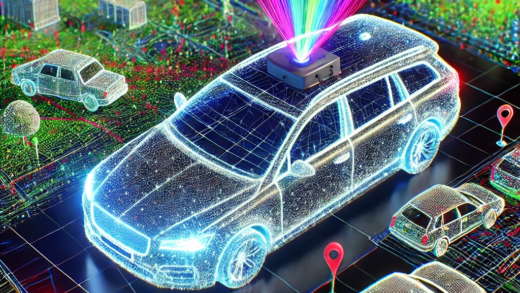
In the era of digital transformation, big data has emerged as a powerful force driving innovation across various industries, including transportation. In the realm of self-driving vehicles (SDVs), big data plays a pivotal role in enabling advancements in technology, safety, and efficiency. By harnessing massive volumes of data generated by connected vehicles and infrastructure, researchers, engineers, and policymakers are pushing the boundaries of what is possible in autonomous driving. In this blog, we will explore the role of big data in driving innovations in SDVs in the US.

Data Collection and Analysis:
At the heart of big data-driven innovations in SDVs is the collection and analysis of vast amounts of data from connected vehicles, sensors, and infrastructure. These data sources include vehicle telemetry data, sensor readings, GPS information, traffic conditions, weather patterns, and more. By capturing and processing this data in real-time, researchers and engineers gain valuable insights into the behavior of SDVs in various driving scenarios, enabling them to refine algorithms, improve decision-making capabilities, and enhance overall system performance.
Training and Testing Autonomous Systems:
Big data plays a crucial role in training and testing autonomous systems, allowing developers to simulate and validate SDV behavior in a wide range of scenarios. Through the use of sophisticated machine learning algorithms and simulation platforms, researchers can expose SDVs to virtual environments that replicate real-world conditions, such as urban streets, highways, adverse weather, and complex traffic scenarios. By feeding large amounts of data into these simulations, developers can train SDV algorithms to recognize patterns, make predictions, and react appropriately to different situations, ultimately improving the safety and reliability of autonomous driving systems.
Enhancing Safety and Reliability:
Big data analytics enable continuous monitoring and analysis of SDV performance, helping to identify potential safety hazards, anomalies, and performance issues. By collecting data from sensors, cameras, and other onboard systems, SDVs can detect and respond to hazardous conditions such as obstacles, pedestrians, and other vehicles in real-time. Additionally, big data analytics can help predict and prevent potential failures or malfunctions in SDV components, ensuring the reliability and robustness of autonomous driving systems.
Optimizing Efficiency and Performance:
Big data-driven insights enable SDVs to optimize efficiency and performance in various aspects of driving, including route planning, energy consumption, and traffic flow management. By analyzing historical and real-time data on traffic patterns, road conditions, and driver behavior, SDVs can identify the most efficient routes, avoid congestion, and minimize travel times. Moreover, big data analytics can optimize energy usage in electric and hybrid SDVs by adjusting speed, acceleration, and route planning to maximize range and minimize charging requirements, leading to more sustainable and cost-effective transportation solutions.
Enabling Personalized and Context-Aware Services:
Big data analytics enable SDVs to deliver personalized and context-aware services to passengers, enhancing the overall user experience. By analyzing data on user preferences, habits, and behavior, SDVs can tailor in-car entertainment, climate control, and other features to individual preferences. Moreover, big data analytics enable SDVs to adapt to contextual factors such as time of day, location, and weather conditions, providing relevant and timely information and services to passengers during their journeys.
Big data is driving innovation in SDVs by enabling data collection, analysis, and insights that enhance safety, reliability, efficiency, and user experience. By harnessing the power of big data analytics, researchers, engineers, and policymakers are pushing the boundaries of autonomous driving technology, paving the way for safer, more efficient, and more sustainable transportation solutions in the US and beyond. As the volume and variety of data generated by SDVs continue to grow, the role of big data in driving innovations in autonomous driving will only become more critical in shaping the future of mobility.