Cars are no longer just machines made of steel, rubber, and glass. Increasingly, they are defined by software, connectivity, and digital services. This is the era of the software-defined vehicle (SDV), where much of a car’s capability is powered not by fixed hardware but by code that can be updated, upgraded, and monetized throughout its life. Automakers around the world are racing to build their own SDV platforms, reshaping both the driving experience and the business of mobility.

What Makes a Vehicle “Software-Defined”?
In a traditional car, most functions are controlled by electronic control units scattered throughout the vehicle. Once the car leaves the factory, those functions stay largely fixed. In an SDV, much of that control is centralized and managed through software platforms. Updates are delivered over the air, meaning the car can gain new features or fix problems long after it’s sold.
This shift allows vehicles to evolve like smartphones. Owners can subscribe to services, unlock performance modes, or enjoy improvements in safety and efficiency over time. For automakers, it opens the door to recurring revenue streams and closer relationships with customers.
BMW and the Neue Klasse
BMW has made SDVs a cornerstone of its next generation of vehicles. Its Neue Klasse platform is designed around modular, centralized computing and flexible software layers. Instead of each function living in a separate control unit, the architecture enables shared computing power and streamlined updates.
With this approach, BMW aims to accelerate innovation, reduce costs, and deliver cars that get better with age. Features like advanced driver assistance, energy management, and infotainment will be enhanced continuously through software, strengthening BMW’s premium positioning in a crowded market.
Volkswagen and Rivian: A Joint Effort
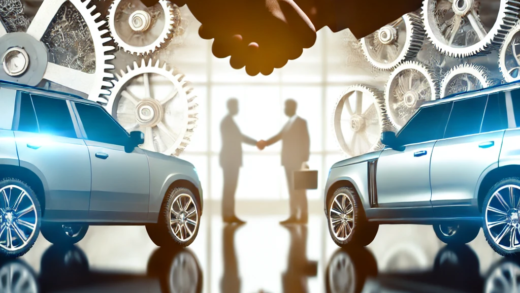
Volkswagen has been pushing its own VW.os platform through its software arm, CARIAD, but it has also recognized the value of partnerships. In 2024, VW announced a joint venture with Rivian to accelerate SDV development. The partnership combines Rivian’s expertise in zonal architectures and digital ecosystems with VW’s global scale and manufacturing power.
The collaboration is expected to deliver unified platforms capable of supporting a wide range of vehicles, from compact cars to premium EVs. It also reflects a broader industry trend: even the largest automakers see that SDV development is too complex and costly to tackle alone.
Toyota and the Arene Platform
Toyota has long been cautious with software innovation, preferring to focus on reliability. But the shift to SDVs has pushed the Japanese giant to rethink its approach. Its new Arene platform, which debuts on the latest RAV4, marks Toyota’s first major step toward a software-first strategy.
Arene will power everything from cockpit systems to advanced driver assistance, enabling Toyota to roll out new features after purchase. This flexibility allows the company to meet rising consumer expectations while maintaining its reputation for quality and dependability.
Mercedes-Benz and MB.OS
Mercedes-Benz is building its own platform, MB.OS, to unify the software foundation across all vehicle domains. MB.OS aims to create a seamless experience that integrates infotainment, safety, and autonomous driving features under one operating system.
Mercedes is also applying SDV thinking to commercial vehicles through a joint venture with Volvo, focused on trucks and buses. This demonstrates how SDV principles extend beyond passenger cars into broader mobility ecosystems, where uptime, efficiency, and safety are critical.
Geely and the GEA Architecture
In China, Geely has been bold with its GEA platform (Global Intelligent New Energy Architecture). GEA integrates hardware, software, artificial intelligence, and energy systems into a unified architecture. It supports multiple powertrains, from pure electric to hybrids, and embeds smart connectivity and driving capabilities.
By developing GEA, Geely is positioning itself not just as a manufacturer but as a tech innovator. The platform is designed to scale across brands and markets, underscoring China’s growing influence in the global SDV race.
Tesla: The Early Mover
While Tesla doesn’t always use the SDV label, its vehicles embody many of the principles. From the beginning, Tesla has relied on centralized computing, over-the-air updates, and software monetization. Features like Autopilot, Full Self-Driving, and performance boosts are delivered via software, making Tesla one of the earliest and most successful adopters of the SDV model.
Tesla’s approach set the benchmark that pushed legacy automakers to accelerate their own software strategies.
The Role of Tech Partners
Automakers are not going it alone. Suppliers and technology firms like Aptiv, Sonatus, NVIDIA, and Qualcomm provide critical software stacks, cloud platforms, and compute power. These partnerships are essential because SDVs require expertise in both automotive safety and advanced digital technology—a blend few companies master alone.
Challenges on the Road Ahead
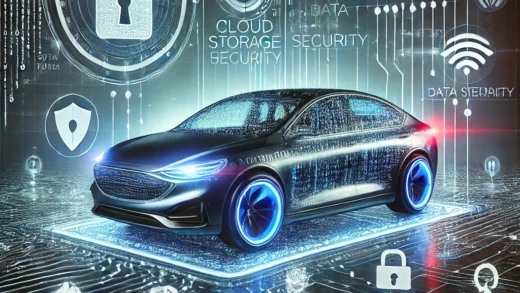
As promising as SDVs are, they also face challenges. Developing robust software platforms requires massive investment and long timelines. Transitioning from legacy hardware-heavy architectures to centralized systems is complex. Automakers must also ensure cybersecurity, data privacy, and regulatory compliance.
Perhaps the biggest challenge is consumer trust. Customers expect updates and subscriptions to add value, not feel like hidden fees. Automakers must balance monetization with fairness to avoid backlash, as seen in controversies over paywalled features.
A New Kind of Car
The shift to SDVs is not just about technology—it’s about redefining what a car means. Instead of being a static purchase, cars are becoming dynamic platforms that evolve with time. Leading automakers are approaching this future in different ways, from BMW’s modular Neue Klasse to VW and Rivian’s joint architecture, Toyota’s Arene, Mercedes’s MB.OS, and Geely’s GEA. Tesla, of course, continues to push the frontier.
While each path is unique, the destination is clear: cars shaped by software, constantly improving, and deeply integrated into digital ecosystems. For drivers, this means vehicles that are smarter, safer, and more adaptable. For automakers, it means a new era where code, not just horsepower, drives the business forward.