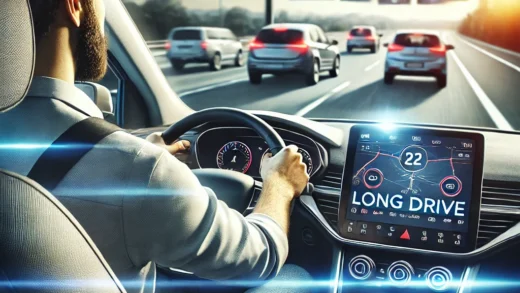
Urban mobility is entering a new chapter, one shaped by real-time data, predictive modeling and smarter infrastructure planning. At the center of this transformation is the “city digital twin” — a virtual mirror of a city that simulates traffic flow, energy demand, pedestrian movement, climate patterns and infrastructure behavior. Unlike traditional planning tools, digital twins are dynamic. They continuously update based on live inputs from sensors, connected infrastructure and mobility platforms.
This dynamic simulation gives city planners and mobility companies an unprecedented opportunity: the ability to test ideas in a virtual environment before deploying them in real streets. As electric vehicles, autonomous systems and robotaxi fleets become stronger market realities, city digital twins are emerging as one of the most important tools for predicting demand and optimizing infrastructure.

For automakers and tech-driven mobility companies — especially those with ambitions to launch robotaxi networks — the value of this technology is enormous.
Why Digital Twins Matter for Robotaxis
A robotaxi fleet cannot be deployed randomly across a city. To make such a system efficient and profitable, operators must understand when and where demand arises. City digital twins help solve this challenge by identifying mobility patterns with incredible precision.
These digital models can highlight areas with the highest passenger demand, forecast rush-hour traffic, and reveal how tourists, residents and commuters move throughout the day. By running simulations, companies can determine how many robotaxis to stage in each district, how often vehicles should reposition and how demand shifts during events or weather changes.
For a Tesla-style robotaxi service, this is crucial. Higher utilization means fewer idle vehicles and greater revenue per car. For cities, digital twin-assisted planning ensures that robotaxis support mobility goals without clogging streets or competing with public transportation. The result is a sustainable, scalable model that benefits both the operator and the city.
Smarter Charging Through Simulation
Robotaxi fleets bring powerful advantages, but they also demand dense, carefully placed charging infrastructure. Without thoughtful planning, EV fleets can overload grid capacity, cluster around limited charging hubs or create urban bottlenecks.
This is where digital twins truly shine. They allow planners to overlay mobility needs with energy consumption data, traffic density and grid limits. Simulations can reveal the optimal placement for fast chargers, how many chargers are needed in each zone and the best times for fleets to recharge without straining the grid.
In Europe and the U.S., where EV adoption is accelerating, digital twins can help cities avoid infrastructure overspending while ensuring that charging stations serve both fleets and private EV owners. For companies building large-scale EV services, the ability to predict energy needs and charger usage before breaking ground reduces risk and improves profitability.
Creating a Sustainable Robotaxi Ecosystem
Robotaxis work best when they operate in harmony with the broader transportation system. Digital twins play a critical role here, too. They allow cities and mobility companies to test scenarios such as road closures, dynamic tolling, bus lane access or autonomous-vehicle-only zones.
For example, a city could simulate how allowing robotaxis into a dedicated lane might shorten trip times or reduce congestion. Operators could model how charging site locations influence fleet downtime. Public agencies could test how robotaxis interact with pedestrians and cyclists in complex areas.
This ecosystem-level planning helps avoid conflicts and ensures that autonomous fleets truly improve urban mobility rather than simply adding more vehicles to the road.
Why This Matters for TSLA’s Long-Term Growth Story
Tesla has positioned autonomy, AI and energy infrastructure as pillars of its long-term strategy. Whether robotaxis become a widespread reality in the near future or gradually over time, Tesla’s growth narrative increasingly depends on two things: fleet-scale deployment and intelligent infrastructure expansion.
City digital twins directly support both. When a robotaxi fleet is optimized using digital simulations, utilization rates rise and downtime falls. This makes the robotaxi business model more financially compelling, strengthening the case for Tesla’s software-driven revenue.
Digital twins also help identify profitable locations for Tesla-style charging hubs, energy storage solutions and grid services. If Tesla can strategically place chargers and superhubs backed by data-accurate forecasting, the company can reduce installation costs while improving ROI on its infrastructure network.
Investors value predictability, and digital twins make scaling more predictable. They allow Tesla to plan growth based on simulations rather than trial and error, improving margins and reducing the risk premium on capital-intensive projects.
The U.S.–EU Landscape: A Growing Playground for Digital Twins
Both U.S. and European cities are adopting digital twin frameworks at increasing speed. Europe, in particular, is integrating them into long-term mobility and climate strategies, while many American metros are testing twins for traffic, emergency response and infrastructure planning.
This alignment creates ideal conditions for companies pursuing autonomous fleets. It also means that Tesla and its competitors may soon find themselves working hand-in-hand with cities to model robotaxi deployment, charging hubs and energy distribution.
As more cities embrace digital simulation, the barriers to launching autonomous EV fleets become lower, and the upside grows.
Looking Ahead: A Smarter Path to Autonomous Mobility
City digital twins are not just another urban tech trend. They are a foundational tool for building the next generation of mobility systems — autonomous, electric and optimized at scale.
These virtual environments reduce uncertainty, cut infrastructure costs, and allow companies to deploy fleets with confidence. For Tesla, they offer a strategic advantage that could accelerate robotaxi adoption and strengthen the company’s long-term growth story.
As digital twins become more widespread, the roadmap to large autonomous EV fleets becomes clearer, more efficient and more achievable. In the end, smarter cities may be the key that unlocks the robotaxi future.