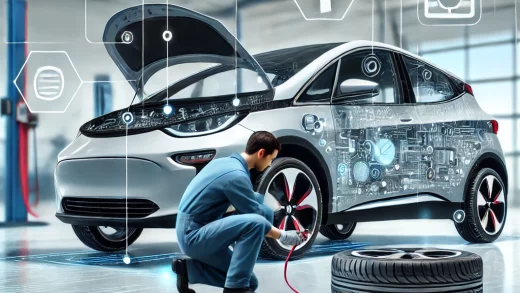
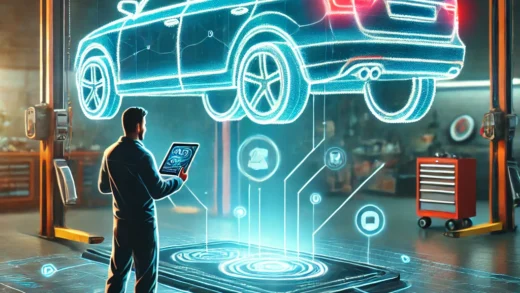
The automotive industry is going through one of the biggest transformations in its history. The shift toward electric, connected, and software-defined vehicles is changing what cars are, how they are built, and where value comes from. As a result, Tier-1 suppliers in the US and Europe — traditionally known for producing mechanical parts and hardware components — are rethinking their entire business models. Many are now pivoting toward software, electronics, and digital services. This shift is not simply a trend; it is becoming a necessity for survival in a market where software increasingly defines the driving experience.

Why Tier-1 Suppliers Are Moving Beyond Hardware
For decades, Tier-1 suppliers built the physical backbone of cars: braking systems, transmission parts, exhaust components, fuel systems, and structural materials. But modern vehicles have evolved far beyond machinery. Software now controls everything from infotainment and ADAS features to thermal management, power electronics, and predictive maintenance.
Electric vehicles have accelerated this change. Traditional internal combustion engine components are becoming less important, while electronics, sensors, battery systems, and software integration take center stage. Hardware alone can no longer deliver the value OEMs need. Instead, manufacturers rely on software to differentiate features, update systems remotely, and offer new capabilities long after the vehicle is sold.
This shift has forced Tier-1 suppliers to adapt. Many see an opportunity to claim new revenue by delivering software-based solutions: advanced driver-assistance software, cloud-connected services, battery-management algorithms, cockpit software, cybersecurity systems, and even subscription-based features. Instead of supplying once-and-done hardware, they are building ongoing service models that generate long-term value.
What the Pivot Looks Like in Practice
The pivot from hardware to software and services is reshaping how suppliers operate. Many are expanding their engineering workforce, hiring software architects, cloud developers, data scientists, and cybersecurity experts. Traditional manufacturing plants are being complemented by software labs, tech hubs, and innovation centers.
Product portfolios are also changing. Tier-1s that once focused on mechanical components are now building integrated electronic systems — for example, sensors paired with perception software for ADAS, digital cockpit controllers combined with user-interface platforms, or smart powertrain modules supported by cloud analytics.
Another major change is the introduction of service-based offerings. Instead of delivering a part and moving on, suppliers can now offer ongoing support, updates, and add-on features. For fleets, this may include remote diagnostics, predictive maintenance services, or energy-management tools for electric vehicles. For consumers, this could mean infotainment upgrades, digital personalization, and safety feature enhancements.
In some cases, suppliers are even reorganizing their corporate structures. Dedicated business units or spin-offs focused solely on software-defined mobility are becoming common, signaling a deep commitment to long-term transformation.
What Is Driving This Massive Change
The push toward software-defined vehicles is the biggest driver. OEMs want cars that can evolve after purchase, allowing them to deploy updates, fixes, and new features through over-the-air updates. This requires suppliers to deliver modules that integrate seamlessly with evolving software architectures.
Competitive pressure is another factor. Tech companies and startups have entered the automotive space with agile software-first mindsets. Traditional Tier-1 suppliers must adapt quickly to stay relevant. Hardware margins are shrinking, and OEMs are increasingly open to sourcing software or cloud components from non-traditional players.
Electrification also plays a role. EVs require fewer mechanical parts but significantly more computing power, sensors, control software, and data platforms. Suppliers built around combustion engines risk fading away unless they shift their focus to electronics and digital capabilities.
Finally, the value pool in the automotive industry is moving upstream. Software, data, and services generate higher margins and recurring revenues — something traditional hardware production cannot offer. By pivoting toward software, Tier-1 suppliers unlock new, more sustainable sources of growth.
Challenges in the Transition from Hardware to Software
Although the pivot is essential, it is not easy. The biggest challenge is talent. Software development requires different skills and workflows than mechanical engineering. Suppliers must compete with tech giants and startups for programming talent, cybersecurity specialists, and cloud engineers.
Another challenge is shifting from long development cycles to fast, iterative software updates. Hardware is built on precision and consistency, while software evolves constantly. Aligning these two worlds requires new processes, tools, and mindsets.
Business-model transformation also presents difficulty. Instead of relying on long-term hardware contracts, suppliers must learn to structure licensing agreements, recurring services, and support models. Profitability can become unpredictable during this transition.
Technical complexity adds further pressure. Integrating software across diverse vehicle platforms, ensuring cybersecurity, maintaining compatibility with multiple OEM ecosystems, and supporting vehicles throughout their lifecycle all require robust strategies and long-term commitments.
How Tier-1 Suppliers Can Succeed in Their New Role
Successful suppliers are embracing agility, building strong software cultures, and adopting collaborative models with OEMs, cloud providers, and technology partners. They focus on modular software platforms that can scale across different vehicle models. They invest in cybersecurity, recognizing that connected-vehicle safety is now a core expectation.
Many are pursuing hybrid offerings where hardware and software work as an integrated unit. For example, a power-electronics module paired with predictive health-monitoring software offers more value than hardware alone. Similarly, ADAS sensors combined with perception algorithms create a competitive advantage.
Suppliers are also strengthening digital services for fleets, such as analytics dashboards, remote maintenance tools, or performance-optimization platforms. These offerings build long-term customer relationships and open recurring revenue streams.
Conclusion: A New Identity for Tier-1 Suppliers
Tier-1 suppliers in the US and Europe are entering a new era. Their identity is shifting from component manufacturers to technology innovators. Software, electronics, and digital services are quickly becoming the foundation of their future success. This transition is challenging, but it also presents enormous opportunity.
As the automotive market embraces software-defined mobility, the suppliers who adopt a forward-looking mindset will shape the next generation of vehicles — smarter, more connected, more efficient, and continuously upgradeable. Those who evolve now will define the future of mobility for decades to come.