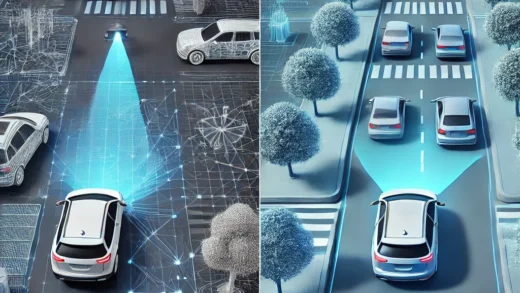
The automotive industry is undergoing a technological revolution, and digital twins are at the heart of this transformation. A concept once reserved for large-scale industrial applications, digital twins are now being embraced for personal cars, offering car owners unparalleled insights and convenience. Imagine having a virtual replica of your car that monitors its performance, predicts potential issues, and even guides repairs—all in real time. As we step into 2024, this game-changing technology is becoming increasingly accessible to drivers across the United States.
What Are Digital Twins for Personal Cars?
Digital twins are virtual replicas of physical objects, in this case, your car. These digital models use real-time data from sensors embedded in the vehicle to create a dynamic and accurate representation of its current state. From engine performance to tire pressure, every detail of your car’s health and functionality is mirrored in the digital twin.
This virtual counterpart isn’t just a static model. It evolves with your car, learning from its performance patterns and offering predictive insights. Think of it as having a virtual mechanic in your pocket, constantly monitoring your vehicle and alerting you to issues before they become costly problems.
How Digital Twins Work for Cars
The concept of digital twins relies on the seamless integration of advanced technologies. Sensors installed in various parts of the car collect data on critical components, such as the engine, transmission, brakes, and battery. This data is transmitted in real-time to the digital twin, which processes and analyzes it using artificial intelligence.
Through cloud connectivity, the digital twin can provide you with instant updates on your car’s performance via a smartphone app or dashboard interface. For instance, if your car’s battery is nearing the end of its lifespan, the digital twin can notify you well in advance and even recommend a replacement schedule.
The ability to simulate different scenarios is another powerful feature of digital twins. Before you head out on a long road trip, the digital twin can run a virtual check to identify any potential risks, such as low tire pressure or worn brake pads, ensuring you travel safely.
Virtual Repairs: A New Era of Car Maintenance
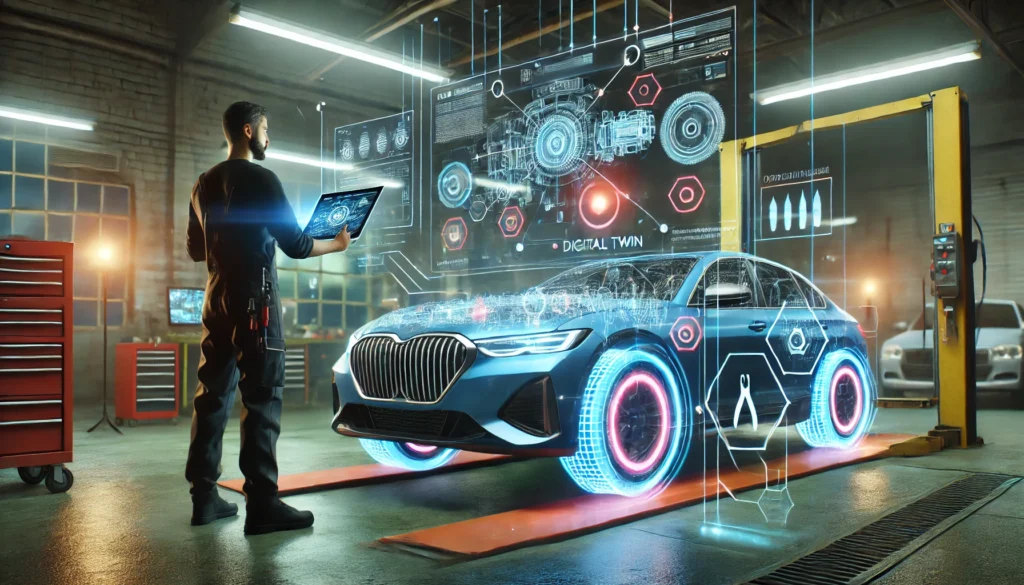
One of the most exciting applications of digital twins is their role in virtual repairs. In the traditional model of car maintenance, diagnosing and fixing issues often requires multiple trips to the mechanic, which can be time-consuming and costly. Digital twins streamline this process by providing precise diagnostics and even virtual repair guidance.
When an issue is detected, the digital twin can simulate potential repair scenarios and recommend the best course of action. Some car manufacturers are also integrating augmented reality (AR) tools that work with digital twins, allowing owners to perform simple repairs themselves with step-by-step visual instructions. For more complex issues, mechanics can use the digital twin to understand the problem before the car even arrives at the shop, saving time and ensuring accurate repairs.
In addition to repair diagnostics, digital twins enable predictive maintenance. Instead of waiting for something to break, the digital twin can predict wear and tear on critical components, allowing you to address issues proactively. This not only extends the lifespan of your vehicle but also saves money by avoiding major breakdowns.
Why Digital Twins Make Sense for US Drivers
In the United States, car ownership is deeply ingrained in daily life, with millions of drivers relying on their vehicles for commuting, travel, and recreation. The introduction of digital twins offers a host of benefits tailored to the needs of American drivers.
For those who frequently drive in urban areas, digital twins can help optimize fuel efficiency by analyzing driving patterns and suggesting adjustments. In rural or remote areas where access to repair shops may be limited, the ability to perform virtual diagnostics and simple repairs is a game-changer.
Digital twins also align with the growing demand for sustainability in transportation. By promoting better maintenance practices and improving fuel efficiency, they contribute to reducing emissions and the overall environmental impact of personal vehicles.
Challenges and Future Potential
While the potential of digital twins is immense, widespread adoption faces a few challenges. Ensuring the security of the data collected by these systems is paramount, as is developing affordable solutions that cater to a broad range of vehicle types. However, with major automakers and tech companies investing heavily in this space, these hurdles are being addressed rapidly.
Looking ahead, digital twins could integrate seamlessly with other emerging technologies, such as autonomous driving systems and smart city infrastructure. Imagine a future where your car’s digital twin communicates with traffic systems to optimize routes or integrates with home automation to schedule maintenance when it’s most convenient for you.
The Road Ahead
As we navigate 2024, digital twins for personal cars are poised to revolutionize how we drive, maintain, and interact with our vehicles. By offering real-time monitoring, predictive maintenance, and virtual repair capabilities, they empower car owners to take control of their vehicle’s health like never before.
Whether you’re a tech-savvy driver eager to explore the latest innovations or someone simply looking for a more efficient way to care for your car, digital twins offer a compelling glimpse into the future of automotive technology. The road ahead is smarter, safer, and more connected, and digital twins are leading the way.