Radar sensors are increasingly at the heart of modern ADAS and autonomous driving systems in the US and EU. Unlike cameras, radar can operate reliably in rain, fog, and darkness, making it essential for consistent vehicle perception. What makes radar more powerful today is the application of machine learning (ML) on radar “cubes,” transforming raw sensor data into actionable insights for safety and automation.
Radar cubes provide a three-dimensional view of the environment, capturing object distance, speed, and direction across a grid. This detailed representation is richer than traditional radar point detections, offering spatial patterns that ML algorithms can analyze. By interpreting these patterns, vehicles can classify objects more accurately and predict their motion, even under challenging conditions.
Automakers and Tier-1 suppliers are investing heavily in radar ML because it enables safer, more reliable systems. Fleets, commercial vehicles, and passenger cars benefit from this technology, which improves collision avoidance, lane-keeping, and pedestrian detection. In production vehicles today, radar ML is no longer experimental; it is a core part of ADAS roadmaps for 2026.
How Radar Cubes Work with Machine Learning
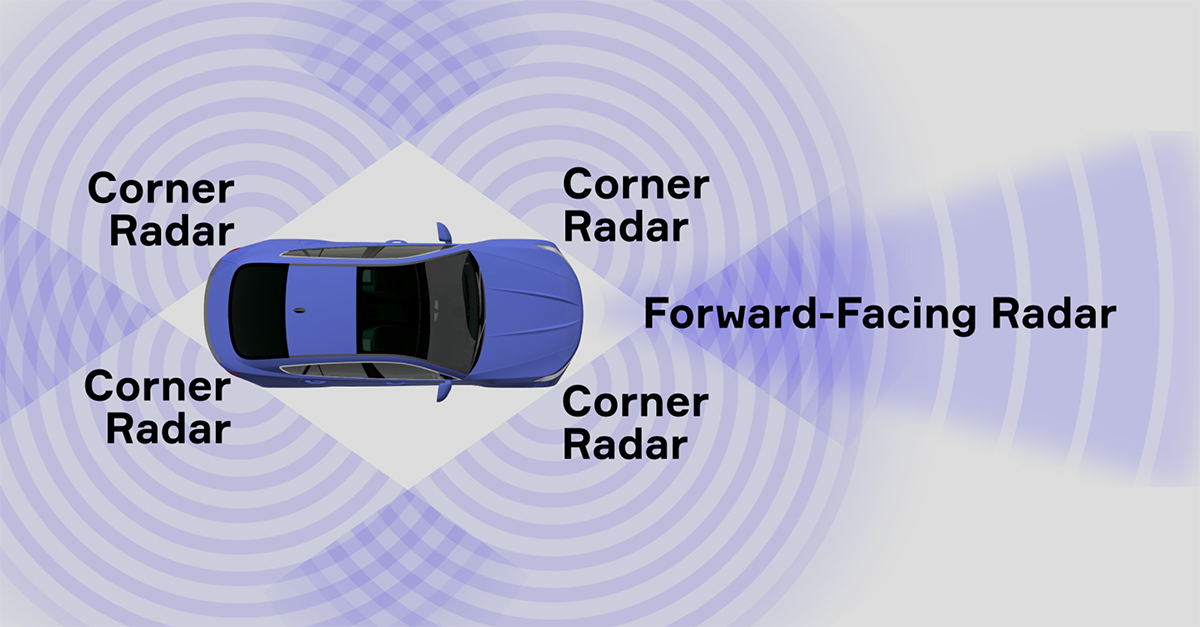
Radar sensors emit radio waves that bounce off objects, returning signals that reveal object distance and speed. Radar cubes organize this data across multiple dimensions, creating a dense representation of the vehicle’s surroundings. These cubes are highly detailed but also complex, requiring sophisticated processing to extract meaningful information.
Machine learning excels at analyzing high-dimensional data like radar cubes. Deep learning models can identify subtle patterns and distinguish between vehicles, pedestrians, cyclists, and other objects. They are trained on vast datasets covering a wide range of driving scenarios, ensuring robust detection even in rain, fog, and night conditions.
ML integration into production systems requires careful engineering. OEMs deploy optimized neural networks on vehicle compute platforms, allowing real-time inference directly on the car without cloud dependency. This ensures rapid response times for safety-critical functions, a must for ADAS features operating at highway speeds or in urban traffic.
Real-World Advantages of Radar ML
One of the key benefits of radar ML is its reliability under poor visibility. Cameras struggle in darkness or heavy rain, and LiDAR performance can be impaired in fog. Radar ML maintains detection accuracy in these conditions, providing a dependable foundation for autonomous and assisted driving systems. Fleets operating in diverse US and EU climates see improved safety and reduced operational risks.
Radar ML also enhances detection of vulnerable road users. Pedestrians and cyclists are often difficult to detect with traditional radar due to irregular shapes and small signatures. Machine learning leverages the full radar cube to identify these objects confidently, reducing collision risk in urban settings.
Another advantage is motion prediction. Radar inherently measures velocity, and ML algorithms can predict object trajectories more accurately than traditional methods. This improves the performance of automatic emergency braking, adaptive cruise control, and collision avoidance systems, allowing vehicles to respond proactively to complex traffic situations.
Production Deployments in 2026
Major automakers have now integrated radar ML into production vehicles. These systems combine radar cubes, neural network models, and sensor fusion to enhance perception capabilities. Sensor fusion ensures radar, cameras, and other sensors complement each other, creating a robust multi-modal understanding of the environment.
OTA updates play a crucial role in production deployment. ML models improve over time as vehicles collect real-world driving data. Fleets and individual vehicles receive software enhancements that refine detection and prediction capabilities without hardware changes, ensuring continuous improvement and adaptability to new scenarios.
Mixed fleet operations also benefit from radar ML. Delivery, logistics, and mobility services use radar-based perception to monitor safety, reduce collisions, and optimize driver coaching programs. Real-time radar insights help fleet managers track operational performance and implement preventative measures more effectively.
Challenges in Radar ML Implementation
Despite its advantages, radar ML faces challenges. Radar cube data is high-dimensional and noisy, requiring careful preprocessing and model optimization. Training datasets must cover rare events and edge cases to ensure system reliability in production vehicles across the US and EU.
Cost and computational demands are another consideration. ML processing on radar cubes requires powerful yet efficient vehicle compute platforms. Engineers must balance accuracy with latency and power consumption to meet safety standards without inflating costs for OEMs and fleet operators.
Validation is also critical. Regulators in both the US and EU demand rigorous testing of ML models to ensure predictable behavior. Automakers implement redundancy and fail-safe mechanisms to maintain perception even if radar data becomes ambiguous, ensuring robust and reliable ADAS performance.
What’s Working in Production
Radar ML systems that succeed in production combine several best practices. They optimize radar data preprocessing, use ML models tailored for real-time edge inference, and integrate seamlessly with sensor fusion frameworks. Continuous learning from fleet data allows models to adapt and improve over time.
OTA updates enhance radar ML performance without physical recalls, allowing vehicles to learn from new environments and weather conditions. This continuous improvement approach ensures detection accuracy and predictive capabilities evolve alongside real-world driving challenges.
Extensive real-world testing is also essential. Radar ML models are validated across urban, suburban, and highway conditions, in varying weather and lighting scenarios. This ensures systems perform reliably in the diverse driving environments typical of both the US and EU markets.
Looking Ahead
Radar ML is set to become a cornerstone of next-generation ADAS and autonomous driving platforms. As neural networks, edge computing, and sensor fusion continue to advance, radar ML will provide increasingly detailed environmental awareness, predictive safety, and operational efficiency.
For fleets, OEMs, and everyday drivers, ML on radar cubes offers robust perception under all conditions. By combining radar, cameras, and AI, vehicles can detect, classify, and predict object behavior with confidence. In 2026, radar ML is no longer a future concept—it is a practical tool enhancing safety, reliability, and performance on roads across the US and EU.