

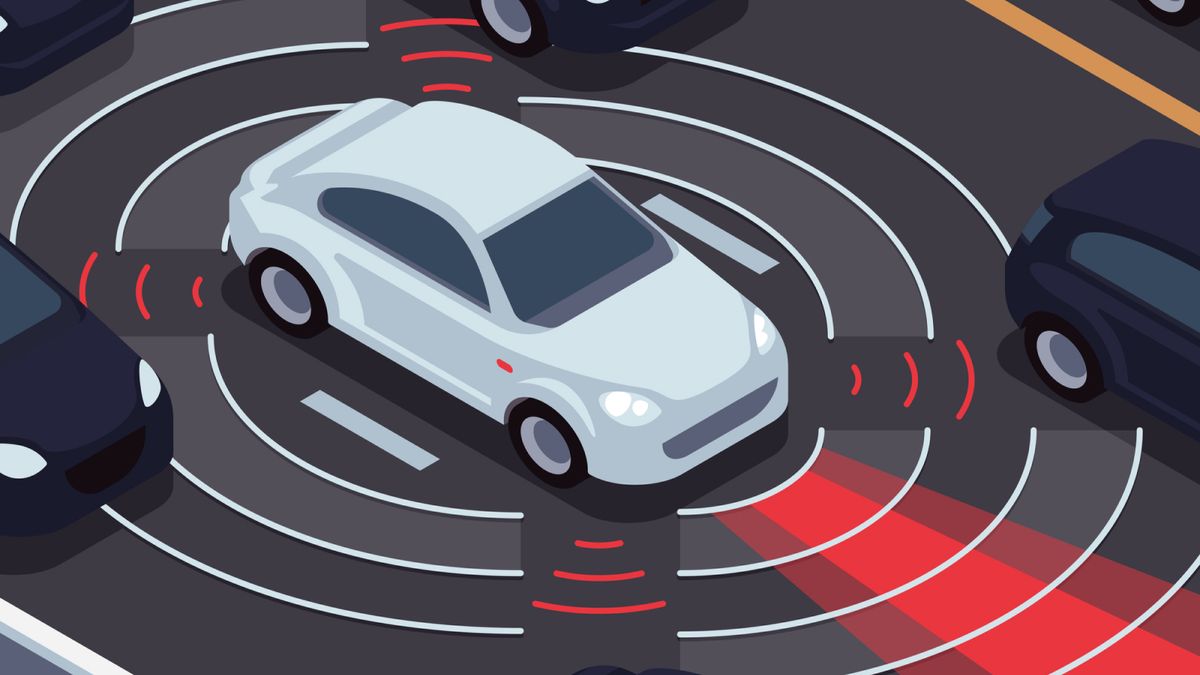
Radar sensors are a cornerstone of modern ADAS and autonomous driving systems in both the US and EU. They excel at detecting vehicles, pedestrians, and obstacles in rain, fog, and darkness, but they come with their own challenges. One of the most persistent issues is radar clutter, which occurs when the radar detects irrelevant reflections from surfaces like guardrails, fences, or road signs. Clutter can confuse perception systems and compromise safety if not properly managed.
Clutter can appear from both static and dynamic objects. Static clutter includes roadside infrastructure such as signposts, light poles, and building reflections. Dynamic clutter comes from moving elements like swaying tree branches, rain droplets, or snowflakes. These unwanted signals can lead to false positives, where the system mistakenly interprets them as hazards, triggering unnecessary alerts or braking events.
For engineers, clutter is more than just noise — it is a complex, real-world problem that can affect system reliability. In dense urban environments, highways, and adverse weather conditions, clutter rejection is essential to ensure radar-based perception remains accurate. Developing algorithms to separate true obstacles from clutter is a priority for automakers and Tier-1 suppliers.
Sources of Radar Clutter
Weather is one of the most common sources of radar clutter. Rain, fog, and snow scatter radar signals, creating echoes that do not correspond to actual objects. Heavy rain or snow can produce hundreds of small reflections around the vehicle, which the system must ignore while still detecting real hazards. Effective filtering is critical to maintain ADAS performance in all climates.
Roadside infrastructure also contributes to clutter. Bridges, guardrails, reflective road signs, and metallic fences can create strong radar returns that appear as false obstacles. In urban canyons, signals can bounce off buildings and vehicles, producing multi-path interference. Engineers need sophisticated algorithms to differentiate between these reflections and meaningful object returns.
Traffic density further complicates clutter management. On busy highways or city streets, multiple vehicles can create complex radar reflections. The radar receives both direct echoes from objects ahead and indirect reflections from surrounding vehicles, making it difficult to distinguish between true obstacles and false signals. Accurate clutter rejection ensures that ADAS systems respond appropriately without overreacting.
Techniques for Clutter Rejection
Signal processing is the foundation of clutter rejection. By analyzing Doppler, amplitude, and phase characteristics, radar systems can filter out unwanted reflections. Engineers design algorithms to detect patterns that are characteristic of clutter, separating them from genuine obstacles. These techniques are critical in ensuring safe and predictable vehicle behavior in diverse conditions.
Machine learning has become a key tool in modern radar clutter rejection. ML models trained on extensive datasets can identify subtle patterns associated with clutter versus real objects. These models are especially useful in complex environments, where static filters may fail. By combining traditional signal processing with AI, vehicles can more reliably interpret radar data and reduce false positives.
Sensor fusion also plays a significant role. Radar data is combined with camera, LiDAR, or ultrasonic inputs to validate detected objects. If a radar reflection is not confirmed by another sensor, the system can deprioritize it. This hybrid approach improves robustness, allowing radar to remain a reliable backbone of ADAS even in challenging weather or traffic conditions.
Clutter in Urban and Rural Environments
Urban streets pose unique challenges for radar clutter. Tall buildings, parked vehicles, and other reflective surfaces create multiple echoes that can confuse perception systems. Engineers simulate urban scenarios extensively but must validate algorithms with real-world data to ensure systems handle unexpected reflections accurately.
Rural highways present different clutter issues. Guardrails, roadside vegetation, and distant signposts can produce persistent false echoes. Unlike urban environments, rural roads may have fewer reference points for fusion algorithms, making accurate detection more difficult. Effective clutter rejection ensures that vehicles avoid false braking or unnecessary alerts at highway speeds.
Weather-induced clutter is also critical in real-world operations. Heavy snow or rain can overwhelm radar with reflections, forming a clutter “cloud” that obscures true obstacles. For fleets operating across diverse climates in the US and EU, robust algorithms that can handle these scenarios are essential for safety and operational efficiency.
Simulation and Real-World Testing
Simulation is a crucial tool for addressing radar clutter. Engineers can create virtual environments that mimic urban canyons, highway infrastructure, and adverse weather conditions. This allows them to test algorithms against extreme scenarios that may be rare in real life but critical for system reliability. Simulated testing accelerates development and reduces deployment risks.
Real-world data is equally important. Radar clutter varies across regions, from dense European cities to open US highways. Collecting and analyzing data from production fleets ensures that algorithms learn from genuine driving conditions. This combination of simulation and field data is essential to train AI models and validate clutter rejection strategies effectively.
Over-the-air software updates allow radar systems to evolve based on new insights from real-world performance. As fleets encounter previously unseen clutter scenarios, updated algorithms can improve perception accuracy without requiring hardware changes. This adaptability is key for maintaining safety and reliability over the vehicle lifecycle.
Why Clutter Rejection Matters
Clutter rejection is not a minor technical detail — it directly affects ADAS performance and road safety. Effective rejection reduces false positives, prevents unnecessary braking, and improves driver confidence in automated systems. Fleets benefit from smoother operations and lower accident risks, which translates into cost savings and higher trust in technology.
In both the US and EU, regulatory standards increasingly emphasize system reliability across diverse driving conditions. Radar systems that can manage clutter effectively contribute to higher safety ratings and enable broader adoption of ADAS features. Manufacturers investing in robust clutter rejection gain a competitive advantage in these markets.
Ultimately, radar clutter rejection is a critical challenge for automotive engineers. By combining signal processing, machine learning, sensor fusion, and extensive testing, they ensure that radar systems perform reliably in the messy realities of real-world driving. This work directly supports safer roads, more confident drivers, and the continued growth of advanced vehicle technologies across the globe.


