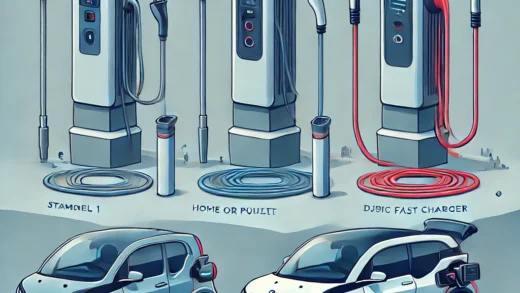
Electric vehicles continue to grow in popularity across the United States and Europe, but one challenge threatens to slow their momentum: charging deserts. These are areas—most often rural regions or long highway stretches—where reliable public charging options are few and far between. While major cities enjoy expanding charging networks, many rural communities remain underserved, leaving drivers uncertain about long-distance travel and daily usability. As EV adoption accelerates, bridging the gap between urban convenience and rural accessibility has become critical.

What Exactly Are Charging Deserts?
A charging desert refers to any location where EV drivers have limited or no access to public charging infrastructure, particularly fast chargers. These areas might have a few slow chargers at hotels or public buildings but lack high-power stations that can quickly recharge a vehicle within 20–40 minutes. Charging deserts are most common along long interstates, in rural towns and in remote regions where population density is low.
For EV owners living in these areas, charging becomes a logistical challenge. Home charging is an option for many, but not everyone has private parking or access to affordable home electricity. For travelers passing through, charging deserts can make road trips difficult to plan, especially during harsh weather when batteries drain faster. This lack of charging security creates “range anxiety”—a major barrier for people considering switching to an electric vehicle.
Why Rural Charging Matters for EV Growth?
If electric mobility is going to be truly universal, it must work for everyone—not just city dwellers. Rural America and rural Europe cover vast distances, and millions depend on cars for daily life. These drivers often travel longer distances than those in cities and need fast, reliable charging to make EV ownership practical.
Fast chargers are also crucial for interstate travel. A well-spaced network of high-power stations allows drivers to take long trips without detours or fears of running out of charge. In the U.S., where cross-country travel is part of the cultural fabric, long-distance charging is essential. In Europe, seamless charging between regions and countries is just as important, especially along major travel corridors.
Building out rural charging solutions is not just about convenience—it’s about making EVs viable for a larger percentage of the population. If charging deserts remain, EV adoption will slow, particularly in markets where people drive long distances or lack home charging.
The Barriers to Rural Fast-Charging Deployment
Fast-charging infrastructure requires far more power than a standard charger, and rural regions often struggle with limited grid capacity. Upgrading electrical lines and transformers can be expensive and time-consuming. Utility companies may hesitate to invest heavily in remote locations where demand starts low. The commercial challenge is also significant. Investors tend to prioritize cities and highways with high traffic, where chargers are more likely to be used frequently. Rural chargers may face slower return on investment, making early deployment financially unattractive.
Distance also plays a role. In some regions, the nearest suitable grid connection may be miles away, adding construction cost and complexity. Harsh climates found in parts of northern Europe or rural America can further slow down installations or reduce equipment lifespan.
Despite these challenges, there is growing momentum to bring high-speed charging to remote areas. Automakers, charging companies and governments are now prioritizing rural networks as part of national EV goals.
Innovative Fast-Charging Solutions for Rural Areas
To overcome the technical and commercial barriers, new solutions are emerging. One promising approach is battery-buffered charging. Instead of relying on a massive grid connection, these stations use large battery packs to store energy and then deliver it rapidly to EVs. This reduces the strain on rural grids and cuts installation costs.
Another trend is modular charging hubs built along main routes. These hubs can start small with only a few chargers and expand as demand grows. Co-locating chargers with existing businesses—such as gas stations, cafés or grocery stores—helps ensure foot traffic and supports operating costs.
Renewable energy integration is also gaining ground. Solar-powered chargers with battery storage can support rural stations where grid upgrades would be too expensive. While these setups may not always deliver ultra-fast charging, they help create reliable access points along underserved routes.
Governments in both the U.S. and Europe are investing heavily in rural charging infrastructure. Funding programs support fast-charging stations along strategic corridors, in underserved counties and at key travel junctions. This public investment is essential because early-stage rural infrastructure requires financial support until EV adoption grows.
What Drivers Can Expect Moving Forward?
The landscape is changing quickly. Over the next few years, U.S. interstate networks are expected to see more evenly spaced high-power chargers, while Europe continues building dense fast-charging networks across major travel routes. Rural towns are beginning to receive reliable public chargers, and automakers are increasingly partnering with energy companies to speed up deployment.
For drivers, this progress means long-distance EV travel will become easier and more predictable. Charging deserts will shrink as more stations come online, giving drivers the confidence to venture beyond city limits without worrying about finding the next charging point. Rural communities will also benefit economically, attracting travelers who stop to charge and spend time locally.
Final Thoughts
Charging deserts remain one of the biggest obstacles to widespread EV adoption, but solutions are rapidly emerging. With improved infrastructure, innovative charging technologies and strong policy support, rural fast-charging networks are expanding across the U.S. and Europe. As accessibility increases, EV ownership becomes more practical for drivers everywhere—not just those in major cities. Bridging the rural charging gap is not just a technical challenge; it’s a crucial step toward making electric mobility truly inclusive and future-ready.