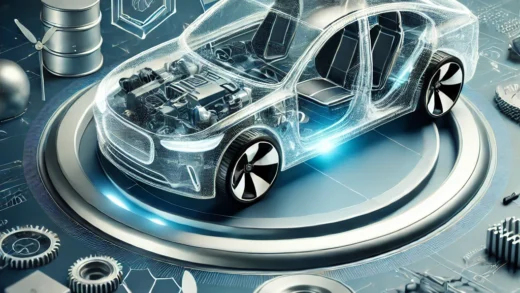
Across Europe, the way we think about driving is changing. Until recently, the most advanced assistance systems could help drivers stay in their lane or adjust speed, but the human behind the wheel was always in charge. That’s beginning to shift. Thanks to the EU ALKS Law, Europe has become one of the first regions in the world to legalize Level 3 autonomous driving — a level where cars can take full control under specific conditions, allowing the driver to momentarily disengage.
This is a landmark step for the European mobility ecosystem. It’s not science fiction anymore; it’s regulated reality. The new rules mean that under certain highway conditions, a car equipped with a compliant Automated Lane Keeping System (ALKS) can steer, accelerate, and brake on its own while maintaining safe distances from surrounding vehicles. The driver must remain alert but doesn’t have to constantly hold the wheel or focus on the road.

What the ALKS Law Actually Does?
The Automated Lane Keeping System framework, defined under UN Regulation No. 157, was developed by the United Nations Economic Commission for Europe (UNECE) and adopted by EU member states. It sets the technical and legal foundation for Level 3 automation.
At its core, ALKS allows a vehicle to handle all driving tasks on motorways and divided highways, where traffic moves in one direction and there are no pedestrians or cyclists. Initially, the law permitted autonomous operation at lower speeds in traffic jams, but recent amendments have expanded the limit to highway speeds — up to 130 km/h in certain conditions. This expansion has opened the door for long-distance autonomous travel on Europe’s busiest routes.
Under the regulation, cars must feature a driver monitoring system, cybersecurity protection, and a data recording unit that tracks when autonomous mode is active. These measures ensure accountability and safety, helping regulators and insurers determine what happened in case of an incident.
When ALKS is active, the car manages steering, acceleration, and braking — but it must always be ready to safely hand control back to the driver if conditions change. For example, if the weather worsens or traffic patterns shift, the system will prompt the driver to take over within a defined time window.
Why It’s a Big Deal for Europe?
This law represents a major turning point for European mobility policy. It effectively gives legal recognition to vehicles that can “drive themselves” under specific scenarios, something that had been missing from previous legislation.
For automakers, it means they can finally bring Level 3 features to market without waiting for separate national approvals. Companies like Mercedes-Benz, BMW, and Audi have already started rolling out ALKS-compliant systems. Mercedes even became the first manufacturer to get full certification for Level 3 hands-off driving on public highways under the ALKS framework.
For drivers, this change is just as revolutionary. The new law allows them to take their hands off the wheel and eyes off the road during defined periods — for example, while cruising in steady highway traffic. It’s a step closer to true autonomous mobility, where the car does more of the work, and the human focuses less on the grind of long drives.
For Europe’s policymakers, the ALKS regulation provides a unified, cross-border framework. Instead of every country making its own rules, the EU now has a shared standard for how Level 3 vehicles should behave and be certified. This harmonization ensures safety, simplifies approval processes for manufacturers, and helps create consistency across borders — a crucial advantage in the European single market.
The Challenges That Come with Autonomy
Despite its promise, Level 3 autonomy isn’t a “hands-off forever” situation. Drivers still need to remain available to take control when prompted. This introduces a new kind of driving behavior — one where humans are not constantly engaged but must stay alert enough to intervene when needed. It’s a complex balance, and regulators know that building public trust will take time.
Infrastructure readiness is another challenge. The ALKS system depends on clear lane markings, reliable signage, and stable network connectivity — conditions that are not uniform across all European highways. The expansion of digital road infrastructure and 5G connectivity will be key to enabling wider adoption.
Manufacturers must also comply with cybersecurity (UN R155) and software update (UN R156) regulations, ensuring that vehicles remain secure and up to date over time. These requirements make vehicle software development far more demanding but also ensure higher safety standards and reliability.
What It Means for Drivers and Manufacturers?
For European drivers, the ALKS law means they can soon buy vehicles capable of real, conditional automation. Cars will not only assist but actually take over — within limits. Imagine driving through heavy motorway traffic, and instead of constant stop-and-go fatigue, your car handles the task while you check a message or adjust your playlist.
For automakers, this marks the start of a new competitive era. Every major European manufacturer — from Mercedes and BMW to Volkswagen and Stellantis — is racing to offer Level 3 features. Those who succeed will gain a major advantage in a market increasingly defined by software and automation. It’s also an opportunity for Europe to show global leadership in safe, regulated autonomous mobility.
The Road Ahead
The EU ALKS law is more than just a regulatory milestone — it’s a sign that Europe is ready to embrace automation responsibly. By defining clear rules for Level 3 driving, the EU is ensuring innovation and safety progress hand-in-hand.
Looking ahead, the next step will be to expand beyond Level 3 to Level 4, where vehicles can handle all driving tasks within defined zones without human supervision. For now, Europe’s ALKS framework lays the foundation, balancing progress with prudence.
For European drivers, this means the car you buy tomorrow could handle much more than you ever imagined — safely, legally, and intelligently. The open road remains the same, but the way we drive it is being rewritten in code.