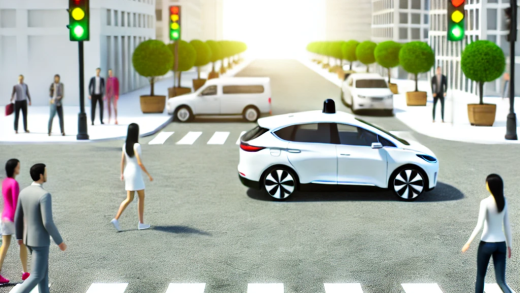
Buying a car has always been a big decision. People think about fuel economy, style, comfort, and price. But as vehicles become more like rolling computers, another factor now outweighs all the rest: trust. Around the world, consumers consistently say that their top concern isn’t just performance or design, but whether they can trust their cars to be safe, secure, and reliable. In this new age of connected and autonomous vehicles, trust has become the most valuable currency in the automotive industry.

Safety First: The Universal Priority
No matter where you go in the world, safety is always the number one expectation. Families want cars that protect them, drivers want technology that reduces accidents, and pedestrians want assurance that advanced systems won’t put them at risk.
This expectation has only grown stronger as cars have become more software-driven. When headlines appear about a self-driving car involved in a crash or an advanced driver-assistance system misreading a situation, consumer confidence takes a hit. Even if statistics show human error causes far more accidents, people remember the unusual failures of automated systems more vividly.
The emotional weight of safety sets it apart from other features. Buyers may overlook style flaws or even high maintenance costs, but they won’t compromise on safety. This makes safety not just an engineering challenge but also a communications one. Automakers must prove—clearly and consistently—that their vehicles can be trusted to keep people safe.
Data Privacy: The Invisible Worry
Modern cars don’t just drive; they collect data. Vehicles equipped with connected services log routes, monitor driving styles, record voice commands, and sometimes even use in-cabin cameras. While this data can improve navigation, performance, and convenience, it raises a critical consumer question: who controls it?
Studies have shown that concerns about data privacy are one of the biggest obstacles to wider adoption of connected features. Many consumers feel uneasy when they don’t know what information is being collected, how long it’s stored, or whether it’s being shared with third parties. The fear isn’t just abstract—people worry about being tracked, profiled, or even hacked.
In Europe, strict regulations such as GDPR give consumers more protections, but elsewhere, rules are often less clear. This makes transparency all the more important. Brands that can show they are treating consumer data with respect and giving drivers real control will stand out in a crowded market. Privacy is no longer a background issue; it is central to trust.
Reliability Over Time
A new car is a long-term investment, and consumers want assurance that features will continue to work years down the road. Reliability has always mattered for engines and brakes, but in a software-defined vehicle, it also applies to code, sensors, and connectivity.
A driver doesn’t just want the car to run well today—they want confidence that it won’t glitch after an update or stop supporting key features in five years. Over-the-air updates, modular software, and long-term support plans can help, but they also carry risks. A poorly executed software patch can cause more problems than it solves.
The global consumer mindset is clear: cars should improve with age, not become obsolete. Automakers that manage updates carefully and commit to ongoing reliability will earn stronger trust.
Different Regions, Shared Concerns
While safety, privacy, and reliability are global concerns, their emphasis varies by region. In Europe, consumers are particularly sensitive to data protection, shaped by strong regulations and public debates about digital rights. In North America, safety incidents involving semi-autonomous systems have kept trust in autonomy relatively low. In Asia, where tech adoption is often quicker, consumers may be more open to new features but still worry about long-term reliability and cost of repairs.
Economic context also matters. In price-sensitive markets, consumers worry about how much it will cost to fix or replace advanced sensors and whether service infrastructure can support complex vehicles. For them, reliability is tied directly to affordability.
Despite these nuances, the common thread is clear: without trust in safety, security, and durability, even the most advanced technologies struggle to win adoption.
How Automakers Can Build Trust?
Earning trust is not about slogans—it’s about action. Consumers expect transparency, accountability, and proof. Vehicles should explain their decisions, whether it’s why adaptive cruise control slowed down or why an autonomous system changed lanes. Transparency makes systems feel less like black boxes and more like reliable partners.
Third-party validation also helps. Independent safety tests, regulatory certifications, and clear reporting on failures give consumers confidence that promises aren’t just marketing.
When it comes to data, privacy must be treated as a feature, not a footnote. Allowing drivers to opt in, see what’s collected, and delete it if they choose sends a powerful signal of respect.
Finally, reliability must extend across the product’s life. Regular updates, long-term support, and clear service commitments reassure consumers that their investment will remain strong for years to come.
Why Trust Defines the Future of Mobility?
In the past, people chose cars for power, speed, or luxury. In today’s world, none of that matters if trust is missing. Whether it’s trusting a safety system to react correctly, trusting that personal data won’t be misused, or trusting that the car will still run reliably after years of updates, this concern is shaping the entire global industry.
Automakers are not just building vehicles anymore—they are building relationships. And those relationships live or die on trust. A sleek design or powerful motor may get someone to look, but trust is what makes them buy and stay loyal.
The message is simple: in the global marketplace, trust isn’t just one factor among many—it’s the foundation of all others. Without it, innovation stalls. With it, the road ahead is wide open.