In recent years, electric vehicles (EVs) have evolved from a niche innovation to a central pillar of global transportation strategies. But as the world races toward electrification, it’s not just automakers and engineers driving the momentum—geopolitics is now playing a major role in determining who leads and who follows in the EV competition.
From government subsidies and tariffs to raw material sourcing and tech partnerships, the battle over EV supremacy is becoming as much about diplomacy and economic power as it is about batteries and horsepower. For the U.S. and Europe, staying ahead in this new landscape means navigating a complex web of global relationships, trade tensions, and strategic alliances.

EVs as the New Arena for Global Influence
Electric vehicles are no longer just a clean energy solution—they’re a symbol of technological and economic leadership. Governments across the world recognize this, and are increasingly treating the EV sector as a strategic asset. As a result, policies related to EV manufacturing, battery supply chains, and charging infrastructure are deeply intertwined with foreign policy and national security concerns.
In the U.S., the Inflation Reduction Act and other federal initiatives have ramped up domestic production efforts, offering tax incentives for EVs built with American-made components. This is a direct move to reduce dependence on overseas suppliers, especially for critical minerals like lithium, cobalt, and nickel—many of which are sourced from countries with unstable political climates or under heavy Chinese influence.
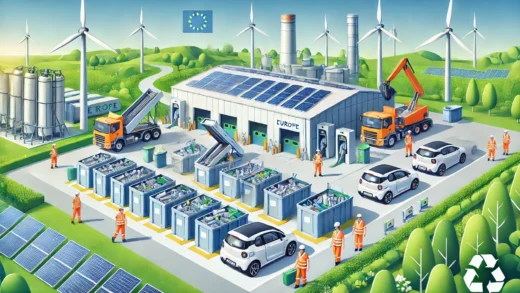
Europe has taken a similar stance with its Green Deal Industrial Plan, which prioritizes local manufacturing, sustainable energy, and battery independence. The European Union is aggressively pushing to build gigafactories, strengthen raw material supply lines, and create a homegrown EV ecosystem that’s resilient against global disruptions.
The China Factor: Innovation Meets Global Resistance
One of the most significant geopolitical players in the EV market is China. Not only is China the largest EV market in the world, but it also dominates key parts of the global battery supply chain. Chinese companies like CATL, BYD, and NIO are not just leading at home—they’re expanding aggressively into Europe and starting to eye the U.S. market.
This rise has triggered concern in Western countries, where fears about overdependence on Chinese technology are growing. In response, both the U.S. and the EU have taken steps to curb Chinese influence, introducing tariffs, launching trade investigations, and tightening restrictions on Chinese-made batteries and electronics.
These moves are creating a fragmented EV market, where access to certain technologies and materials is increasingly determined by where companies operate and which governments they partner with. For automakers in the U.S. and Europe, the challenge is clear: innovate fast, localize production, and secure reliable sources for essential materials—all while avoiding political pitfalls.
Supply Chains Under Pressure
One of the clearest ways geopolitics is influencing EV development is through supply chains. EVs require a wide range of raw materials that are often mined and processed in politically sensitive regions. For instance, the Democratic Republic of Congo produces over half the world’s cobalt, while China controls much of the global refining capacity for rare earth elements.
As tensions rise between global powers, the risk of supply chain disruptions is growing. This has led to a scramble for resource diversification. Both Europe and the U.S. are now investing in mineral exploration at home and in more politically aligned regions like Canada and Australia.
The geopolitical competition is also sparking interest in alternative technologies. Solid-state batteries, cobalt-free cathodes, and advanced recycling methods are getting more attention—not just for their technical benefits, but because they can reduce exposure to high-risk supply chains.
Trade Wars, Tariffs, and EV Pricing
Another way geopolitics is shaping the EV landscape is through trade policy. As countries seek to protect domestic industries and jobs, trade barriers are increasingly affecting the flow of EVs and components across borders. This impacts everything from the final price of a vehicle to which models are available in which markets.
For example, U.S. buyers looking at EVs from Chinese automakers may face higher prices due to tariffs or eligibility restrictions on tax credits. In Europe, growing concern over low-cost Chinese EVs has sparked debates around fair competition and the need to level the playing field for European automakers.
These trade dynamics are forcing brands to rethink their strategies. Instead of importing vehicles, many are considering local assembly plants or joint ventures to sidestep political and economic hurdles. It’s no longer just about engineering the best EV—it’s about building it in the right place, with the right partners.
National Security Meets Transportation Policy
It might seem surprising, but EVs are increasingly viewed as a national security issue. Governments are now treating automotive technology—especially software and data-driven systems—as critical infrastructure. That’s why questions around cybersecurity, digital sovereignty, and intellectual property protection are becoming central to EV policymaking.
European regulators are already putting data protection laws in place that affect how EVs handle driver information and connectivity services. Meanwhile, U.S. policymakers are raising concerns about vehicles with Chinese software potentially collecting sensitive data.
This is pushing Western automakers to take more control over their digital ecosystems. Expect to see more in-house software development, stricter security protocols, and tighter oversight over who supplies what in the EV tech stack.
Collaboration in a Divided World
Despite rising tensions, not all roads lead to conflict. There’s still room—and need—for collaboration in the EV space. Climate change doesn’t respect borders, and neither does technological innovation. Strategic partnerships between Western automakers and global battery producers, including some in China, are still ongoing. Cross-border research initiatives on green energy, EV charging standards, and emissions reduction continue to connect nations even amid geopolitical uncertainty.
Ultimately, no country can electrify its vehicle fleet in isolation. The future of EVs will be built through a careful mix of competition and cooperation, diplomacy and design, politics and performance.