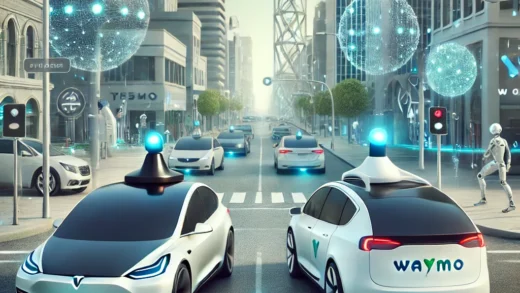
The global shift to electric vehicles (EVs) is no longer a vision of the future—it’s happening now. But while EV adoption grows across continents, the strategies fueling this movement are taking very different forms. In Europe, the focus has largely been on building a comprehensive charging infrastructure to support electric mobility. In contrast, China has placed its bets on smart car technology, making connected, intelligent vehicles the centerpiece of its EV strategy.
As the U.S. watches these developments closely and shapes its own electrification path, understanding the unique strengths of each approach reveals where the industry is heading—and how global players are redefining what it means to drive electric.

Europe’s Investment in EV Infrastructure
Europe has taken an infrastructure-first approach to the EV revolution. Recognizing that range anxiety and charging availability are two of the biggest hurdles for EV adoption, the European Union and individual governments have poured billions into building a reliable, accessible charging network.
From major highways to city centers, Europe is leading the way in public EV charging availability. The European Commission’s goal to have at least one charging station every 60 kilometers along major routes has led to dense coverage in many Western European countries. Fast-charging networks from companies like IONITY, Allego, and Shell Recharge are expanding quickly, enabling long-distance travel in electric vehicles with minimal stress.
Urban areas have also embraced residential charging solutions, integrating stations into apartment complexes and public parking zones. This investment isn’t just about convenience—it’s about creating the foundation for mass-market adoption of electric cars.
Beyond physical infrastructure, Europe has prioritized grid integration and green energy. Charging stations increasingly draw from renewable sources like wind and solar, ensuring that EVs on European roads are part of a broader zero-emissions ecosystem. In many regions, vehicle-to-grid (V2G) technology is also being explored, where EVs can feed energy back into the grid during peak times, adding stability to energy networks.
China’s Focus on Smart EVs and In-Car Technology
While Europe builds roads for EVs to drive on, China is focused on how EVs themselves are evolving. Chinese automakers are redefining what a car can be by integrating advanced software, AI, and data-driven features directly into the vehicle’s core systems.
Smart cars from Chinese brands like NIO, XPENG, and BYD are packed with futuristic tech. These vehicles offer autonomous driving assistance, facial recognition for starting the car, smart cabins with AI-powered voice control, and over-the-air software updates. It’s no longer just about transportation—it’s about experience.
China’s advantage lies in its rapid innovation cycles and seamless integration of hardware and software. Automakers often develop their own chips, operating systems, and cloud platforms, which allows for tight control over the user experience. For example, XPENG’s navigation-guided pilot system offers near-autonomous driving on highways, complete with lane changes and exit management, using real-time data and machine learning.
In urban areas, Chinese smart EVs interact with the broader “smart city” infrastructure. Cars can communicate with traffic lights, parking systems, and toll booths—automating tasks that still require human input in most parts of Europe and the U.S. This V2X (vehicle-to-everything) connectivity is a huge leap toward fully autonomous ecosystems.
The Contrast: Hardware vs Software, Speed vs Stability
The divide between Europe’s EV infrastructure focus and China’s smart car technology isn’t just geographical—it’s strategic. Europe is building the physical and regulatory environment for sustainable mobility, emphasizing quality, safety, and long-term durability. Meanwhile, China is pushing the boundaries of digital innovation inside the vehicle, creating a future where cars act more like rolling smartphones than traditional machines.
European automakers are starting to catch up in the software race, with brands like Mercedes-Benz, Audi, and Volvo investing in connected services, app-based interfaces, and advanced driver assistance systems. However, most still rely on suppliers for core digital systems and are limited by slower regulatory approval processes.
On the other hand, while China’s smart cars are incredibly advanced, their rollout across Europe has met some friction. Data privacy regulations in the EU—especially under GDPR—have created hurdles for importing vehicles that rely on real-time cloud processing and data collection. European regulators want transparency on how data is handled, stored, and used—something that’s still a gray area for many Chinese brands.
What This Means for the U.S. and Global EV Players
As both regions refine their approaches, the U.S. is watching closely. American automakers and tech firms are taking cues from both sides—building robust EV charging networks while also ramping up investment in smart features and autonomous driving.
Tesla, for instance, has become a bridge between both models, with its vast Supercharger network and industry-leading software capabilities. Other U.S. brands like Ford and GM are investing in software platforms, while working with infrastructure partners to improve national charging coverage. The Biden administration’s push for federally supported charging stations mirrors Europe’s strategy, while Silicon Valley’s influence on EV software is more in line with China’s path.
The challenge now is integration—how to combine a reliable, accessible charging infrastructure with vehicles that are smart, connected, and ready for the future. That’s where the next frontier of EV competition lies.
The Road Ahead: Can the Two Worlds Converge?
While Europe and China have taken different routes, both are heading toward the same destination: a fully electric, connected, and intelligent mobility ecosystem. The ideal EV future may be one that blends both strategies—pairing Europe’s robust infrastructure and renewable energy integration with China’s advanced software and in-vehicle intelligence.
Global automakers, especially those expanding across borders, will need to adapt to both mindsets. Cars built for Europe must prioritize compliance, user data protection, and grid compatibility. Those targeting China must offer personalized digital experiences, smart navigation, and seamless software updates.
Consumers, ultimately, will benefit from this competition. As the race intensifies, innovation will accelerate. EVs will become more accessible, more intelligent, and more deeply integrated into our daily lives—whether you’re charging at a wind-powered station in Norway or letting your car self-park in a smart garage in Shenzhen.