The roar of engines, the thrill of speed, and the skillful maneuvers of drivers have defined motorsports for decades. But what if the human element was removed entirely? Autonomous racing, where cars drive themselves using advanced artificial intelligence and sensors, is no longer just a futuristic concept—it’s happening now. From experimental races to dedicated championships, autonomous racing is challenging everything we know about motorsports, sparking debates across the US and Europe about whether machines can truly replace humans on the track.
The Emergence of Autonomous Racing
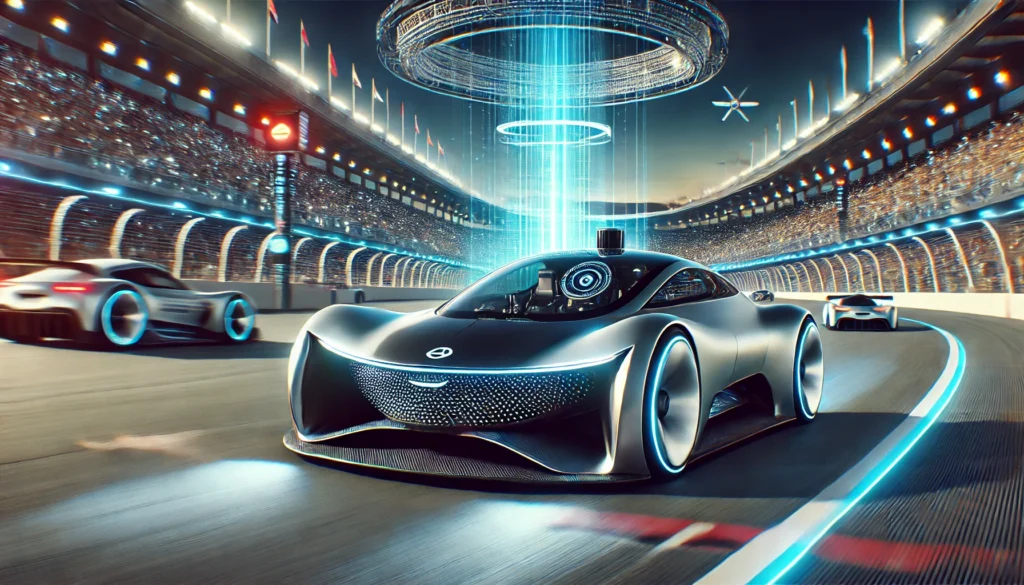
Autonomous racing is the natural evolution of advances in self-driving technology. Inspired by innovations in autonomous consumer vehicles, developers have brought this tech to the racetrack, pushing the limits of what AI can achieve. Events like the Roborace series and university-led competitions have showcased driverless race cars competing at high speeds, relying entirely on AI to make decisions in real time.
These races are not just about who finishes first. They’re about testing the boundaries of machine learning, precision engineering, and sensor technology. The challenges are immense, but the potential is equally groundbreaking.
How Autonomous Cars Compete
Unlike traditional racing, where human drivers rely on their instincts and split-second decisions, autonomous race cars depend on complex algorithms and real-time data analysis. These cars are equipped with a range of sensors, including lidar, radar, cameras, and GPS, to gather information about their surroundings.
The AI software processes this data to make critical decisions—when to accelerate, brake, or take the perfect racing line. In many ways, these cars “learn” as they race, using machine learning models to improve their performance with each lap.
This combination of advanced technology and raw speed creates a fascinating dynamic. Instead of focusing on the skill of a driver, autonomous racing shifts attention to the ingenuity of the programmers and engineers behind the scenes.
The Benefits of Autonomous Racing
One of the biggest advantages of autonomous racing is its ability to test cutting-edge technologies in a high-pressure environment. The innovations developed on the racetrack often find their way into consumer vehicles, improving safety and efficiency for everyday drivers.
For instance, the sensors and algorithms that enable autonomous race cars to navigate complex tracks at high speeds are directly influencing the development of advanced driver-assistance systems (ADAS). Features like collision avoidance, adaptive cruise control, and lane-keeping assist are becoming more sophisticated thanks to the lessons learned in autonomous racing.
Another benefit is safety. By removing human drivers from the equation, autonomous racing eliminates the risks of injury or death, making it possible to push the limits of speed and technology in ways that would be unthinkable in traditional motorsports.
The Challenges of Autonomous Racing
Despite its potential, autonomous racing faces significant hurdles. One of the biggest challenges is programming AI to handle the unpredictable nature of racing. While machines excel at precision, they often struggle with the nuances of competition, such as adapting to the strategies of other vehicles or responding to unexpected events.
There’s also the question of fan engagement. For many, the appeal of motorsports lies in the human element—the bravery, skill, and personality of the drivers. Autonomous racing, with its lack of human competitors, has yet to capture the same emotional connection.
Moreover, achieving true autonomy requires enormous amounts of data, computational power, and investment. These barriers mean that autonomous racing is still in its early stages, with a long road ahead before it can rival traditional motorsports in popularity.
A Complement, Not a Replacement
Rather than replacing traditional motorsports, autonomous racing is better viewed as a complement to it. While it might not replicate the drama and emotion of human-driven races, it offers a unique perspective on the future of mobility and technology.
Fans of autonomous racing appreciate its focus on innovation and its potential to solve real-world problems. By showcasing the capabilities of AI and self-driving technology, it’s helping to accelerate the adoption of autonomous vehicles in everyday life.
At the same time, traditional motorsports continue to thrive, offering the excitement and unpredictability that only human drivers can provide. Together, these two forms of racing are pushing the boundaries of what’s possible, ensuring that the motorsport landscape remains diverse and dynamic.
The Future of Autonomous Racing
As autonomous racing continues to evolve, its impact on both technology and society will become increasingly apparent. Competitions will grow more sophisticated, with faster, smarter cars navigating even more complex tracks.
Beyond the racetrack, the advancements made in autonomous racing are likely to accelerate the development of self-driving cars, making them safer, more efficient, and more reliable. For the US and Europe, where the push for autonomous vehicles is gaining momentum, the lessons learned in autonomous racing will play a crucial role in shaping the future of mobility.
Conclusion
Autonomous racing is redefining what motorsports can be. By combining speed, technology, and innovation, it offers a glimpse into a future where machines take the wheel. While it may never replace the thrill of human-driven races, it’s carving out its own niche, blending science and sport in a way that captures the imagination of fans and engineers alike.
As we watch these AI-powered cars battle it out on the track, one thing is clear: the journey of autonomous racing is just beginning, and the finish line is nowhere in sight. Whether they drive themselves to victory or not, these machines are already changing the game—for motorsports and for the world.