The world of motorsports has always been about pushing limits—speed, precision, and ingenuity. Over the years, technology has played a pivotal role in transforming race car performance. Today, one of the most significant advancements reshaping the track is artificial intelligence (AI). In the US and Europe, where motorsport culture is deeply ingrained, AI is driving a new era of strategy and performance that goes beyond the driver’s skill and car engineering.
How AI Enhances Race Car Strategy
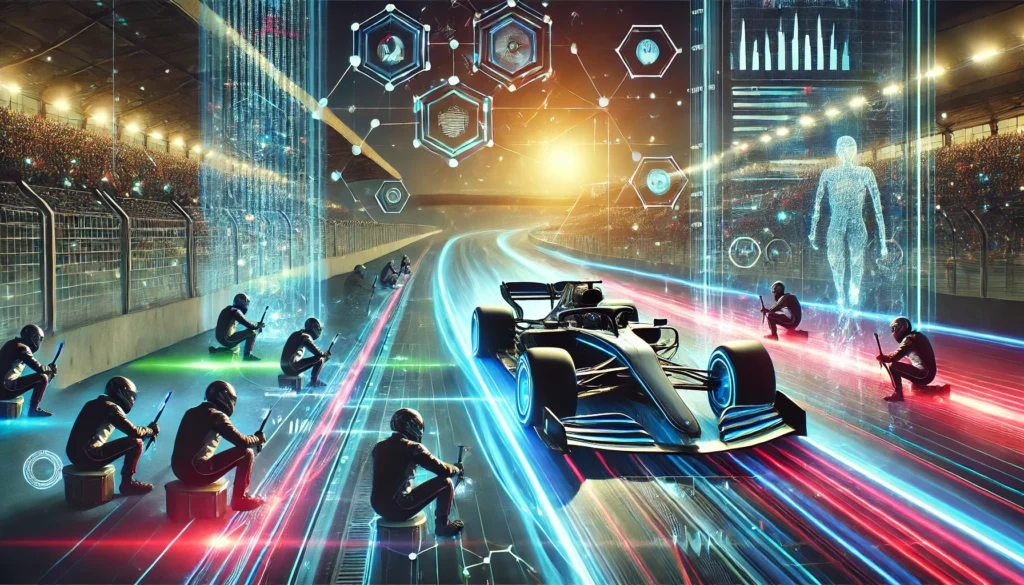
AI has introduced a level of precision and predictive capability that was once unimaginable. In race car strategy, milliseconds count, and AI’s ability to process vast amounts of data in real-time gives teams a competitive edge. From pre-race preparation to live decision-making during the race, AI algorithms analyze data points like tire wear, fuel consumption, weather conditions, and even driver behavior to optimize strategies.
One of the standout applications of AI is in predictive analytics. By analyzing historical race data and current conditions, AI can forecast potential scenarios, such as when a safety car might be deployed or how weather changes could affect lap times. This allows teams to prepare and adjust their strategies with unprecedented accuracy.
AI and Real-Time Decision-Making
During a race, split-second decisions can mean the difference between victory and defeat. AI systems excel at processing real-time telemetry data from the car and the track. This data feeds into sophisticated algorithms that provide instant insights, helping teams make informed decisions about pit stops, tire choices, and fuel management.
For example, AI can monitor tire degradation patterns and recommend the optimal moment for a pit stop to ensure maximum performance. Similarly, it can analyze competitors’ strategies and suggest countermeasures, giving teams a tactical advantage. With AI, race engineers are no longer relying solely on instinct or experience—they have the power of advanced data science at their fingertips.
AI’s Role in Simulations and Training
Pre-race simulations are another area where AI has transformed race car strategy. Before a car even hits the track, AI-powered tools simulate countless race scenarios to identify the best strategies for various conditions. This helps teams understand how different factors—such as track layout, weather, and competitor behavior—might impact their performance.
Drivers also benefit from AI in their training. Virtual environments powered by AI enable racers to practice on accurate simulations of tracks, complete with realistic conditions and AI-driven competitors. This not only sharpens their skills but also helps them familiarize themselves with the nuances of each circuit.
AI and the Human Touch
While AI has revolutionized motorsport strategy, it’s important to note that it complements rather than replaces human expertise. Race engineers and strategists still play a critical role in interpreting AI-generated insights and making the final calls. Drivers, too, rely on their instincts and experience to execute strategies on the track.
The partnership between AI and humans creates a powerful synergy. AI provides the data-driven insights, while humans bring creativity, intuition, and the ability to adapt to unforeseen circumstances. Together, they form a winning combination that pushes the boundaries of what’s possible in racing.
AI and the Push for Sustainability
Beyond strategy and performance, AI is also contributing to the broader goals of sustainability in motorsports. With the growing popularity of electric race cars and series like Formula E, AI plays a key role in optimizing energy usage and battery performance. Advanced algorithms monitor and manage energy consumption during races, ensuring that cars maintain peak efficiency while delivering high performance.
In traditional motorsports, AI helps teams improve fuel efficiency and reduce waste, aligning with global efforts to make racing more eco-friendly. This focus on sustainability resonates with fans in the US and Europe, where the push for greener technologies is shaping the future of the automotive industry.
The Future of AI in Motorsports
As AI technology continues to evolve, its role in race car strategy will only expand. Machine learning algorithms are becoming more sophisticated, allowing them to predict and adapt to an ever-wider range of variables. In the future, AI could enable fully autonomous race cars, with teams programming strategies into the cars themselves.
For now, AI’s biggest impact lies in its ability to empower teams and drivers to make smarter, faster, and more informed decisions. Whether it’s shaving milliseconds off a lap time or predicting the perfect pit stop moment, AI is proving to be a game-changer in motorsports.
Conclusion
AI is revolutionizing the way race car teams approach strategy, offering tools and insights that were once the stuff of science fiction. By harnessing the power of data and predictive analytics, teams can optimize performance, outsmart competitors, and deliver unforgettable racing moments.
In the high-stakes world of motorsports, where every decision matters, AI has become an indispensable partner. From the circuits of Europe to the iconic tracks of the US, this cutting-edge technology is driving motorsport into a thrilling new era—one where innovation and competition go hand in hand.
Whether you’re a fan cheering from the stands or an industry insider shaping the future of racing, there’s no denying the transformative impact of AI. The race isn’t just about speed anymore—it’s about intelligence, and AI is leading the charge.