The thrill of motorsport has long been fueled by roaring engines and the unmistakable scent of burning fuel. For decades, gas-powered race cars have dominated the track, defining the golden age of racing with their speed, sound, and raw power. However, the emergence of electric race cars has sparked a new debate. With quieter engines and cutting-edge technology, they’re reshaping the future of competitive racing. So, which one comes out on top—electric or gas-powered race cars? Let’s dive in.
Speed and Performance: A Battle of Power
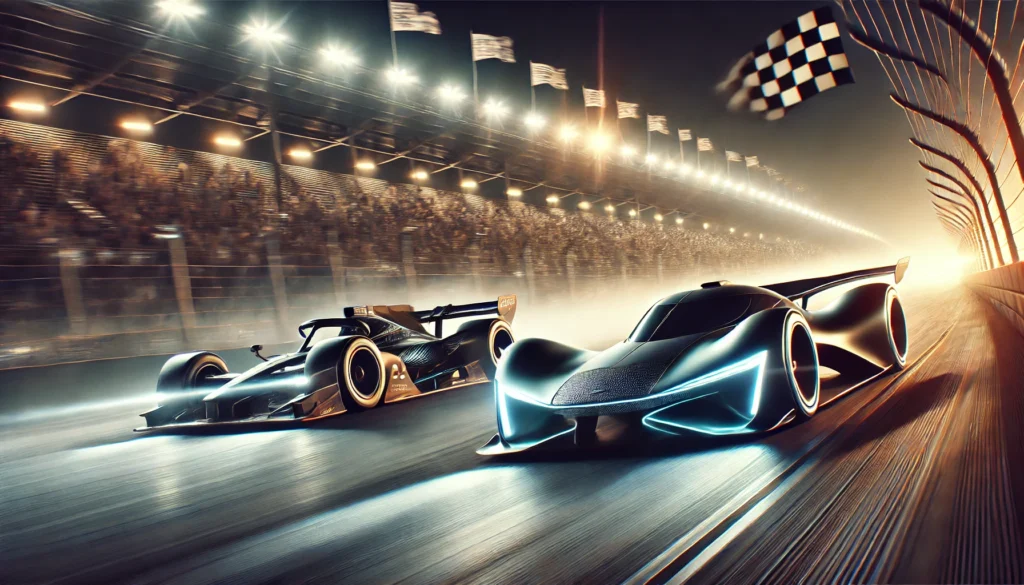
Speed is the essence of racing, and both electric and gas-powered race cars bring their A-game. Gas-powered vehicles, equipped with internal combustion engines, are renowned for their high top speeds and exhilarating acceleration. Their raw mechanical output provides a visceral thrill that has captured the hearts of racing fans for generations.
Electric race cars, on the other hand, deliver instant torque, providing rapid acceleration right off the line. Unlike traditional engines that take time to build power, electric motors can achieve incredible speed in just seconds. In some cases, electric race cars are even faster than their gas-powered counterparts during short sprints, although they may not yet match the endurance of gas cars over long distances.
Technology and Innovation: Pioneering the Future
Gas-powered race cars rely on decades of mechanical refinement, with advancements in aerodynamics, fuel efficiency, and engine optimization. These vehicles are a testament to engineering excellence, continually evolving to push the limits of what’s possible.
Electric race cars, however, are built around groundbreaking technology. Innovations in battery systems, energy recovery, and software optimization give them a unique edge. Regenerative braking, for instance, captures energy lost during deceleration and feeds it back into the battery, enhancing efficiency. Electric cars also rely heavily on software, with algorithms fine-tuning performance in real-time. This makes them a showcase for the future of both motorsport and everyday driving.
Sustainability: The Green Revolution
When it comes to sustainability, electric race cars leave their gas-powered counterparts in the dust. Gasoline engines, while powerful, produce carbon emissions that contribute to pollution and climate change. In a world increasingly focused on sustainability, this is a significant drawback.
Electric race cars, by contrast, operate with zero tailpipe emissions, making them an environmentally friendly alternative. Many racing series, such as Formula E, go a step further by using renewable energy to power their events, ensuring a minimal carbon footprint. This commitment to sustainability resonates with a growing audience of eco-conscious fans and aligns with the broader push toward a greener future in the US and Europe.
Sound and Spectacle: The Emotional Connection
There’s no denying the emotional connection fans feel with the thunderous roar of a gas-powered race car. The sound of a finely tuned engine reverberating through the grandstands is part of what makes traditional motorsport so captivating. For many enthusiasts, it’s not just about speed—it’s about the visceral experience.
Electric race cars, in contrast, are eerily quiet. While this might initially seem like a drawback, it has its own appeal. The absence of engine noise allows fans to hear other elements of the race, such as tire squeals and the whoosh of air as cars speed by. This quiet performance also makes electric racing more accessible in urban environments, where noise restrictions might otherwise prevent events from taking place.
Costs and Accessibility: Breaking Down the Barriers
Gas-powered racing has a reputation for being expensive, with high costs for fuel, maintenance, and logistics. The complexity of internal combustion engines adds to these expenses, making it a sport often reserved for elite teams and manufacturers.
Electric race cars, while not without their costs, have the potential to make motorsport more accessible. Electric motors are simpler and require less maintenance than traditional engines, reducing operational costs over time. As battery technology continues to improve and scale, the cost of entry for teams is expected to drop, opening the door for new participants.
The Verdict: It’s Not Just About Winning
Choosing a winner between electric and gas-powered race cars isn’t as straightforward as it might seem. Each offers unique advantages, catering to different aspects of motorsport. Gas-powered cars provide a nostalgic, high-octane experience that celebrates the history of racing. Electric race cars, meanwhile, represent the future, combining sustainability with cutting-edge innovation.
Ultimately, the real winner is the audience. Whether you’re a fan of the classic roar of internal combustion engines or the sleek, futuristic appeal of electric vehicles, there’s never been a more exciting time to be a motorsport enthusiast. The coexistence of these two technologies ensures that racing will continue to evolve, offering something for everyone.
As the automotive world accelerates toward electrification, the rivalry between electric and gas-powered race cars isn’t just a competition—it’s a collaboration driving the entire industry forward. Both are essential in their own way, pushing boundaries and inspiring innovation that benefits not only racing but also the cars we drive every day.
Whether you’re cheering from the stands or following the latest developments online, one thing is certain: the race to the future is already underway, and it’s electrifying.