The world of freight transport is on the brink of a revolution, with automated road trains emerging as a groundbreaking solution to some of the industry’s biggest challenges. In Europe, these driverless truck convoys are becoming a reality, promising to enhance efficiency, reduce costs, and minimize environmental impact. As the transportation sector evolves in 2024, the concept of automated road trains is not just futuristic—it’s a game-changing innovation that could redefine how goods are moved across the continent.
While Europe leads the way in adopting this technology, the United States is also exploring its potential. However, the two regions are taking distinct approaches, shaped by their unique geographies, infrastructure, and regulatory landscapes.
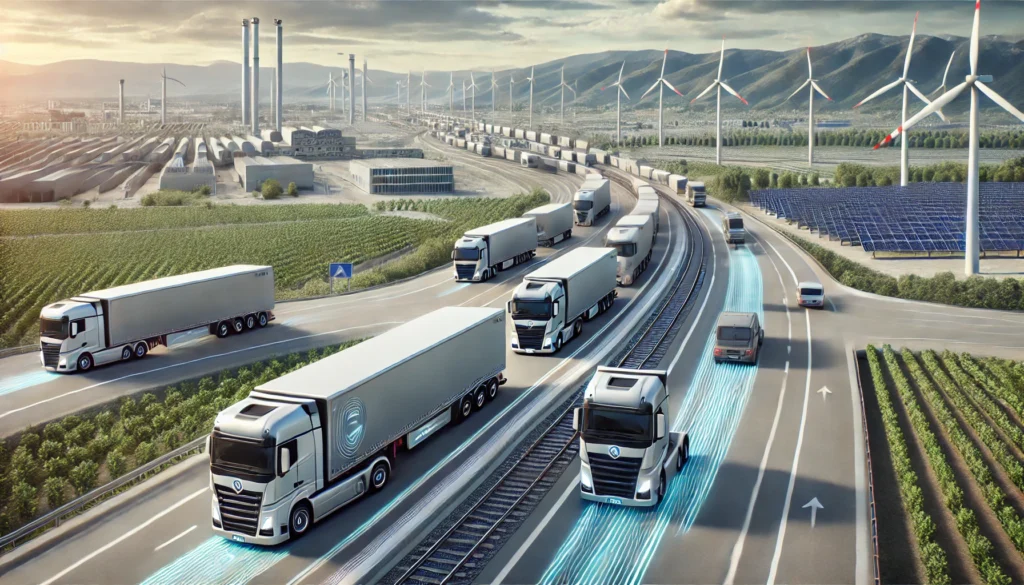
What Are Automated Road Trains?
Automated road trains, also known as truck platooning, involve a convoy of semi-autonomous or fully autonomous trucks traveling together in close formation. Using advanced technologies like vehicle-to-vehicle (V2V) communication, artificial intelligence, and adaptive cruise control, these trucks operate as a synchronized unit. A lead vehicle sets the pace, while the following trucks replicate its movements with precision, reducing the need for individual drivers.
The benefits of road trains are significant. By reducing drag through close formation, they improve fuel efficiency and lower greenhouse gas emissions. Automation also enhances safety by minimizing human error, a leading cause of road accidents. For freight companies, the technology promises substantial cost savings and increased operational efficiency.
Europe’s Push for Automated Freight Solutions
Europe is at the forefront of automated road train adoption, driven by its commitment to sustainability and innovation. The European Union has launched several initiatives to promote truck platooning, including large-scale trials involving major logistics companies and vehicle manufacturers.
The continent’s dense network of highways and harmonized regulations make it an ideal testing ground for this technology. Countries like Germany, the Netherlands, and Sweden are leading the charge, with successful trials demonstrating the viability of automated road trains. These projects highlight Europe’s ability to adapt its infrastructure to accommodate new technologies, ensuring seamless integration with existing road networks.
In addition to efficiency, Europe’s focus on sustainability is a driving factor. Automated road trains align with the EU’s ambitious goals to reduce carbon emissions in the transport sector. By optimizing fuel consumption and transitioning to electric or hydrogen-powered trucks, this technology supports the continent’s broader environmental objectives.
The US Perspective: Challenges and Opportunities
In the United States, the adoption of automated road trains is gaining momentum, but the approach differs from Europe’s. With its vast distances and diverse road conditions, the US presents unique challenges for implementing truck platooning. However, these challenges also offer opportunities to innovate and tailor the technology to meet the country’s specific needs.
Companies like Tesla, Embark, and TuSimple are pioneering automated freight solutions, testing autonomous truck systems across highways in states like Texas, Arizona, and California. These trials demonstrate the potential for long-haul automation to address driver shortages and improve supply chain efficiency.
Regulatory differences across states remain a significant hurdle in the US. Unlike Europe, where cross-border standardization facilitates adoption, the US must navigate a patchwork of state-level regulations. However, federal initiatives and partnerships between the government and private sector are helping to create a framework for the widespread deployment of automated freight technology.
Advantages of Automated Road Trains
The advantages of automated road trains extend beyond cost savings and environmental benefits. For freight companies, the technology reduces dependency on drivers, addressing the ongoing driver shortage that has disrupted supply chains globally. It also enhances reliability, with automated systems capable of operating around the clock without the limitations of human fatigue.
From a sustainability perspective, automated road trains significantly reduce fuel consumption by optimizing driving patterns and maintaining consistent speeds. This not only lowers emissions but also helps companies meet increasingly stringent environmental regulations.
For consumers, the benefits trickle down in the form of more efficient supply chains. Faster, more reliable freight transport means reduced delivery times and potentially lower costs for goods.
The Road Ahead
As automated road trains become a reality, both Europe and the US have significant opportunities to shape the future of freight transport. Europe’s collaborative, sustainability-focused approach serves as a model for integrating advanced technologies into established systems. Meanwhile, the US’s vast landscape and entrepreneurial spirit provide a platform for large-scale innovation and testing.
The next decade will likely see automated road trains transition from trials to mainstream adoption, driven by advances in AI, connectivity, and energy efficiency. Collaboration between governments, manufacturers, and logistics companies will be crucial to overcoming regulatory and infrastructural challenges.
Conclusion
Automated road trains are more than just a technological breakthrough—they are a solution to some of the most pressing issues in freight transport. By improving efficiency, reducing emissions, and enhancing safety, this innovation is paving the way for a smarter, greener future.
Whether in the tightly connected highways of Europe or the expansive interstates of the US, automated road trains are poised to redefine the way goods move across regions. As we look ahead, it’s clear that the road to the future is automated, sustainable, and transformative.