The dream of transforming urban mobility has always captured the imagination of city planners, engineers, and futurists alike. As cities in the US and Europe face mounting challenges like traffic congestion, pollution, and the inefficiency of traditional transportation systems, one innovation is emerging as a game-changer: VTOL, or Vertical Take-Off and Landing technology.
VTOL vehicles, often referred to as flying cars or urban air taxis, are not just a vision of science fiction anymore. They are on the brink of becoming a practical solution for urban transportation, bringing speed, convenience, and sustainability to the skies above crowded cityscapes.
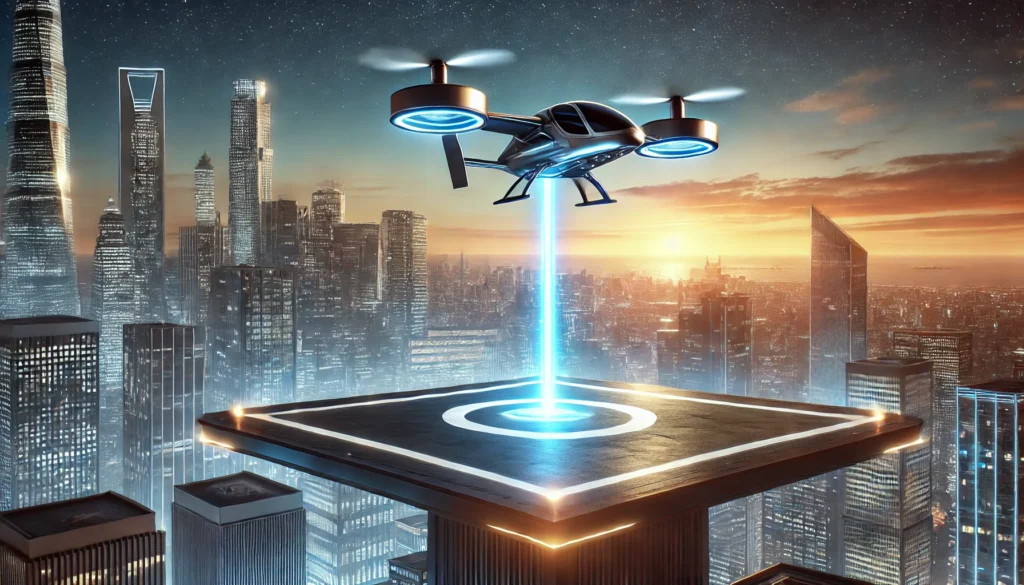
What Is VTOL and Why Does It Matter?
VTOL refers to aircraft that can take off, hover, and land vertically without the need for long runways. These vehicles come in different forms, from fully electric models (eVTOL) to hybrid-powered systems. What sets VTOL apart is its potential to revolutionize urban transportation by bypassing road congestion and offering a faster alternative to ground-based travel.
Imagine living in a busy metropolis where your daily commute takes hours. Now, picture boarding a VTOL air taxi that whisks you to your destination in a fraction of the time. This is the promise of VTOL: reshaping the way people move in cities while reducing stress and improving overall quality of life.
Addressing Urban Congestion and Sustainability
Cities in the US and Europe are grappling with worsening traffic congestion. Traditional infrastructure, including roads and public transit systems, often struggles to keep pace with growing populations and increasing vehicle numbers. VTOL vehicles offer a fresh perspective by taking transportation off the ground and into the skies.
One of the most appealing aspects of VTOL is its potential to reduce environmental impact. Many VTOL vehicles, particularly eVTOLs, are designed with sustainability in mind, using electric propulsion systems to eliminate emissions. This is especially significant for cities in Europe, where stringent environmental regulations demand cleaner transportation solutions.
By combining quiet operation with zero-emission technology, VTOL vehicles promise to meet urban mobility needs without contributing to noise pollution or air quality concerns. This aligns perfectly with the sustainability goals set by both governments and private sectors in these regions.
Speed, Efficiency, and Connectivity
Time is one of the most valuable resources in modern urban life, and VTOL vehicles are poised to give people more of it. With the ability to bypass ground traffic, VTOLs drastically reduce travel times for commuters. A trip that might take an hour by car can often be completed in minutes using a VTOL vehicle.
Beyond speed, VTOL technology enhances connectivity by linking key urban hubs. For instance, busy airports, downtown business districts, and suburban areas can be seamlessly connected via a network of VTOL routes. This integrated approach to urban mobility could revolutionize how people travel for work, leisure, and everything in between.
Pioneering Companies in the VTOL Revolution
The VTOL landscape is teeming with innovation, with startups and established aviation companies leading the charge. In the US, companies like Joby Aviation and Archer Aviation are developing advanced eVTOL designs that prioritize passenger safety, noise reduction, and sustainability. Europe is also home to leaders like Volocopter and Lilium, which are building sleek, efficient vehicles tailored for urban air mobility.
These companies are not only developing cutting-edge VTOL vehicles but also working closely with regulators to ensure their solutions are safe, scalable, and aligned with urban infrastructure. Partnerships with city planners and transportation authorities are key to integrating VTOL systems into existing networks.
Overcoming Challenges and Gaining Public Trust
While the potential of VTOL is immense, there are challenges to overcome before the technology becomes mainstream. Regulatory frameworks need to be developed to address air traffic control, safety standards, and urban airspace management. Building the necessary infrastructure, such as vertiports for take-offs and landings, is also crucial.
Public trust is another essential factor. People need to feel confident in the safety, reliability, and affordability of VTOL transportation. The aviation industry is addressing these concerns through rigorous testing, transparent communication, and collaborative efforts with stakeholders.
The Future of Urban Mobility
The introduction of VTOL vehicles represents more than just a technological leap—it’s a shift in how cities are designed and experienced. As the technology matures, VTOLs have the potential to transform urban environments by reducing dependence on cars, minimizing traffic congestion, and creating more efficient, sustainable transportation systems.
In both the US and Europe, the future of urban mobility is taking flight. With investments pouring into research, development, and infrastructure, the day when VTOL vehicles become a common sight in our skies is drawing closer. These vehicles will not only redefine how we move but also improve the way we live in increasingly crowded urban areas.
The VTOL revolution is a thrilling glimpse of what’s to come. As we prepare for this new era of transportation, one thing is clear: the skies are opening up to a world of possibilities, and VTOL technology is leading the way. With a focus on sustainability, speed, and innovation, the future of urban mobility has never looked so bright.