

Tesla’s Full Self-Driving (FSD) technology has made waves since its inception, and with each new release, it continues to evolve. The latest update, FSD 13, introduces a host of improvements and refinements that take Tesla’s autonomous driving closer to reality. For both new and experienced Tesla owners, this release is packed with intriguing features and advancements. Let’s dive into the key aspects of Tesla FSD 13 and see how it’s shaping the future of driving.
What’s New in Tesla FSD 13?
With Tesla FSD 13, the company has focused on making the system more refined and capable. This release brings notable improvements in the overall driving experience, making the car smarter and more intuitive. One of the most significant updates is the enhancement of Tesla’s ability to handle complex driving situations. The software now better handles intricate intersections, lane changes, and real-time traffic scenarios, reducing the need for human intervention in more varied conditions.
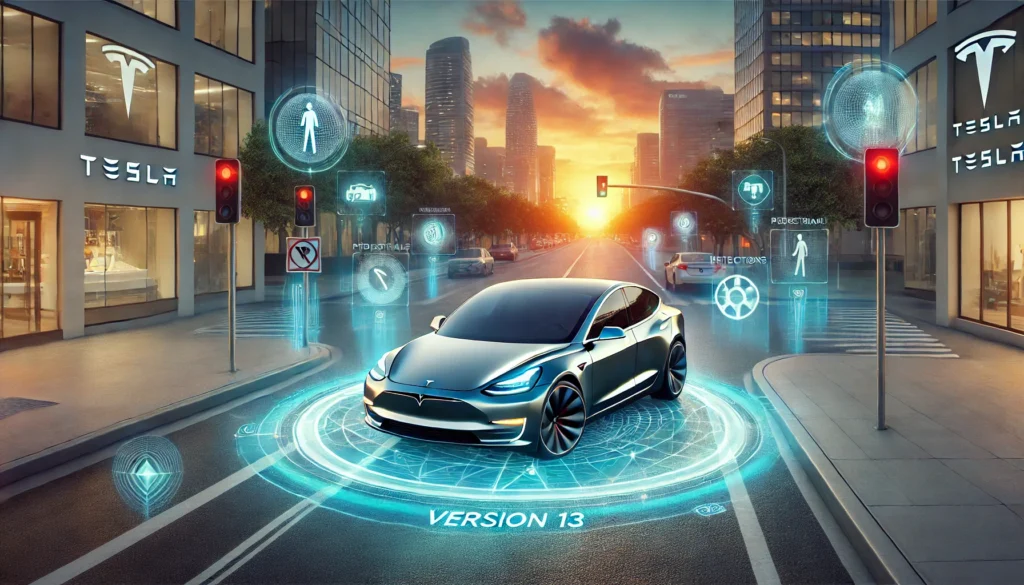
Tesla has also made strides in improving the system’s ability to recognize pedestrians, cyclists, and other road users, making it safer for everyone on the road. The FSD 13 update includes better object detection and decision-making algorithms, which means the car can make quicker and more accurate decisions based on its surroundings.
Enhanced Autonomy on Urban Roads
One of the key areas of focus for Tesla FSD 13 has been improving the car’s performance on urban roads. While previous iterations of FSD excelled on highways, urban environments presented more challenges due to the unpredictability of traffic, pedestrians, and road conditions. However, Tesla FSD 13 has made remarkable progress in tackling these challenges.
Navigating tight city streets and complex intersections is now more seamless than ever. The car has become adept at handling stop signs, traffic lights, and even complicated left turns. FSD 13 can now make better judgments when it comes to merging, yielding, or stopping at the right time. This gives drivers more confidence in using the technology in everyday driving situations.
Safety Improvements
As with every Tesla update, safety is a top priority. Tesla FSD 13 is no exception, with the latest software introducing further enhancements to the vehicle’s safety protocols. The car’s ability to anticipate potential hazards and make appropriate adjustments has been refined. This includes smoother and more controlled braking in emergency situations and improved decision-making to prevent collisions.
Tesla has also improved the car’s ability to detect vulnerable road users such as pedestrians and cyclists. FSD 13 now gives the car a much more responsive way to deal with unexpected obstacles, making it safer to drive in urban environments where unpredictability is higher.
Performance and User Experience
Tesla FSD 13 is designed to make driving easier and more enjoyable. With improved driving behavior, smoother transitions, and more intelligent decisions, the system has a more natural feel compared to earlier versions. The car’s ability to drive itself on highways, navigate ramps, and even exit interchanges is highly efficient. Tesla owners are finding that the car now takes over more aspects of driving, from starting the journey to pulling into a parking spot.
In addition, FSD 13 brings subtle improvements to the user interface, making it easier for drivers to interact with the system. The display is more intuitive, showing detailed information about upcoming turns, obstacles, and current driving conditions, so the driver can stay informed at all times.
Still a Work in Progress
Although FSD 13 has made significant strides, it’s important to remember that Full Self-Driving technology is still a work in progress. Tesla vehicles with FSD are not yet fully autonomous and still require the driver to remain attentive and ready to take control at any time. While Tesla’s advancements in artificial intelligence and machine learning continue to push boundaries, there’s still a way to go before true Level 5 autonomy—where the car can drive itself in all conditions without human input—becomes a reality.
It’s worth noting that Tesla’s FSD software continues to improve with each release, and updates are rolled out over-the-air, meaning that even after purchasing a Tesla, the vehicle continues to evolve over time. This “always improving” aspect of Tesla vehicles is one of the reasons they stand out in the world of electric cars and autonomous driving.
Conclusion
Tesla FSD 13 represents a significant step forward in the evolution of self-driving technology. With more advanced algorithms, improved safety features, and better handling of urban environments, Tesla is proving that autonomous driving is becoming increasingly realistic. While there are still some kinks to iron out, the FSD 13 release is a promising development for anyone eager to experience the future of driving. Whether you’re a Tesla owner or simply someone curious about the future of transportation, this update is a clear sign of how far we’ve come and how much further we can go.
As Tesla continues to refine its Full Self-Driving technology, the automotive world watches closely, knowing that the next step in automotive innovation is already on the horizon.


