Tesla’s Full Self-Driving (FSD) system is at the cutting edge of autonomous driving technology, and at the heart of this innovation is a complex web of neural networks. These AI-powered architectures enable Tesla vehicles to process real-world data, make split-second decisions, and navigate complex environments safely and efficiently. For enthusiasts in the U.S. and Europe curious about the technology driving Tesla’s FSD, let’s break down how these neural networks work and why they are revolutionizing the automotive industry.
What Are Neural Networks, and Why Are They Important for FSD?
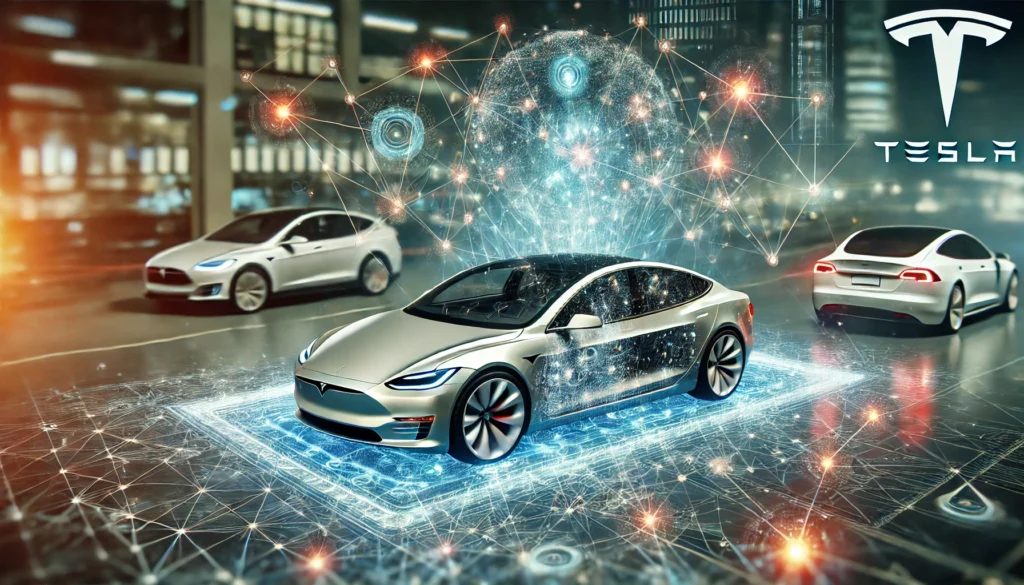
Neural networks are a type of artificial intelligence modeled after the human brain. They consist of layers of interconnected nodes, or “neurons,” that process data and extract patterns. In Tesla’s FSD, these neural networks analyze inputs from multiple cameras, radar, and ultrasonic sensors to understand the surrounding environment.
Unlike traditional programming, where each rule must be explicitly defined, neural networks learn from data. Tesla trains these networks using millions of miles of real-world driving data collected from its fleet of vehicles. This approach allows the system to identify objects, predict their movement, and make complex decisions, such as how to navigate busy intersections or avoid obstacles.
Neural networks are critical for FSD because they enable Tesla vehicles to achieve a level of situational awareness that would be impossible with conventional algorithms. The result is a driving experience that’s safer, smarter, and more intuitive.
Tesla’s Multi-Camera Approach and Perception Neural Networks
One of Tesla’s standout features is its reliance on a vision-based system. Instead of using LiDAR, which many competitors favor, Tesla’s FSD uses a combination of eight cameras to create a 360-degree view of the vehicle’s surroundings. This camera data feeds directly into Tesla’s perception neural networks.
Perception networks are designed to identify and classify objects such as vehicles, pedestrians, traffic signs, and road markings. These networks also evaluate environmental factors like weather, lighting, and road conditions. By processing all of this visual data in real time, Tesla’s FSD can understand its environment and make informed decisions.
Tesla’s approach to perception is a prime example of deep learning in action. Deep learning is a subset of machine learning that uses multi-layered neural networks to extract complex features from raw data. In Tesla’s case, these features include the distance to an object, its velocity, and even its trajectory.
Path Planning with Neural Networks
Once the perception networks have analyzed the environment, Tesla’s FSD relies on path planning neural networks to determine the best course of action. Path planning involves deciding how the vehicle should move based on its surroundings and destination.
Tesla’s neural networks use reinforcement learning techniques to optimize path planning. This means the system is trained to maximize safety and efficiency by simulating countless driving scenarios. For example, the FSD might learn how to navigate a roundabout or merge onto a busy highway by simulating various outcomes and adjusting its strategy accordingly.
In the U.S., where highway driving is common, these path planning networks excel at managing tasks like lane changes and merging. In Europe, where roads are often narrower and intersections more complex, the same neural networks adapt to the unique challenges of urban driving.
Prediction and Decision-Making Neural Networks
Prediction is another crucial aspect of Tesla’s FSD. Once the system identifies objects in its environment, it must predict their future movements. This is especially important for interacting with dynamic elements like pedestrians and other vehicles.
Tesla’s prediction networks use recurrent neural network (RNN) architectures, which are ideal for processing sequential data. These networks analyze past behavior to anticipate future actions. For instance, if a pedestrian is walking toward a crosswalk, the system predicts whether they will stop or continue across the road.
Finally, Tesla’s decision-making networks ensure the vehicle takes appropriate actions based on these predictions. These networks consider multiple variables, such as the speed and trajectory of other vehicles, road rules, and the preferences of the driver. The result is a system that feels natural and responsive.
Continuous Learning Through Fleet Data
One of the most impressive aspects of Tesla’s FSD is its ability to improve over time. Tesla’s fleet of vehicles continuously collects driving data, which is used to train and refine its neural networks. This process, known as fleet learning, allows Tesla to address edge cases—rare scenarios like unexpected obstacles or unusual weather conditions.
As Tesla vehicles drive more miles across the U.S. and Europe, the system becomes increasingly adept at handling the diverse conditions found in these regions. This data-driven approach ensures that Tesla’s FSD remains at the forefront of autonomous driving technology.
The Future of Neural Networks in Tesla FSD
Tesla’s neural network architectures are a testament to the power of AI in transforming transportation. By combining perception, path planning, prediction, and decision-making, Tesla’s FSD achieves an unprecedented level of autonomy. While challenges like regulatory approval and edge-case scenarios remain, the continuous evolution of these networks promises an exciting future for self-driving technology.
For drivers in the U.S. and Europe, Tesla’s FSD represents more than just convenience—it’s a step toward safer roads and smarter cities. As neural network technology advances, Tesla is set to lead the way in shaping how we move through the world.