The race to perfect autonomous driving is heating up, with Tesla Full Self-Driving (FSD), Waymo, Cruise, and others leading the charge. Each company has its unique approach to self-driving technology, and understanding how Tesla stacks up against its competitors is key to grasping the future of mobility. In the U.S. and Europe, where autonomous driving faces different regulatory, environmental, and infrastructure challenges, comparing these technologies reveals a fascinating battle of innovation.
Tesla FSD: Vision-Driven Ambition
Tesla’s Full Self-Driving (FSD) technology is based on a vision-only approach, relying on cameras and AI to interpret the world. This philosophy aligns with Tesla’s belief that self-driving cars should “see” the world as humans do, using vision rather than expensive sensors like LiDAR. Tesla’s global fleet of vehicles collects millions of miles of real-world driving data, allowing its neural networks to continuously learn and improve.
Tesla’s FSD is highly scalable, designed for a wide variety of road types, weather conditions, and driving scenarios. This makes it especially attractive for personal vehicle owners in the U.S. and Europe who want semi-autonomous functionality on a broad range of road networks. Tesla’s software updates are delivered over-the-air, enabling owners to benefit from continuous improvements.
While Tesla FSD is currently classified as Level 2 autonomy, requiring driver supervision, the company is pushing hard to achieve Level 4 and beyond. Its strengths lie in its adaptability, cost-effectiveness, and data-driven development, but it faces challenges in edge cases and regulatory approval.
Waymo: The Safety-First Pioneer
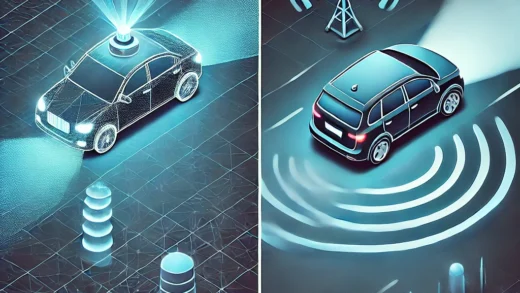
Waymo, a subsidiary of Alphabet, is widely regarded as a pioneer in autonomous driving. Unlike Tesla, Waymo employs a sensor-heavy approach, combining LiDAR, radar, and cameras to create a detailed 3D map of its surroundings. This approach excels in providing pinpoint accuracy and reliability, especially in controlled environments.
Waymo’s strength lies in its Level 4 autonomous capabilities, demonstrated through its fully autonomous ride-hailing services in select U.S. cities. By focusing on geofenced areas, Waymo ensures safety and reliability, but this limits its scalability. In Europe, where road networks are more varied and complex, this approach may face additional challenges.
Waymo’s cautious, safety-first strategy has built strong credibility among regulators and users alike. However, its reliance on expensive sensors and pre-mapped areas makes it less versatile for broad, personal vehicle use compared to Tesla’s FSD.
Cruise: Autonomous Urban Specialist
Cruise, backed by General Motors, has carved out a niche in urban autonomous driving. Similar to Waymo, Cruise uses a combination of LiDAR, radar, and cameras, focusing on high-resolution mapping and controlled environments. The company has launched commercial robotaxi services in select U.S. cities, showcasing its ability to handle dense, urban traffic.
Cruise’s approach is ideal for well-mapped metropolitan areas but faces limitations in scalability. Expanding beyond controlled zones, especially to rural or unstructured roads, remains a challenge. For European markets, where infrastructure varies widely, Cruise will need significant adaptation to compete effectively.
What sets Cruise apart is its close integration with GM’s vehicle platforms and its focus on shared mobility solutions. However, like Waymo, its reliance on LiDAR and restricted deployment zones may hinder its ability to rival Tesla’s broad applicability.
The European Context: A Different Playing Field
Europe presents unique challenges for autonomous driving, from narrow streets and complex intersections to varied traffic regulations across countries. Tesla’s camera-based system gives it an edge in adapting to such diversity, while Waymo and Cruise may face hurdles due to their reliance on geofenced areas and expensive hardware.
Tesla’s scalability makes it particularly appealing in Europe, where personal vehicle ownership remains high, and public trust in new technologies grows steadily. However, regulatory approval in Europe is more stringent, requiring extensive testing and compliance with strict safety standards.
Waymo and Cruise may find opportunities in European cities, where demand for shared mobility services aligns with their robotaxi models. However, their ability to scale beyond urban centers will determine their success in this market.
Tesla vs. Waymo and Cruise: The Key Differentiators
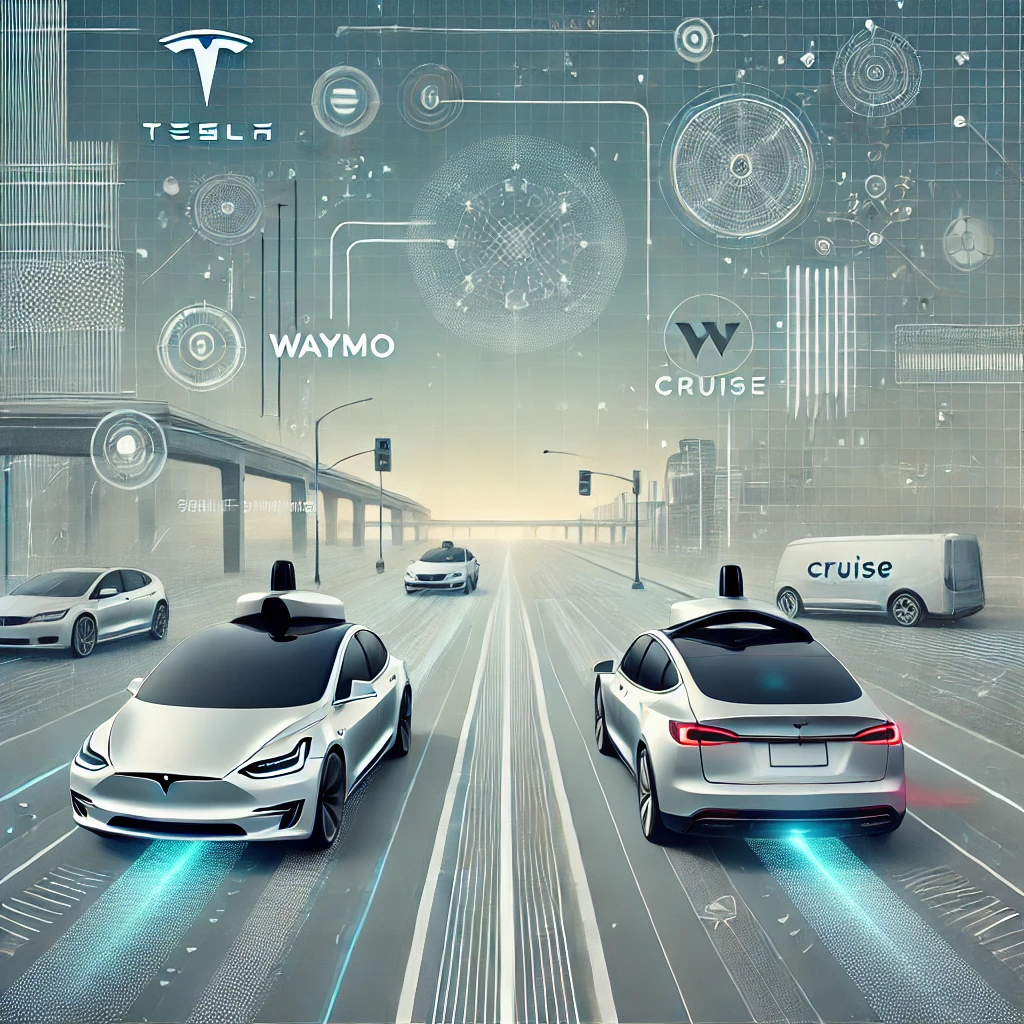
The primary distinction between Tesla FSD and competitors like Waymo and Cruise lies in their philosophies. Tesla’s vision-first approach prioritizes scalability and affordability, making it ideal for personal vehicles. Waymo and Cruise focus on high-precision technology for specific applications, excelling in controlled environments but facing challenges in scaling beyond them.
Tesla’s global data collection and fleet-learning approach allow it to refine its technology rapidly, whereas Waymo and Cruise rely on predefined maps and zones. This gives Tesla an advantage in handling diverse scenarios, especially in areas with less infrastructure development or inconsistent mapping.
The Road Ahead for Autonomous Driving
Tesla, Waymo, Cruise, and others are shaping the future of mobility in unique ways. In the U.S., Tesla’s adaptability and broad reach make it a strong contender for personal autonomy, while Waymo and Cruise shine in ride-hailing and urban applications. In Europe, Tesla’s flexibility and fleet-wide data collection could help it navigate diverse road networks, but Waymo and Cruise may find opportunities in shared mobility solutions for urban centers.
As autonomous driving technology evolves, the competition among these players will continue to push the boundaries of innovation. Each approach offers distinct advantages and challenges, but one thing is certain: the road to autonomy is a race worth watching. For drivers and cities alike, these advancements promise a safer, smarter, and more connected future.