Automotive sensor technology is evolving rapidly, driven by the need for safer, more reliable vehicles. In both the US and EU, fleet operators and OEMs are increasingly adopting radar‑first sensor fusion as a cornerstone of their 2026 roadmaps. Unlike traditional approaches that rely heavily on cameras or LiDAR, radar‑first systems position radar as the primary sensor for environmental perception. This shift reflects radar’s reliability in diverse driving conditions and its ability to provide accurate velocity data for objects in real time.
Radar has long been used in adaptive cruise control and blind‑spot detection, but its capabilities have expanded. Modern radar offers high resolution, wide bandwidth, and improved object discrimination. These features make it a strong anchor for sensor fusion, particularly in scenarios where cameras or LiDAR may fail, such as low light, fog, or heavy rain. The technology now supports not only basic detection but also sophisticated predictive safety algorithms.
The industry’s move toward radar‑first systems is driven by safety, compliance, and operational demands. Fleets and autonomous programs alike require sensors that work reliably in real-world conditions, not just in controlled environments. Radar‑first fusion ensures consistent perception across all scenarios, reducing risk while enabling advanced features like automatic emergency braking and collision avoidance.
Why Radar Is Gaining Ground
Radar’s main advantage is its resilience in adverse conditions. Cameras can be blinded by glare, darkness, or precipitation, while LiDAR struggles in fog or rain. Radar uses radio waves, allowing it to detect objects and their speed regardless of visibility. For fleets operating across diverse climates in the US and EU, this reliability is essential to maintaining safety and operational continuity.
Another strength of radar is its ability to measure object velocity directly. Cameras and LiDAR must infer speed over time, which can introduce delays or errors. Radar provides immediate velocity information, improving predictive algorithms for braking, lane changes, and collision mitigation. In dense traffic, this real-time accuracy enhances both safety and fleet efficiency.
Cost and scalability are also important. Advances in mmWave technology and system-on-chip designs have reduced radar hardware costs while improving performance. This makes radar‑first approaches viable not only for premium vehicles but also for commercial fleets and delivery vehicles that need robust, cost-effective safety systems.
Understanding Radar‑First Fusion
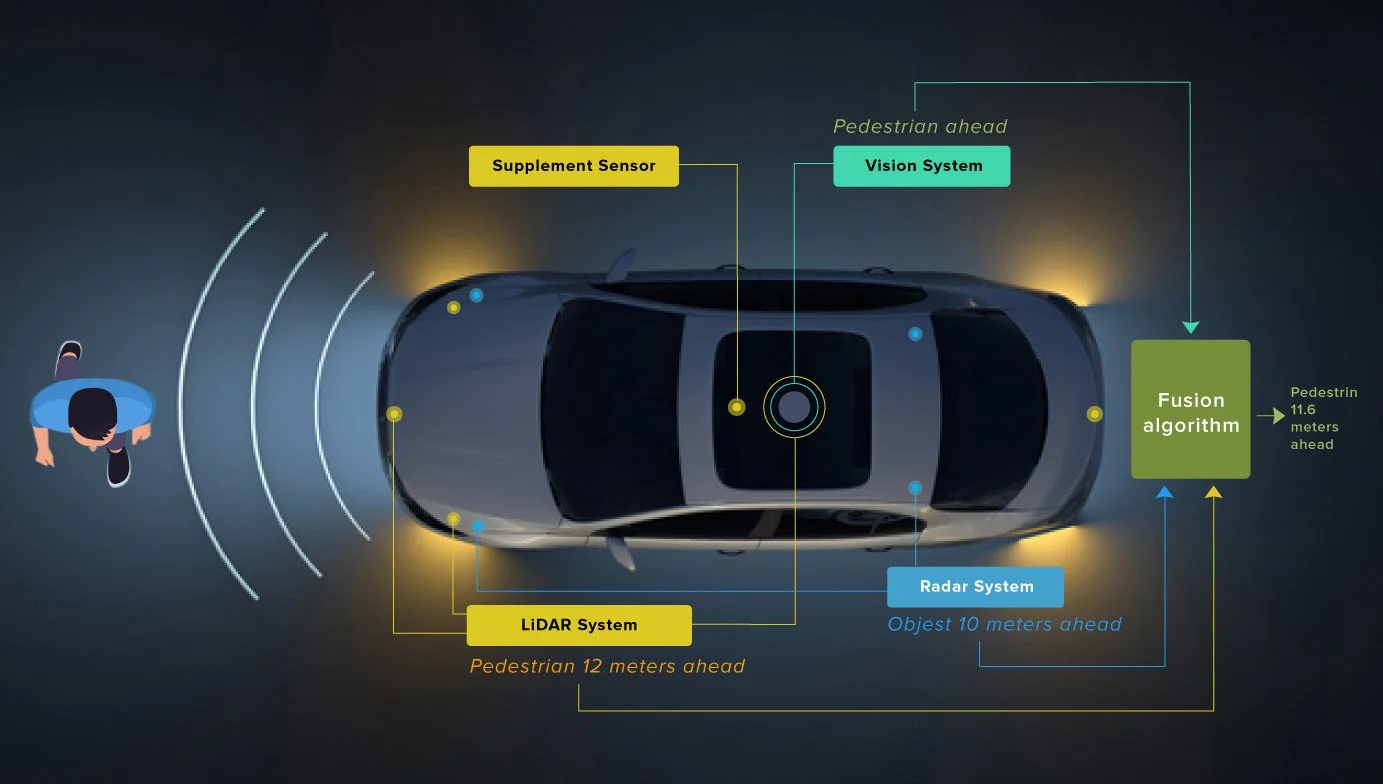
Radar‑first sensor fusion reorders the traditional sensor hierarchy. Instead of treating radar as supplementary, it serves as the primary source for detecting and tracking objects. Camera and LiDAR data are used to refine and classify objects detected by radar. This approach ensures consistent detection in challenging conditions and reduces the likelihood of false negatives.
Selecting vehicles for testing radar‑first systems is key. Fleets often begin with pilot deployments across various routes and vehicle types. This ensures that the system is evaluated in real-world operational conditions before wider rollout. Early testing also allows engineers to fine-tune algorithms and calibrate sensor fusion models based on observed performance.
Monitoring is critical during early deployments. Metrics like object detection accuracy, false positives, energy usage, and system latency are tracked closely. Data analytics platforms can flag anomalies immediately, allowing rapid rollback or software adjustments. This approach prevents operational disruptions while validating the system’s performance.
Market Drivers in the US and EU
Regulatory frameworks in both the US and EU are shaping the adoption of radar‑first systems. In the US, agencies such as NHTSA emphasize real-world safety performance, favoring sensor systems that operate reliably in all conditions. In Europe, Vision Zero initiatives and Euro NCAP testing protocols reward vehicles with strong detection and avoidance capabilities, encouraging manufacturers to prioritize robust sensor fusion.
Commercial fleets are another driver of adoption. Delivery vehicles, public transport, and logistics operations benefit from radar‑first fusion because it reduces accidents and improves operational uptime. Consistent detection enhances safety for drivers and cargo, while also lowering insurance premiums and maintenance costs.
Radar‑first systems also enable smoother OTA (over-the-air) updates for fleet management. Algorithms can be refined remotely based on live data, improving perception capabilities without requiring physical service visits. This flexibility is increasingly important for large-scale operations in both regions.
Implications for Autonomous Driving
As automakers aim for higher levels of autonomy, radar‑first fusion becomes a critical enabler. Cameras and LiDAR alone struggle in complex urban environments or poor weather. Radar provides a reliable baseline for object detection, while other sensors enhance classification. This layered approach is crucial for Level 3 and beyond automation.
Radar’s velocity sensing also improves predictive safety functions, supporting automated lane changes, emergency braking, and adaptive cruise control. These functions require highly accurate, real-time data to operate safely, and radar-first systems deliver that reliability consistently.
Finally, redundancy in radar-first architectures enhances system trustworthiness. If a camera or LiDAR fails, radar maintains situational awareness, which is vital for autonomous systems in the US and EU that are expected to meet stringent safety and reliability standards.
Challenges and Future Outlook
Implementing radar-first fusion requires sophisticated AI algorithms and real-world testing. Data from radar must be harmonized with camera and LiDAR signals, and software validation is more complex than in traditional sensor setups. OEMs also need to standardize radar integration across multiple vehicle platforms to maintain performance consistency.
Despite these challenges, the benefits are clear. Radar-first fusion enhances safety, improves fleet reliability, and reduces dependence on expensive LiDAR. Fleets and OEMs that adopt radar-first systems gain a competitive edge in both operational efficiency and compliance.
Looking forward to 2026, radar-first sensor fusion is set to become a standard in automotive roadmaps. Vehicles equipped with these systems will offer safer, more reliable driving experiences, and fleets will benefit from reduced risk, improved uptime, and scalable software-driven enhancements.
Radar-first fusion is more than a technical upgrade; it represents a strategic shift in how vehicles perceive the world. By prioritizing radar while integrating complementary sensors, OEMs and fleet operators are building safer, smarter, and more resilient vehicles for the US and EU markets.