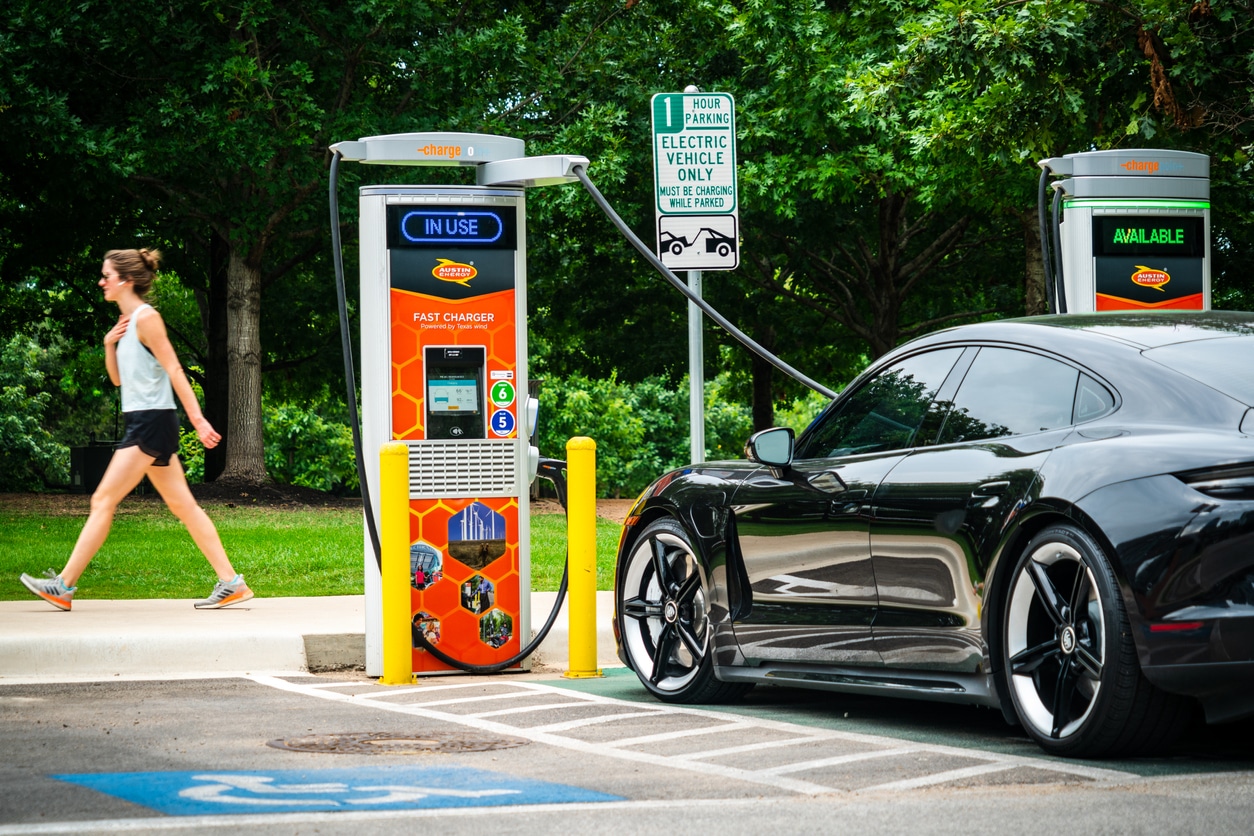
Carbon-aware charging sounds technical, but the idea is actually simple. It means charging your electric vehicle when the electricity grid is cleaner and producing fewer carbon emissions. In the United States and across Europe, the power mix changes throughout the day depending on renewable energy availability, fossil fuel usage, and overall demand. Some hours rely more on wind and solar, while others depend heavily on natural gas or coal. Carbon-aware UX is about showing this information to drivers and guiding them to charge at greener times.
As EV adoption rises in markets like California, Texas, Germany, France, and the Nordics, grid transparency is improving. Many regional grid operators now publish real-time carbon intensity data. This data can be integrated into vehicle apps, charging platforms, and in-car dashboards. Instead of just seeing battery percentage or charging speed, drivers could see whether they are charging during a “low-carbon” or “high-carbon” period. The goal is to align EV charging with cleaner electricity generation.
On paper, this makes perfect sense. After all, many drivers buy electric vehicles because they want to reduce emissions and support the energy transition. If charging at 2 PM uses excess solar power while charging at 8 PM relies on gas plants, wouldn’t environmentally conscious drivers prefer the greener option? The challenge is not the concept itself, but how it is presented. User experience design determines whether carbon-aware charging feels empowering or overwhelming.
Why Automakers Are Investing in Carbon-Aware UX
Automakers and charging networks see carbon-aware UX as the next evolution of smart charging. The first wave focused on convenience and time-of-use pricing, helping drivers charge when electricity is cheaper. The second wave now looks at carbon intensity as an additional layer of intelligence. In both the US and EU, regulators and policymakers are pushing for deeper decarbonization, making this feature strategically attractive for brands.
For car manufacturers, integrating carbon-aware features strengthens their sustainability narrative. Marketing an EV as “zero emissions” is no longer enough when customers understand that electricity production still matters. By offering tools that optimize charging based on real-time grid conditions, brands show they are serious about lifecycle emissions. This builds trust and differentiates them in a competitive EV market where features and software increasingly define customer choice.
There is also a grid management angle that cannot be ignored. Renewable energy generation is often highest during specific hours, such as midday solar peaks or windy nights. Encouraging EV charging during these windows helps balance supply and demand. If thousands of vehicles automatically shift charging to cleaner hours, the cumulative impact can be significant. Automakers recognize that carbon-aware UX can support national climate goals while strengthening partnerships with utilities.
Do Drivers Actually Want This Feature?
The honest answer is that most drivers care about simplicity first. In real life, people think about when they need their car, how much it costs to charge, and how quickly it will be ready. Carbon intensity, while important, is not always top of mind. In both the US and Europe, surveys consistently show that cost savings and convenience rank higher than environmental optimization when it comes to daily charging decisions.
However, there is a growing segment of highly engaged EV owners who absolutely want deeper insights. These drivers install solar panels, track home energy usage, and actively follow climate news. For them, carbon-aware charging feels like a natural extension of their lifestyle. If they know that delaying charging by two hours significantly lowers emissions, they are willing to make that adjustment. The demand is real, but it is concentrated within a specific audience.
The broader market requires a different approach. Drivers do not want complicated graphs or guilt-driven notifications. If carbon-aware UX becomes too technical, it risks being ignored. The feature must blend seamlessly into existing charging routines. When carbon signals are combined with cost signals and presented clearly, drivers are far more likely to engage without feeling pressured or confused.
Designing Carbon-Aware UX That Works
The success of carbon-aware charging depends entirely on thoughtful design. Instead of overwhelming users with raw carbon intensity numbers, apps can display simple indicators such as green, yellow, or red signals. A message like “Cleaner energy available now” is easier to understand than a technical metric expressed in grams per kilowatt-hour. Clear and friendly language makes the feature accessible to all drivers.
Automation is another powerful tool. Many EV owners already schedule charging overnight to save money. Carbon-aware systems can take this further by automatically selecting the cleanest available window that still meets the driver’s departure time. The user sets preferences once, and the software handles the complexity. This removes decision fatigue while delivering environmental benefits in the background.
Personalization is equally important in the US and EU markets. Energy mixes vary widely between regions, and so do driver expectations. In areas where grids are already relatively clean, carbon optimization may have limited visible impact. In regions with high variability, the benefit is stronger. Giving drivers the option to activate or deactivate detailed carbon insights ensures that the feature feels empowering rather than intrusive.
The Future of Carbon-Smart Charging
As EV penetration increases, the conversation around charging will become more sophisticated. Cost optimization was just the beginning. Carbon optimization is the next logical step in making electric mobility smarter and more aligned with climate goals. With improving data transparency and better software integration, carbon-aware UX is likely to become more refined and intuitive over time.
In the long term, carbon signals may merge with dynamic pricing, renewable energy forecasting, and home energy management systems. Imagine a single dashboard that balances cost, carbon impact, and grid conditions automatically. This kind of integrated experience could redefine how drivers interact with energy. It turns the EV from a passive consumer of electricity into an active participant in the clean energy transition.
So, does anyone actually want carbon-aware charging UX? Yes, but only if it respects their time, priorities, and need for simplicity. When designed thoughtfully, it offers real environmental impact without adding stress. For automakers and tech providers in the US and EU, the opportunity lies not in pushing complex data, but in delivering smarter, cleaner charging that feels effortless and rewarding.