Electric vehicles have firmly established themselves across the United States and Europe, moving from early adoption into mass-market reality. With that growth comes a new financial and operational challenge for automakers: battery warranty exposure. EV batteries are among the most expensive components in a vehicle, and long-term warranty commitments can stretch eight years or more. If degradation happens faster than predicted, replacement or repair costs can significantly impact profitability. This makes battery warranty risk one of the most critical issues for modern OEMs.
Unlike traditional engine warranties, EV battery coverage depends on complex chemical and software-driven systems. Degradation patterns vary depending on driving habits, climate conditions, charging behavior, and even terrain. A battery in California’s heat will age differently from one operating in Norway’s cold winters. These regional variations across US and EU markets make it difficult to rely on simple age or mileage thresholds. Manufacturers must understand real-world usage at a granular level to avoid financial surprises.
This is where Battery Warranty Risk Scoring enters the conversation. Instead of treating all vehicles equally, OEMs are developing predictive scoring systems that estimate the likelihood of future warranty claims. These systems analyze real-time vehicle data and historical trends to forecast degradation risk. In 2026, this capability is no longer optional; it is becoming a strategic differentiator. The OEMs that master warranty risk scoring gain both financial protection and competitive advantage.
What Battery Warranty Risk Scoring Really Means
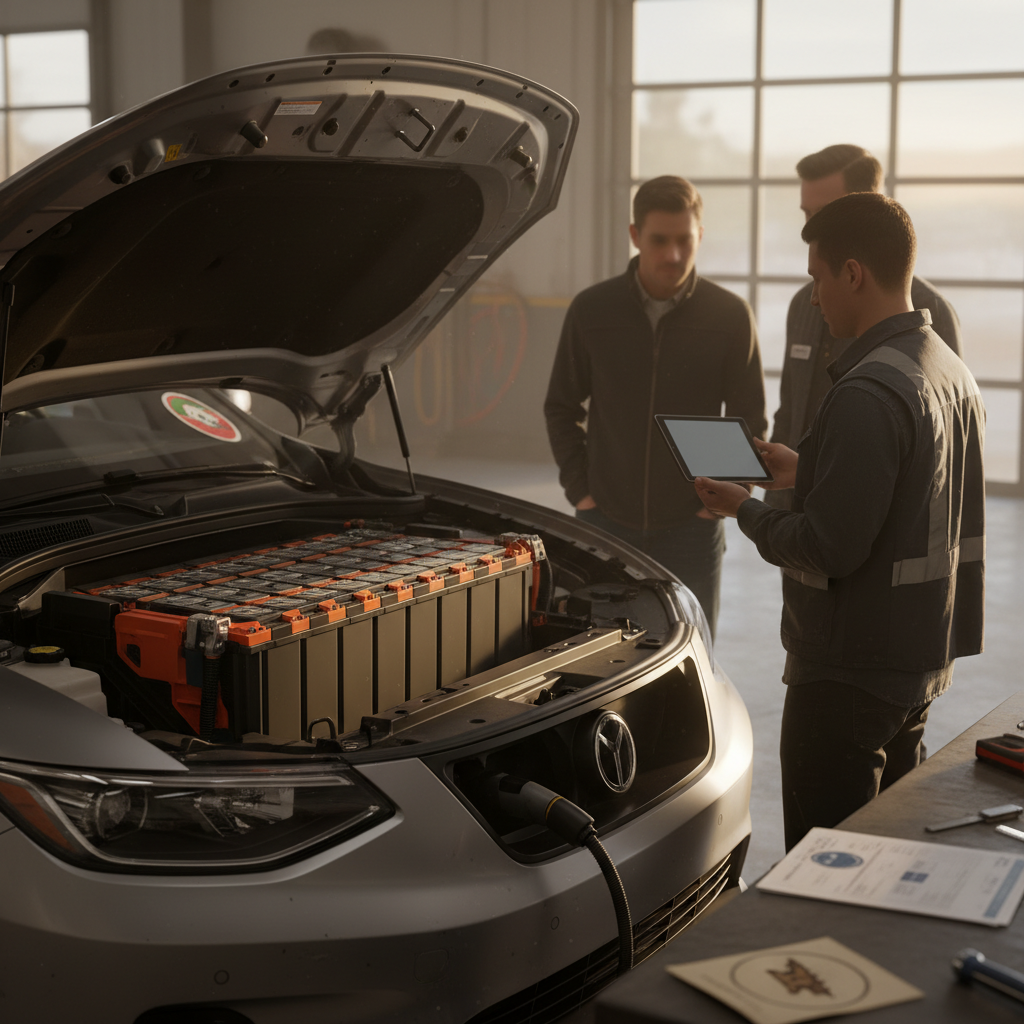
Battery Warranty Risk Scoring is essentially a predictive model that evaluates how likely a battery pack is to trigger a warranty claim. It goes beyond simple State-of-Health readings and considers patterns over time. Data such as charge cycles, depth of discharge, temperature exposure, fast-charging frequency, and internal resistance behavior are all analyzed. By combining these signals, OEMs generate a risk profile for each individual vehicle. This approach transforms warranty management from reactive to proactive.
The scoring process relies heavily on connected vehicle ecosystems. Modern EVs constantly transmit telemetry to secure cloud platforms, allowing manufacturers to observe battery performance at scale. Machine learning models trained on millions of miles of driving data can detect subtle patterns that human engineers might miss. If a battery begins showing early signs of accelerated degradation, the system flags it long before a customer files a complaint. Early detection reduces unexpected failures and builds customer trust.
What makes this scoring approach powerful is its personalization. Two vehicles of the same model year can carry very different risk scores based on how they are driven and charged. A delivery fleet vehicle that fast-charges daily will likely age differently from a commuter car that charges slowly at home. By recognizing these differences, OEMs can allocate warranty reserves more accurately. Instead of overestimating risk for the entire fleet, they can target resources where needed most.
Why This Is Becoming Core OEM Intellectual Property
In today’s competitive EV landscape, battery warranty risk scoring is more than an operational tool; it is core intellectual property. The algorithms and data models behind these systems are proprietary assets that define how well an automaker understands its own vehicles. Brands that build strong internal analytics capabilities reduce reliance on third-party estimations. This gives them tighter control over financial forecasting and product development strategies. In essence, risk scoring becomes part of the brand’s technical DNA.
US and EU markets are particularly sensitive to warranty transparency and consumer protection laws. Regulators expect clarity in battery coverage terms, and customers demand fairness. OEMs that can demonstrate robust internal risk assessment frameworks are better positioned during audits or legal scrutiny. This reduces exposure not only to financial loss but also to reputational damage. A well-calibrated risk model ensures warranties are both competitive and sustainable.
Furthermore, strong risk scoring systems feed directly into innovation cycles. Data gathered from field performance informs next-generation battery chemistry, cooling strategies, and software updates. When engineering teams understand exactly how and why batteries degrade in real-world scenarios, they can design better systems. This feedback loop transforms warranty data into product improvement insights. Over time, this strengthens the OEM’s technological leadership in electrification.
Turning Risk Scores into Business Advantage
Battery Warranty Risk Scoring is not just about avoiding losses; it can also create new revenue opportunities. For example, OEMs can tailor extended warranty packages based on actual risk profiles rather than fixed pricing. Customers with low-risk usage patterns may receive more attractive offers, increasing subscription adoption. Fleet operators can use risk insights to optimize vehicle rotation and maintenance schedules. This turns predictive analytics into tangible operational benefits.
Another advantage lies in proactive customer engagement. If a vehicle’s risk score rises due to aggressive fast charging or extreme temperature exposure, OEMs can send personalized recommendations. Simple suggestions about charging habits or software updates can help slow degradation. This approach prevents claims before they occur and strengthens customer loyalty. Drivers feel supported rather than surprised by unexpected warranty issues.
Financial planning also improves dramatically with precise risk modeling. Warranty reserves represent a major accounting component for EV manufacturers. Overestimating risk ties up capital unnecessarily, while underestimating it exposes companies to sudden financial hits. Accurate scoring allows CFOs to balance risk and liquidity more effectively. Investors increasingly look for disciplined risk management strategies, making this capability even more valuable in capital markets.
The Future of Battery Risk Intelligence
As EV adoption continues to expand, battery risk scoring will only grow more sophisticated. Advances in artificial intelligence and data processing will enable even deeper insights into degradation patterns. OEMs may integrate climate forecasting, grid charging behavior, and regional infrastructure data into their models. The result will be more accurate, context-aware risk assessments. This evolution will redefine how warranties are structured and communicated.
Regulatory frameworks in Europe are already moving toward greater transparency in battery performance reporting. As similar standards emerge in parts of the United States, standardized health metrics may become more common. OEMs with mature internal scoring systems will adapt quickly to these regulatory shifts. Their proprietary models will remain competitive advantages even within standardized frameworks. Innovation will continue behind the scenes.
In 2026 and beyond, Battery Warranty Risk Scoring represents a convergence of engineering, finance, and customer experience. It transforms uncertainty into measurable intelligence and strengthens both brand credibility and profitability. For automakers operating in demanding US and EU markets, this capability is no longer a back-office tool. It is core intellectual property that defines who leads in the electric era.