Modern vehicles across the United States and Europe are packed with intelligent systems that rely on precise calibration to function correctly. From radar and camera alignment in advanced driver assistance systems to torque management in electric powertrains, calibration ensures that digital commands translate into accurate real-world actions. However, over time, these calibrations can slowly shift due to vibration, temperature changes, software updates, component wear, or minor physical impacts. This gradual misalignment, known as calibration drift, often develops silently without immediate warning signs. By the time a driver notices reduced performance or warning alerts, the issue may have already progressed significantly.
In today’s safety-driven and regulation-heavy automotive landscape, even small deviations can have measurable consequences. European safety frameworks and US regulatory bodies place strong emphasis on system reliability, especially for ADAS and emissions-related technologies. When calibration drifts, it can subtly reduce braking precision, lane-keeping accuracy, or energy efficiency. These changes may not immediately trigger diagnostic trouble codes, making them difficult to detect through traditional service routines. That is why the industry is turning toward digital twins as a smarter way to monitor alignment continuously.

The Growing Complexity of Software-Defined Vehicles
Vehicles sold in the US and EU markets are increasingly software-defined, meaning that performance, safety, and efficiency depend heavily on software logic interacting with physical hardware. Sensors, control units, and cloud connectivity generate massive volumes of data every second. This complexity creates tremendous opportunity but also introduces new risks if systems drift away from their calibrated baseline. A slight deviation in sensor fusion logic can influence how an ADAS system interprets its environment. Over time, these small discrepancies can compound and affect overall system confidence.
Traditional calibration checks are typically performed during scheduled service visits or after visible incidents such as windshield replacement or collision repair. While these checks remain important, they cannot provide continuous visibility into how systems evolve during everyday use. In long-haul trucking fleets across North America or delivery networks operating in dense European cities, vehicles experience vastly different environmental and driving conditions. Without real-time oversight, calibration drift can develop gradually across hundreds or thousands of vehicles. This is where twin-driven detection introduces a breakthrough advantage.
How Digital Twins Enable Early Drift Detection
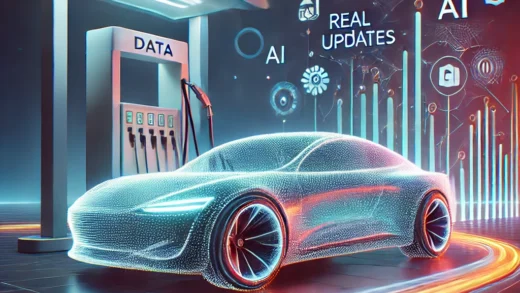
A digital twin is a real-time virtual replica of a physical vehicle that mirrors its operational behavior using live data feeds. By continuously ingesting sensor outputs, control responses, environmental inputs, and historical performance benchmarks, the twin establishes a dynamic reference model. This model reflects how the vehicle is expected to behave under normal calibrated conditions. When real-world performance begins to diverge from the expected model, the digital twin flags potential anomalies.
In the context of calibration drift, the twin acts like a constant quality inspector. It compares actual sensor alignment values, braking responses, steering corrections, or energy management patterns against validated engineering parameters. If subtle differences emerge consistently over time, the system identifies them as early signs of misalignment. This proactive detection allows engineers or fleet managers to intervene before safety margins shrink or efficiency declines. Instead of waiting for a dashboard alert or customer complaint, drift is detected in its earliest phase.
Safety Gains in a Regulation-Driven Market
Safety remains the top priority for automakers operating in both the US and EU. Advanced driver assistance systems are designed to enhance driver awareness and reduce collision risks, but their effectiveness depends entirely on precise calibration. A slightly misaligned camera or radar sensor can alter distance perception and reaction timing. Even minor calibration shifts may influence how quickly automatic emergency braking engages or how smoothly lane-centering functions operate.
Twin-driven calibration monitoring strengthens safety compliance by ensuring these systems stay aligned with their original design intent. Continuous oversight reduces the likelihood of unnoticed performance degradation. In regulated markets, this not only protects drivers but also helps manufacturers maintain compliance with evolving safety standards. Early detection minimizes the risk of costly recalls or regulatory investigations triggered by systemic calibration issues. Maintaining consistent performance across thousands of vehicles builds trust and reinforces brand reputation.
Operational and Warranty Cost Benefits
Calibration drift does not just affect safety; it also has direct financial implications. When misalignment leads to premature component wear, inaccurate diagnostics, or degraded efficiency, warranty claims can rise quickly. In electric vehicles, even small deviations in battery management calibration can influence charging behavior and long-term battery health. For fleet operators, inefficient calibration can mean higher fuel consumption or reduced range, quietly increasing operating costs.
Twin-driven detection transforms calibration management from a reactive expense into a proactive cost-control strategy. By identifying issues early, service teams can apply targeted adjustments rather than replacing entire components unnecessarily. Remote diagnostics and over-the-air recalibrations further reduce workshop visits and downtime. Over time, this approach lowers warranty reserves and improves overall fleet profitability. The financial case for digital twin–based monitoring becomes stronger as vehicles grow more complex.
Preparing for the Future of Connected Mobility
As connectivity, electrification, and automation continue to expand, calibration complexity will only increase. Vehicles will rely more heavily on software updates, sensor fusion, and cloud-driven analytics to maintain peak performance. In this evolving ecosystem, digital twins provide a scalable foundation for continuous quality assurance. They create a closed feedback loop between real-world operations and engineering teams, enabling rapid refinement and adaptation.
For automotive leaders in the US and EU, adopting twin-driven calibration drift detection is no longer optional. It represents a forward-looking investment in reliability, safety, and long-term cost optimization. By catching misalignment early, manufacturers protect both drivers and margins. In the connected vehicle era, precision is everything, and digital twins ensure that vehicles remain aligned with their intended performance throughout their entire lifecycle.