

In today’s automotive landscape, software defines the driving experience. From advanced driver assistance systems to over-the-air updates and connected services, vehicles in the US and EU markets rely on complex code that must perform flawlessly. Everything begins with requirements that describe what a system should do, and everything ends with tests that prove it works safely and reliably. The challenge is that as systems become more advanced, the distance between written requirements and effective test cases grows wider. Bridging that gap efficiently is now a strategic priority for OEMs and Tier-1 suppliers.
Engineering teams often face thousands of detailed requirements across safety, performance, cybersecurity, and user experience domains. Translating each one into meaningful, traceable test cases is time-consuming and prone to interpretation errors. Even small ambiguities in wording can lead to incomplete test coverage or misaligned validation efforts. In highly regulated environments like North America and Europe, these gaps can result in delays, compliance risks, or costly recalls. This pressure has sparked growing interest in Generative AI as a potential accelerator.
How GenAI Supports the Requirements-to-Test Flow
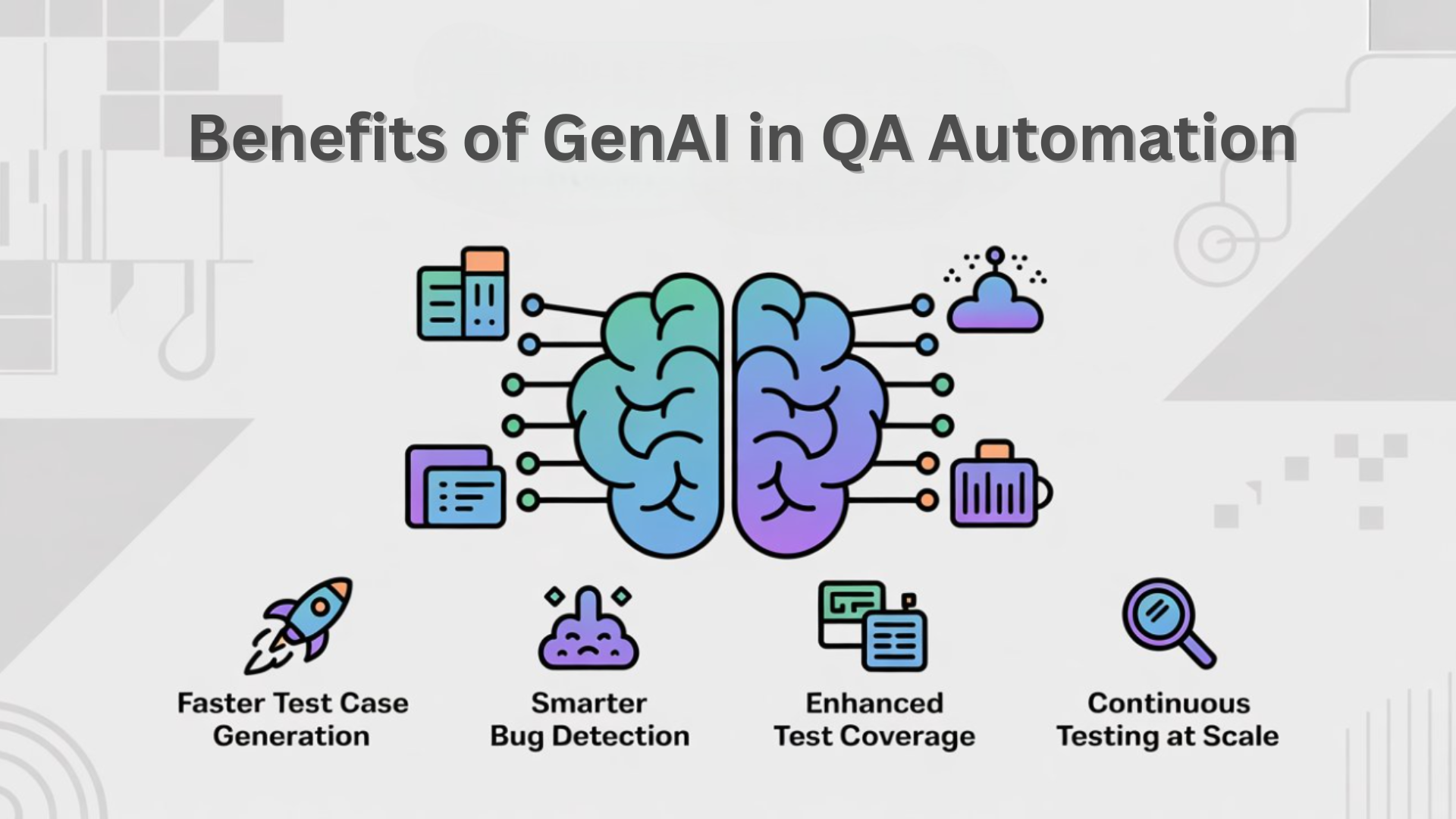
Generative AI is designed to analyze patterns in language and structured data, then produce new content based on that knowledge. In automotive development, this means GenAI can read natural language requirements and suggest corresponding test cases. For example, if a braking system requirement specifies detection thresholds and environmental conditions, GenAI can propose multiple validation scenarios that reflect those constraints. This dramatically reduces the initial drafting time for quality assurance teams. It also encourages broader test coverage by exploring variations engineers may not immediately consider.
In fast-paced development cycles, speed matters. GenAI allows teams to move from requirement definition to preliminary test design within minutes rather than days. This is especially valuable when updates are frequent, such as in software-defined vehicles that receive continuous improvements. By automating repetitive drafting work, engineers can focus on refining edge cases and validating assumptions. The result is a more agile workflow that aligns well with modern DevOps-inspired automotive processes.
Where GenAI Truly Adds Value
One of the strongest advantages of GenAI lies in consistency. Automotive organizations often operate across multiple regions and vehicle programs, each with slightly different documentation styles. GenAI tools trained on internal standards can generate test cases that follow consistent terminology and structure. This supports better collaboration between distributed teams in the US and EU. It also simplifies audits and reviews by maintaining a uniform approach to traceability.
Another major benefit is enhanced requirement coverage. GenAI can systematically scan requirements and highlight missing or unclear test links. By automatically mapping tests back to source requirements, it strengthens traceability matrices that are essential for regulatory compliance. Agencies expect clear evidence that safety-critical features have been validated thoroughly. When used correctly, GenAI can help ensure that nothing falls through the cracks during documentation and validation.
GenAI is also helpful during early project phases. When requirements are still evolving, AI-generated test suggestions can reveal ambiguities or logical gaps. If the AI struggles to interpret a requirement clearly, that often signals that the wording needs refinement. In this way, GenAI becomes not just a productivity tool but also a quality checkpoint for requirement clarity.
Where GenAI Breaks Down
Despite its promise, GenAI has clear limitations in safety-critical automotive contexts. The first issue is depth of technical understanding. Requirements often include implicit assumptions about timing constraints, sensor limitations, or system interactions. Unless trained on highly specialized domain data, GenAI may generate tests that appear correct but miss critical technical nuances. In systems like adaptive cruise control or steering assistance, overlooking milliseconds of latency or rare environmental conditions can create serious safety blind spots.
Another challenge is data quality. GenAI systems learn from existing documents, and if those documents contain inconsistencies or outdated practices, the AI will replicate them. Automotive standards evolve continuously, particularly in cybersecurity and functional safety. Without strong governance, AI-generated tests may reflect yesterday’s thinking instead of today’s regulatory expectations. This is a serious concern in the tightly regulated US and EU markets.
GenAI also struggles when dealing with novel technologies. New sensor architectures, AI perception stacks, or advanced compute platforms introduce scenarios that historical data may not cover. In these cases, human engineers must rely on domain expertise and creative reasoning. AI can support brainstorming, but it cannot fully anticipate unknown failure modes in groundbreaking systems.
The Importance of Human Oversight
For GenAI to deliver real value, it must operate within a structured framework of expert review. AI-generated tests should be treated as drafts rather than final artifacts. Engineers must validate assumptions, refine boundary conditions, and ensure alignment with safety standards such as ISO 26262 and other regional guidelines. This collaborative model combines machine efficiency with human judgment.
Organizations adopting GenAI are finding success when they embed it directly into existing requirement management and test tools. Clear workflows for review, approval, and revision maintain accountability. Transparency in how the AI generated its suggestions builds trust among engineering teams. Over time, as feedback loops improve training data, the quality of generated tests also increases.
A Balanced Path Forward
GenAI is not a replacement for experienced automotive engineers, but it is a powerful accelerator. In the US and EU markets, where innovation and regulation move in parallel, companies must develop software faster without compromising safety. When used thoughtfully, GenAI helps reduce manual workload, improve traceability, and identify gaps early. When used blindly, it risks oversimplifying complex technical realities.
The future of requirements-to-test workflows will likely be hybrid. AI will handle repetitive drafting and structural mapping, while human experts provide the deep domain insight required for safety-critical validation. By striking this balance, automotive companies can move toward smarter, faster, and more reliable software development — without losing sight of what matters most: delivering safe vehicles to the road.


