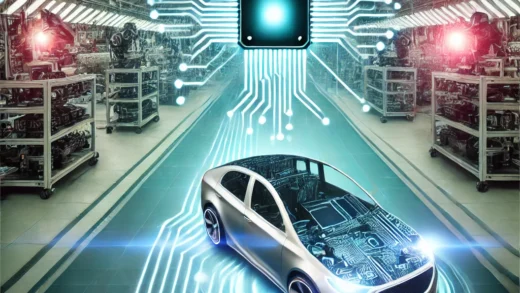
As electric vehicles advance in both the United States and Europe, the spotlight is shifting toward high-voltage platforms—specifically 800-volt and even 1000-volt architectures. These systems are becoming a defining feature of next-generation EVs, especially for customers who rely on frequent highway travel. Higher voltage means higher efficiency, faster charging, lighter components and better overall performance. And as more automakers adopt these architectures, highway charging networks must evolve alongside them.
This article explores what 800–1000V architectures are, why they matter, how they improve highway fast charging, and what changes we can expect across U.S. and European EV markets.

What High-Voltage Platforms Actually Do?
Most early EVs were built on 400-volt systems, which delivered adequate performance but placed limitations on charging speed and thermal management. Higher charging power generates high current, which produces heat and energy loss. This is where 800–1000V platforms offer a leap forward. When you increase voltage, you can deliver the same power at lower current, which reduces heat and allows the charging system to maintain higher power levels safely.
Put simply, high-voltage vehicles can charge faster without overloading cables, connectors or internal components. They also operate more efficiently during acceleration, regenerative braking and cruising. For drivers in regions like the Western U.S. or continental Europe—where long highways and fast charging are essential—this improvement can transform EV usability.
Faster Highway Charging: The Key Benefit
On long road trips, the convenience of fast charging matters as much as range. A vehicle built on an 800–1000V platform can accept ultra-high charging power from compatible stations—often exceeding 250kW and even approaching or surpassing 350kW in some cases. That means a significant portion of the battery can be recharged in under 20 minutes under optimal conditions.
This is especially important on highways where drivers want to stop briefly, stretch, get a drink or use restroom facilities, and then continue. Instead of waiting 30–40 minutes at a charger, high-voltage vehicles shorten that window dramatically. Drivers in Europe benefit from densely spaced high-power charger corridors, while U.S. drivers appreciate better coverage on interstate highways.
High-voltage platforms are making EV road-tripping easier and bringing the experience closer to the convenience of traditional gas stops.
Why Automakers Are Moving Toward 800–1000V Systems?
Automakers in both markets see high-voltage EV platforms as essential for future competitiveness. There are several reasons behind this shift.
Efficiency plays a major role. Since 800–1000V systems reduce current, they allow thinner cables and smaller cooling systems. This decreases weight and increases range without expanding battery size. For manufacturers targeting efficiency improvements, weight reduction is one of the most reliable ways to gain range.
Performance is another advantage. High-voltage platforms support advanced motor technology and can provide smooth, consistent acceleration while managing heat more effectively. This is particularly attractive for premium or performance EVs.
Finally, high-voltage systems simplify integration with new technologies such as silicon-carbide inverters and next-generation power electronics. These components continue to gain traction in Europe and the U.S. because of their efficiency and reduced thermal loss, further improving charging speeds and driving performance.
The Infrastructure Challenge: Chargers Must Keep Up
While high-voltage vehicles are becoming more common, charging infrastructure must evolve too. Many existing fast chargers in the U.S. and parts of Europe still operate at lower wattages or are designed with 400-volt charging profiles in mind. Even when a vehicle can accept very high power, the station may not be able to deliver it.
Charging-network operators face technical obstacles. Cables and connectors must handle higher voltages safely. Cooling systems must keep up with long-duration high-power sessions. Grid capacity is also a major limiting factor; ultra-fast chargers can place significant stress on local electricity networks, especially in rural U.S. areas or older European grids.
Despite these challenges, progress is accelerating. Many European charging networks already deploy 350kW units compatible with 800V platforms. In the U.S., new federal incentives are pushing operators to install higher-power stations along key interstate corridors. As more automakers release high-voltage EVs, the economic incentive for network upgrades grows stronger.
Real-World Drivers Will Feel the Difference
For everyday drivers, the benefits of high-voltage architectures show up most clearly during long-distance travel. Shorter charging stops reduce planning stress and increase confidence in electric mobility. Even at stations that cannot deliver maximum power, high-voltage platforms may still charge more efficiently because they manage heat better and sustain higher power for longer periods.
Fleet operators also stand to gain. Delivery vans, taxis and ride-share vehicles operating across long routes in the U.S. and Europe can significantly reduce downtime, increasing both productivity and profitability.
Early adopters already report that high-voltage EVs feel “future proof” because they will benefit more from charging-network upgrades as infrastructure improves.
What the Future Holds for 800–1000V EVs?
The shift to high-voltage platforms is unlikely to remain in the premium segment for long. As costs come down and technology matures, mainstream EVs will adopt similar architectures. This mirrors the trajectory of features like advanced driver-assist systems and large battery packs, which began as luxury options and later became standard.
Battery technology will also evolve. Solid-state cells, silicon-anode chemistries and improved thermal management systems will take fuller advantage of high voltages, pushing charging times even lower.
Eventually, 800–1000V architectures will become the new normal for highway-ready EVs in Europe and the U.S.
Conclusion
The move toward 800–1000V architectures represents a significant leap forward in EV performance and charging convenience. For drivers in Europe and the United States, high-voltage platforms mean faster charging, better efficiency and smoother long-distance travel. As charging networks upgrade and automakers continue refining power electronics, the full benefits of these architectures will unfold across highways worldwide.
In the near future, recharging an EV on a road trip will feel even more natural and effortless—thanks to the rise of high-voltage innovation.