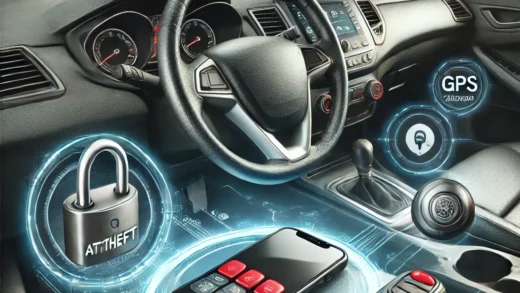
Connected-car telematics has evolved into one of the automotive industry’s most valuable assets. Modern vehicles constantly collect data on driving behaviour, location, vehicle status, safety performance and user preferences. This data fuels new services such as predictive maintenance, insurance telematics, fleet optimisation and personalised in-car experiences. But with this explosion of data comes an equally important responsibility: protecting user privacy.
In Europe, the General Data Protection Regulation (GDPR) has reshaped how automakers, suppliers and mobility providers approach data collection. And because many US manufacturers operate in European markets, GDPR has effectively become a global benchmark for connected-car privacy standards. Understanding how GDPR drives changes in telematics is essential for anyone following the future of automotive technology.

Why Telematics Data Is So Sensitive?
Connected-car data is not just technical information from sensors and electronics. It often contains personal elements tied directly to an identifiable driver or passenger. Location histories, vehicle routes, speed patterns, braking behaviour, voice commands, infotainment choices and biometric signatures can all be traced back to a specific individual.
This makes telematics data subject to strict protections under GDPR. The regulation views anything that can identify a person — directly or indirectly — as personal data. Because vehicles today operate like moving data hubs, automotive companies must treat telematics with the same level of care as any other sensitive digital information.
This shift has compelled the automotive sector to rethink how telematics systems are built, how data flows are managed and how user consent is handled.
How GDPR Is Transforming Connected-Car Design?
Under GDPR, companies must demonstrate that their data practices are lawful, transparent and limited to what is necessary. For connected cars, this translates into major design and operational changes.
Automakers must now clarify which telematics features require user consent, which operate under legitimate interest and which are essential for delivering services. For example, emergency-call systems may not need consent, but sharing driving-behaviour data with an insurer certainly does.
Telematics units increasingly incorporate privacy-by-design principles. This means data collection is minimized, unnecessary data points are avoided and sensitive information is stripped of identifiable elements wherever possible. Some systems now process data locally within the vehicle before sending only aggregated results to the cloud, reducing exposure of raw personal data.
Consent and transparency have also become central. Drivers must be informed about what data is collected, how it is used, how long it is stored, and whom it is shared with. In Europe, this often requires clear privacy interfaces within the car’s infotainment system or the companion smartphone app.
GDPR’s security requirements also influence how telematics architectures are built. Encrypted transmission, hardened communication channels, secure storage and role-based data access are becoming standard across both US and European platforms, driven in part by the stricter expectations set by European regulators.
Fleet Operators, Insurers and Mobility Providers Feel the Impact
GDPR does not only affect automakers. Any company that processes vehicle data — from fleet-management providers to ride-sharing platforms to insurance companies — must redesign their data practices accordingly.
For fleet operators, GDPR requires clear distinctions between driver monitoring that is essential for safety and monitoring that is more invasive. Employees must be informed about what data is being tracked, and operators must justify each category of data collected.
Usage-based insurance companies, which rely heavily on telematics data, must obtain explicit permission from drivers before collecting or analysing behaviour patterns. Consent must be easy to withdraw, and users must be able to access or delete their telematics history if they request it.
Mobility providers, such as car-sharing and ride-hailing services, must account for multiple drivers using the same vehicle. This introduces complexity in determining who controls the data and how individual privacy rights are applied.
The common thread is transparency and accountability. GDPR forces service providers to be crystal clear about their data handling, something that is increasingly valued by customers on both sides of the Atlantic.
The US Perspective: GDPR Influence Without Direct Enforcement
GDPR is a European regulation, but its impact reaches well beyond Europe. US automakers selling vehicles in European markets must comply fully with GDPR rules. Moreover, American consumers and regulators have become more privacy-aware, and GDPR has influenced discussions around emerging privacy laws in some states.
Many US mobility providers voluntarily adopt GDPR-like practices, recognizing that strong privacy measures can be a market differentiator. As vehicles become more connected and autonomous, the pressure to meet global privacy expectations continues to rise.
Trends Shaping the Future of Telematics Privacy
One of the biggest shifts is the rise of anonymized and edge-processed data. Instead of streaming everything to the cloud, vehicles can process raw data internally, sending only essential insights. This reduces privacy risk while maintaining value for service providers.
Another trend is the development of more granular user-control dashboards, allowing drivers to pick which data streams are active. This feature is becoming increasingly common in both US and European vehicles.
Transparency is also becoming a competitive advantage. Companies that clearly communicate how they handle telematics data tend to build stronger customer trust, especially as connected-vehicle services expand.
Finally, cybersecurity is now a core component of telematics design. GDPR’s emphasis on secure processing has pushed automakers to integrate stronger protections, ensuring that personal data cannot be intercepted or misused.
Conclusion
GDPR has fundamentally reshaped the connected-car landscape. By demanding stronger transparency, consent management, data minimization and security, the regulation has pushed the automotive sector to rethink how telematics is collected and used. These changes extend beyond Europe, influencing practices in the US and shaping global expectations around vehicle data privacy.
As connected cars become smarter and more capable, privacy will remain a critical pillar of innovation. Companies that embrace GDPR-driven telematics practices today will be better positioned to win trust, navigate regulation and lead the next generation of mobility experiences.