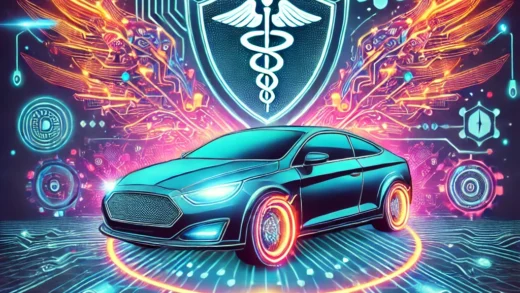
When people imagine autonomous cars, they often picture futuristic pods gliding effortlessly through traffic with no driver in sight. The technology is advancing quickly, but the bigger question remains: are consumers actually ready to trust these vehicles? Around the world, attitudes are mixed. Some are excited about the possibilities, while many remain cautious. Building trust may turn out to be just as important as building the technology itself.

How People Feel About Autonomous Vehicles Today?
Surveys show that while awareness of autonomous vehicles is high, trust is still limited. A global study by S&P Global Mobility found growing openness to automation on highways, yet far fewer people are comfortable handing over full control. In the U.S., J.D. Power’s trust index for self-driving cars fell to just 37 out of 100 in 2023, reflecting unease that hasn’t improved with time.
In Europe, attitudes are similarly cautious. A U.K. survey revealed that nearly two-thirds of respondents felt safer with a human driver than with a self-driving car. Only a small minority said they would feel “safest” in a fully autonomous vehicle. Even in markets like China, where consumers tend to adopt new tech quickly, many buyers still prefer advanced driver assistance over complete autonomy.
What emerges globally is a pattern: people accept partial automation more readily than full autonomy. Adaptive cruise control or lane-keeping assistance feels like an extra safety net. But when machines are in charge entirely, trust drops sharply.
Why Trust Remains Hard to Earn?
Trust in automation isn’t binary—it’s shaped by many factors. Transparency plays a key role. People are more comfortable if the vehicle explains its actions, such as why it slowed down or changed lanes. Researchers increasingly stress the need for “explainable autonomy,” where cars communicate not just what they are doing, but why.
Past incidents also weigh heavily. High-profile crashes involving semi-autonomous systems have generated headlines and reinforced fears. Even if statistics show humans cause far more accidents, individual failures by autonomous cars stand out and reduce confidence.
Loss of control is another obstacle. Many people like the idea of assistance but are reluctant to surrender the steering wheel entirely. Psychologically, having the option to intervene feels safer, even if the system could theoretically perform better on its own.
Cybersecurity and privacy also factor in. Cars that connect to the cloud raise questions about hacking, data collection, and misuse. For many consumers, trust is not just about whether the vehicle avoids crashes but also about whether their personal data remains safe.
Signs That Trust Is Growing
Despite hesitations, there are encouraging signals. In certain regions, pilot programs for robotaxi services have helped consumers warm up to autonomy. In Phoenix, San Francisco, and parts of China, passengers who try these services often report higher comfort levels after real-world exposure.
Educational efforts also help. One study found that people who experienced autonomous driving in a simulator or virtual reality environment became more positive about the technology afterward. Seeing how the system “thinks” in a safe context can turn abstract fears into informed confidence.
Incremental features are also moving the needle. Automated lane-keeping on highways, for example, gives drivers a taste of autonomy without removing them from the loop entirely. As these systems prove reliable, drivers begin to transfer some trust to higher levels of automation.
The Roadblocks Ahead
For trust to deepen, several challenges must be addressed. Safety remains the foundation. Autonomous systems need to show consistently better performance than human drivers, not just in easy conditions but in complex, messy real-world environments. Edge cases—like unusual pedestrian behavior or poor weather—must be handled with the same confidence as routine driving.
Regulation is another piece of the puzzle. People want to know who is accountable if something goes wrong. Clear frameworks that define liability between manufacturers, software providers, and owners are essential. Without them, many will hesitate to embrace the technology.
Consistency across markets matters too. A vehicle that behaves differently in one country compared to another risks confusing consumers. Harmonized standards can help set global benchmarks for safety and performance, creating a stronger base of trust worldwide.
Finally, communication is critical. Overpromising breeds disappointment. If automakers exaggerate the readiness of self-driving systems and incidents follow, public trust can fall further than before. Honest, transparent messaging is a must.
Building the Trust of Tomorrow
So how can the industry close the gap between technological progress and consumer acceptance? Step by step. Demonstrations of reliability in limited environments build credibility. Robotaxis in controlled areas, autonomous shuttles on fixed routes, and driver assistance on highways all serve as stepping-stones.
Equally important is feedback. Cars should show riders what they see and why they act. If a vehicle brakes suddenly, passengers should understand whether it was for a pedestrian, a cyclist, or debris. Visibility into the system’s logic makes people feel less like passengers of a black box.
Governments and automakers must also collaborate. Strong certification standards, transparent incident reporting, and consumer education campaigns can reassure the public that autonomy is progressing responsibly. Trust is not built in isolation—it requires cooperation across technology, regulation, and culture.
The Bottom Line
Autonomous vehicles promise safer roads, fewer accidents, and new mobility opportunities. But trust is the missing ingredient that will determine how quickly consumers embrace them. Right now, most people are comfortable with small steps but not ready to give up control entirely.
That doesn’t mean the vision is out of reach. As people experience autonomy in safe, controlled ways and see its benefits firsthand, confidence will grow. Over time, consistent performance, strong regulation, and honest communication will shift public opinion.
The question isn’t just whether the technology is ready for people, but whether people are ready for the technology. Trust may be the hardest road to travel, but it is also the most important one. Once it’s earned, the future of autonomous mobility can truly begin.