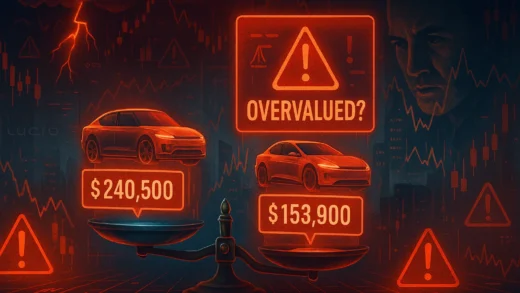
The automotive industry is in the middle of one of the biggest transformations in its history. Electrification, automation, and digital innovation are pushing legacy automakers to reinvent themselves, while new players aim to disrupt everything from the way we drive to how we own cars. But with change comes uncertainty—and that’s especially true for auto stocks right now.
Some companies are showing strong growth potential but struggling with short-term execution. Others are holding steady with legacy products while trying to catch up in the electric vehicle race. For investors, the question is whether to buy in and hold through the volatility—or bail before deeper problems surface.
Let’s take a look at a few U.S. and European automotive stocks currently sending mixed signals and what that means for investors trying to make the right call.

Ford: Solid Foundation, But Growing EV Pains
Ford is a name that often carries weight with value investors. It has a strong foothold in the truck and SUV markets and continues to lead in commercial fleet solutions. The company’s F-150 Lightning and Mustang Mach-E have put it firmly in the EV conversation, but recent earnings reports reveal the road to electrification is anything but smooth.
Margins in Ford’s electric division remain under pressure due to rising input costs and pricing competition from other EV makers. At the same time, demand for traditional vehicles remains steady, helping to offset those struggles. For investors, Ford is showing signs of long-term resilience, but its EV transition is moving slower than expected. It may not be time to bail, but it’s wise to keep a close eye on quarterly performance and global EV demand shifts.
Rivian: Ambitious Vision Meets Operational Reality
Rivian came onto the scene as one of the most exciting electric vehicle startups. With its rugged electric trucks and a major contract with Amazon for delivery vans, the company seemed poised to carve out a unique niche. However, production delays, high cash burn, and ongoing losses have taken a toll on investor confidence.
The stock has seen major ups and downs as the company works to ramp up manufacturing while managing supply chain challenges. Rivian’s Q1 earnings showed some progress on narrowing losses and maintaining production targets, which provided a brief boost. Still, the path to profitability remains long. The market is divided on whether this is a buy-and-hold opportunity or a time to step away and wait for more stable execution.
Lucid Motors: Luxury EVs With Limited Reach
Lucid Motors has impressed many with its ultra-premium EVs that boast long ranges and high-performance features. The company’s technology is seen as top-tier, and its Air sedan has drawn comparisons to Tesla’s higher-end models. However, Lucid’s challenge lies in scale and demand.
Its Q1 report highlighted slower-than-expected deliveries and concerns over sustained consumer interest at its current price points. The brand’s high-end focus may also limit its global reach, especially as mainstream automakers flood the market with more affordable electric models. For investors, Lucid is a stock that looks attractive on paper but requires patience—and a strong stomach for volatility. It’s not a definitive sell, but it’s not a confident buy either.
Stellantis: Underappreciated With Quiet Momentum
While many eyes are on flashier EV names, Stellantis is quietly building one of the most diversified electric portfolios in the industry. The company, which owns brands like Jeep, Peugeot, and Fiat, is taking a pragmatic approach to electrification. It’s rolling out affordable EVs in Europe, investing in solid-state battery tech, and maintaining healthy profit margins on combustion vehicles.
Despite this progress, Stellantis remains undervalued compared to peers. Analysts are mixed on whether the stock is simply under the radar or being overlooked for good reason. Its strong cash flow and global presence offer upside potential, but concerns over European EV competition and regulatory changes linger. For investors seeking balanced exposure to legacy and electric strategies, Stellantis may deserve a second look—even if the market hasn’t fully caught on yet.
Volkswagen: Caught in a Strategic Pivot
Volkswagen is one of the biggest automakers in the world and one of the earliest adopters of the EV shift among European giants. The company has made bold investments in battery tech, software platforms, and electric models like the ID.4 and ID.7. But the execution has been uneven.
Recent headlines have highlighted software integration delays and slowing sales in key EV markets. On the flip side, VW’s traditional business remains profitable, and its scale gives it a long runway to correct its course. Investors face a dilemma—VW’s long-term electric strategy is compelling, but current challenges make it difficult to fully trust the timing. It’s a hold for some, a buy for the bold, and a wait-and-see for the cautious.
What Mixed Signals Mean for Smart Investors
When automotive stocks send mixed signals, it’s not always a reason to panic—or jump in. It often means the company is in transition, dealing with real-world challenges while working toward longer-term goals. For investors, this is where careful research, patience, and diversification come into play.
In today’s auto sector, the best-performing stocks are often those with both short-term stability and a clear plan for the future. That might mean solid earnings from legacy models while slowly building out electric capabilities. Or it could mean early losses today in exchange for tech innovation and scalability tomorrow.
Understanding where a company stands—financially, strategically, and competitively—helps investors make more informed decisions, even when the market sends mixed signals. Automotive stocks with conflicting data points can be risky, but they can also offer unique opportunities for those willing to dig deeper.
In the end, whether you buy or bail depends on your investment horizon and your tolerance for change. In a sector defined by disruption, it’s often the companies navigating the noise that deliver the biggest rewards over time.