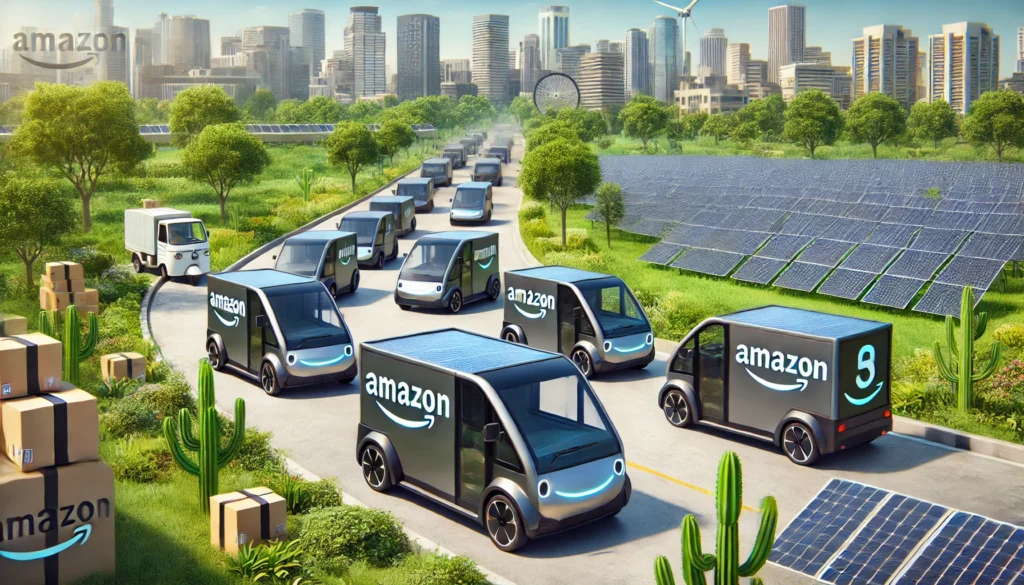
Amazon has taken a significant step toward sustainability by deploying 10,000 electric vehicles (EVs) as part of its delivery fleet in India. This move underscores the e-commerce giant’s commitment to reducing its carbon footprint and promoting clean transportation in one of its key markets. By incorporating EVs into its operations, Amazon is not just transforming its delivery ecosystem but also contributing to India’s broader goal of achieving sustainable mobility.
This initiative is a part of Amazon’s global Climate Pledge, which aims to achieve net-zero carbon emissions by 2040, a decade ahead of the Paris Agreement. For India, this deployment represents a leap forward in the journey toward greener logistics and a cleaner environment.
A Boost for India’s EV Ecosystem
The deployment of 10,000 electric vehicles across India is a strong endorsement of the country’s evolving EV ecosystem. With government policies like FAME (Faster Adoption and Manufacturing of Hybrid and Electric Vehicles) and state-level subsidies supporting EV adoption, the Indian market has become increasingly favorable for electric mobility.
Amazon’s decision to adopt EVs for its operations aligns perfectly with these efforts, demonstrating how businesses can play a pivotal role in driving the transition to cleaner transportation. The inclusion of electric three-wheelers, vans, and other vehicle types in Amazon’s delivery fleet will not only reduce emissions but also help in expanding the demand for EVs across the country.
This deployment is expected to further energize India’s EV industry, encouraging manufacturers and service providers to innovate and scale up their offerings to meet the growing demand for commercial EVs.
Partnering with Indian Manufacturers
To bring its vision of a sustainable delivery network to life, Amazon has partnered with leading Indian EV manufacturers. These partnerships ensure that the EVs used in Amazon’s operations are tailored to the specific needs of delivery logistics, including features like extended battery range, durability, and efficient cargo space.
This collaboration between Amazon and local manufacturers is a win-win situation. While Amazon benefits from vehicles designed for its operational requirements, Indian manufacturers gain a valuable opportunity to showcase their products and scale up their production. This synergy not only boosts the local EV manufacturing sector but also reinforces India’s position as a hub for electric vehicle innovation.
Reducing Emissions, One Delivery at a Time
E-commerce and logistics have grown exponentially in India, driven by increasing internet penetration and consumer demand for convenient shopping experiences. However, this growth has also contributed to higher emissions, particularly in densely populated urban areas where delivery vehicles are constantly on the move.
By introducing 10,000 EVs into its delivery fleet, Amazon is taking a proactive approach to mitigate these emissions. Electric vehicles produce zero tailpipe emissions, making them a cleaner alternative to traditional internal combustion engine vehicles. Over time, this initiative is expected to significantly reduce Amazon’s carbon footprint in India, helping the company achieve its sustainability goals while making cities cleaner and greener.
Creating Jobs and Opportunities
Amazon’s deployment of electric vehicles is not just about sustainability—it’s also about creating economic opportunities. The introduction of EVs has opened up new avenues for employment, from drivers trained to operate electric vehicles to technicians specializing in EV maintenance.
Additionally, this move supports the growth of ancillary industries such as EV charging infrastructure, battery manufacturing, and after-sales services. As the adoption of EVs grows, so does the demand for skilled professionals, creating a ripple effect of job creation in the green economy.
Challenges and the Road Ahead
While the deployment of 10,000 electric vehicles is a significant milestone, it’s not without challenges. Charging infrastructure remains one of the key hurdles in scaling up EV operations in India. To address this, Amazon has committed to working with partners to establish charging stations in key locations, ensuring a seamless charging experience for its fleet.
Battery technology is another area that requires continuous improvement. Factors like range, charging time, and battery life are critical for commercial applications, and ongoing advancements in these areas will further enhance the viability of EVs for logistics.
Despite these challenges, Amazon’s initiative sets a strong precedent for other businesses to follow. By demonstrating that large-scale EV adoption is both practical and impactful, Amazon is inspiring other companies to incorporate sustainability into their operations.
A Model for Sustainable Business Practices
Amazon’s deployment of 10,000 electric vehicles in India is more than just a corporate initiative—it’s a statement of intent. It shows that sustainability and business growth can go hand in hand, even in a fast-paced and competitive industry like e-commerce.
For consumers, this initiative brings added value to every delivery. By choosing Amazon, customers can feel confident that their shopping habits are contributing to a cleaner and greener future. For the broader industry, Amazon’s move is a call to action, encouraging more companies to explore how they can integrate sustainability into their operations.
Driving Toward a Greener Future
As Amazon’s electric delivery fleet hits the roads, it’s clear that the company is serious about its role in building a sustainable future. The deployment of 10,000 EVs is a bold step that sets a benchmark for other businesses, demonstrating that sustainability is not just a trend but a necessity.
India is at the forefront of the electric mobility revolution, and initiatives like this play a crucial role in accelerating the transition. With companies like Amazon leading the way, the vision of a greener, cleaner, and more sustainable India feels closer than ever.