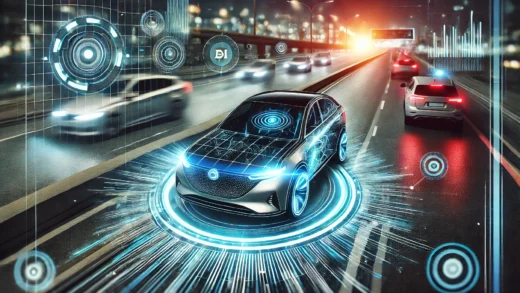
Autonomous cars are no longer just a concept of the future; they are becoming a reality on roads across the United States and Europe. These vehicles promise a revolution in safety, convenience, and efficiency. However, for autonomous cars to truly deliver on their potential, continuous performance optimization is essential. From software updates to hardware improvements, performance optimization ensures that autonomous vehicles can operate safely, smoothly, and intelligently in diverse environments.
As the industry progresses, the focus on refining every aspect of these self-driving marvels is growing. Here’s how performance optimization is shaping the future of autonomous driving.

The Foundation of Autonomous Performance
At the heart of every autonomous car lies an intricate combination of software, sensors, and artificial intelligence (AI). These components work together to analyze the environment, make decisions, and execute actions in real-time. The performance of an autonomous vehicle depends on how well these systems communicate and adapt to changing conditions.
Key elements such as LiDAR, radar, cameras, and ultrasonic sensors feed data into the vehicle’s AI, which processes information to identify objects, predict movements, and plan routes. However, the effectiveness of these systems relies heavily on their ability to operate seamlessly and efficiently, even in challenging scenarios like heavy traffic, poor weather, or unfamiliar terrain.
Performance optimization focuses on enhancing these capabilities to make autonomous cars not just functional but exceptional.
Fine-Tuning AI for Smarter Decision-Making
One of the primary ways to optimize the performance of autonomous cars is through advancements in AI. The machine learning algorithms that power these vehicles are constantly evolving, with engineers training them to recognize a broader range of objects and scenarios. This includes everything from identifying pedestrians and cyclists to understanding complex traffic patterns in urban environments.
Real-time data processing is another area of focus. Autonomous vehicles must be able to make split-second decisions, such as when to brake or swerve to avoid an obstacle. Optimizing AI algorithms to process data faster and with greater accuracy reduces the risk of errors, making autonomous driving safer and more reliable.
Personalization is also emerging as a way to enhance the user experience. By optimizing AI systems to learn from individual driver preferences, autonomous cars can adapt their driving styles to suit passenger comfort while still maintaining safety standards.
Enhancing Sensor Performance and Integration
Sensors are the eyes and ears of an autonomous vehicle, and their performance is critical to the car’s ability to navigate safely. Advances in sensor technology are enabling autonomous cars to see farther, detect objects more accurately, and operate effectively in challenging environments.
Performance optimization in this area involves improving the resolution and range of sensors, as well as integrating data from multiple sensor types for a more comprehensive understanding of the environment. For example, combining inputs from LiDAR, radar, and cameras can create a detailed 3D map of the surroundings, helping the car make better decisions.
Another focus is reducing the impact of adverse conditions, such as rain, fog, or snow, which can interfere with sensor performance. Enhanced cleaning systems, weather-resistant designs, and advanced software algorithms are being developed to ensure that autonomous cars can function reliably in all types of weather.
Optimizing Battery Life and Efficiency
Electric powertrains are the backbone of most autonomous vehicles, and optimizing battery performance is crucial to ensuring their range and reliability. Autonomous systems, particularly those running advanced AI and sensor arrays, require significant energy. Performance optimization efforts are aimed at reducing energy consumption without compromising functionality.
One approach is to develop more efficient hardware components, such as low-power sensors and processors. Another is to optimize software systems to prioritize energy-efficient decision-making. For instance, route planning algorithms can be designed to select paths that minimize energy usage while still ensuring safety and comfort.
Battery technology is also evolving, with advances in energy density and charging speed allowing autonomous cars to travel longer distances and spend less time recharging. These innovations are essential for the widespread adoption of autonomous vehicles in both urban and rural areas.
Regular Software Updates for Continuous Improvement
One of the unique advantages of autonomous cars is their ability to receive over-the-air (OTA) software updates. This feature allows manufacturers to improve vehicle performance long after the car has left the factory. From refining AI algorithms to introducing new features, OTA updates ensure that autonomous vehicles remain at the cutting edge of technology.
Performance optimization through software updates also helps address emerging challenges. As autonomous cars are exposed to new environments and scenarios, manufacturers can collect data and use it to improve their systems. This iterative approach means that autonomous cars become smarter and safer over time.
Building Trust Through Performance Optimization
As autonomous cars become more common, earning the trust of drivers and passengers is crucial. Performance optimization plays a significant role in building this trust by ensuring that these vehicles are reliable, safe, and capable of handling a wide range of scenarios.
Regulatory compliance is another important factor. In the US and Europe, autonomous vehicles must meet strict safety standards before they can be deployed on public roads. Continuous performance optimization helps manufacturers stay ahead of these requirements and ensure compliance with local laws.
Driving Toward the Future
The journey to fully autonomous driving is an exciting one, filled with challenges and opportunities. Performance optimization is the key to overcoming these challenges and unlocking the full potential of autonomous vehicles. From smarter AI and advanced sensors to energy-efficient systems and regular updates, every aspect of an autonomous car can be fine-tuned to deliver a safer, smoother, and more enjoyable driving experience.
As the technology continues to evolve, autonomous cars will not only change how we travel but also transform our cities, roads, and lifestyles. With performance optimization leading the charge, the future of autonomous driving is bright—and it’s arriving faster than we think.