The automotive world is no stranger to innovation, but Hyundai’s collaboration with Boston Dynamics is taking things to a whole new level. Combining Hyundai’s expertise in automotive engineering with Boston Dynamics’ groundbreaking robotics technology, this partnership is poised to redefine mobility, automation, and even the way we interact with machines.
From advanced robotics applications in factories to robots that can assist with daily life, Hyundai and Boston Dynamics are exploring the exciting intersection of cars and robots. This collaboration is not just about building smarter cars; it’s about creating a future where robotics and mobility work seamlessly together.
A Vision for Robotics and Mobility
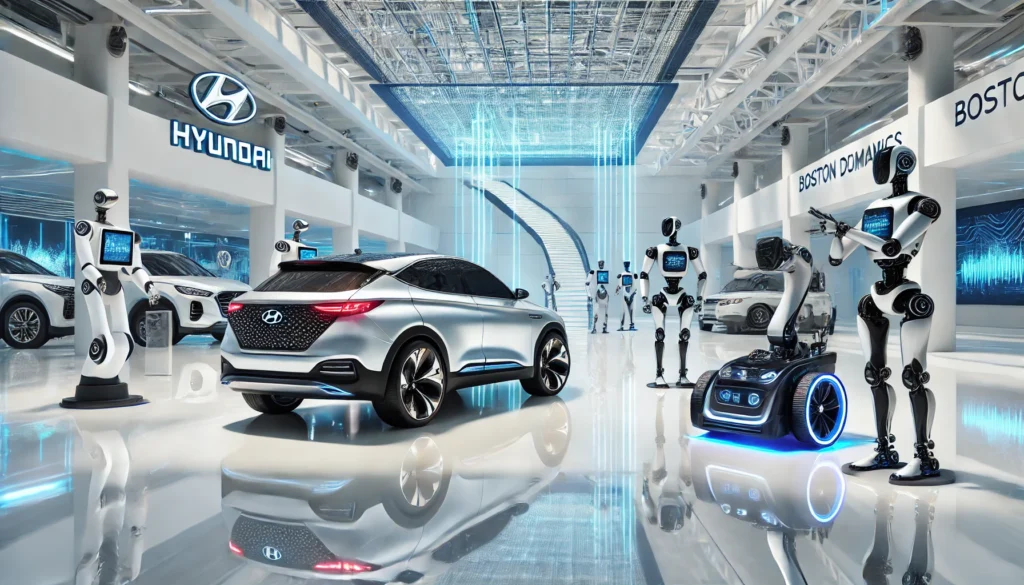
Hyundai’s acquisition of Boston Dynamics signaled a bold move into the world of robotics. Known for its innovations in human-like robots and highly agile robotic systems, Boston Dynamics has long been at the forefront of pushing what robots can do. Hyundai’s vision for this partnership extends beyond industrial use, focusing on integrating robotics with mobility to enhance everyday life.
Imagine robots assisting in loading your groceries into the trunk of your car, delivering packages autonomously, or even helping with roadside assistance in emergencies. Hyundai sees robots as companions that can make mobility smarter, safer, and more convenient, both in urban settings and beyond.
Smarter Manufacturing with Robots
One of the immediate impacts of this partnership can be seen in manufacturing. Hyundai’s factories in the US and Europe are already highly automated, but with Boston Dynamics’ robotics expertise, production lines are becoming even more efficient. Robots like Stretch and Atlas are designed to handle repetitive tasks with precision, reducing human effort and increasing productivity.
Boston Dynamics’ robots excel in navigating complex environments, which makes them ideal for factory settings. They can inspect hard-to-reach areas, carry heavy loads, and even collaborate with humans safely. This kind of automation not only boosts efficiency but also ensures a safer working environment for factory employees.
Enhancing the Driving Experience
Hyundai’s collaboration with Boston Dynamics isn’t just about robots in factories—it’s also about creating a better driving experience. Advanced robotics are being integrated into Hyundai’s vehicles, offering features that improve comfort, safety, and convenience.
One exciting application is robotic assistance in vehicles designed for people with mobility challenges. Boston Dynamics’ robotic arms and adaptive technologies could help drivers and passengers get in and out of cars more easily. These innovations are particularly relevant in Europe and the US, where accessibility is a growing priority.
Hyundai is also exploring how robotics can play a role in autonomous driving. By combining Boston Dynamics’ sensors and navigation systems with Hyundai’s automotive expertise, future vehicles could achieve new levels of precision in navigation and obstacle avoidance.
Robots That Assist in Everyday Life
Hyundai and Boston Dynamics are not limiting their focus to industrial and automotive applications. They are also working on robots that can enhance day-to-day life. For example, Spot, Boston Dynamics’ famous quadruped robot, is being developed for roles such as security patrols, delivery services, and even companionship.
In urban environments, these robots could assist in last-mile deliveries, reducing traffic congestion and promoting greener alternatives to traditional delivery vehicles. Robots could also work in public spaces, helping with crowd management or providing information to visitors. For European cities focused on sustainability and efficiency, these applications align perfectly with urban planning goals.
Mobility for All
One of the most exciting aspects of this collaboration is its potential to make mobility accessible to everyone. Hyundai and Boston Dynamics are exploring how robots can assist individuals with disabilities or the elderly. Whether it’s helping someone navigate their home or providing mobility solutions in public spaces, these innovations aim to improve quality of life for millions.
Robots equipped with AI can also anticipate needs and adapt to users. For instance, a robot could assist a driver by monitoring their health and alerting them to take breaks or even call for help in emergencies. This kind of proactive support highlights how robotics and mobility can work together to prioritize safety and well-being.
A Shared Vision for the Future
Hyundai and Boston Dynamics share a vision of a world where robots and vehicles work together seamlessly. This partnership is not just about building smarter cars or more agile robots—it’s about creating a future where technology enhances every aspect of life. From efficient factories to personalized in-car experiences, the possibilities are endless.
For the US and Europe, where innovation and sustainability are driving forces in the automotive industry, this collaboration represents a significant step forward. By leveraging Boston Dynamics’ robotics expertise and Hyundai’s leadership in mobility, the two companies are poised to set new benchmarks for what’s possible in technology and transportation.
A Future of Possibilities
As Hyundai and Boston Dynamics continue to innovate, their collaboration is opening up exciting possibilities for the automotive and robotics industries. Whether it’s creating safer, more efficient factories, designing vehicles that cater to diverse needs, or developing robots that enhance everyday life, the impact of this partnership will be felt far and wide.
For consumers, this means more than just smarter cars or cutting-edge robots—it’s about a future where technology works seamlessly to make life easier, safer, and more connected. Hyundai and Boston Dynamics are not just imagining that future—they’re building it, one robot and one car at a time.