As the world accelerates towards sustainable transportation, electric vehicles (EVs) have emerged as a pivotal solution. Among the various innovations supporting EV adoption, battery swapping stations stand out as a promising alternative to traditional charging methods. While this concept shows significant potential in India, its implementation in the United States faces numerous challenges. Let’s delve into why battery swapping stations are a better fit for India in 2025 and the hurdles they encounter in the U.S.
The Rise of Battery Swapping in India
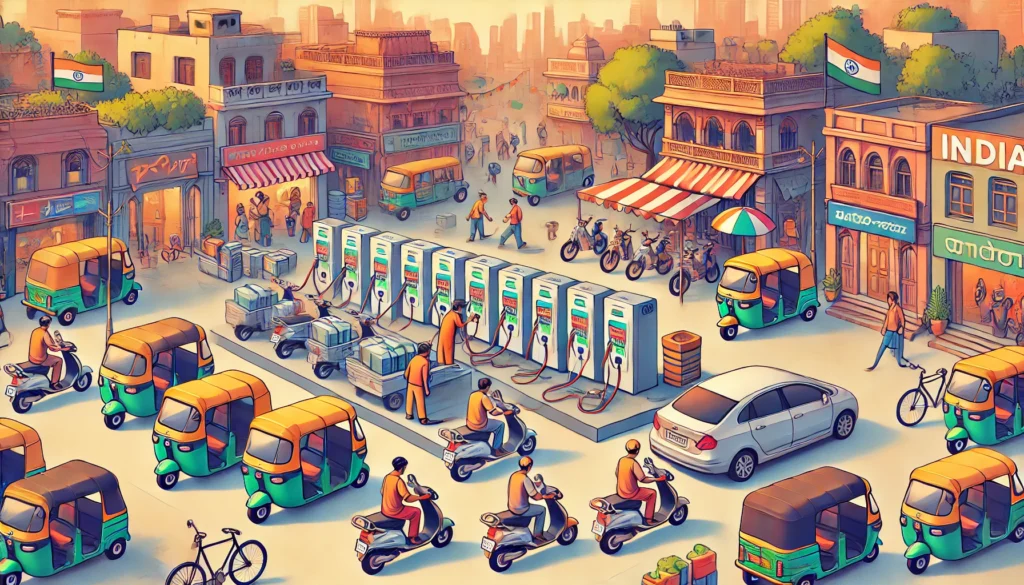
India’s bustling cities and growing EV market create a fertile ground for battery swapping stations. With increasing urbanization, the demand for efficient and quick EV charging solutions is on the rise. Battery swapping offers a swift alternative to waiting for hours to charge an EV, allowing drivers to exchange depleted batteries for fully charged ones in minutes. This convenience is particularly appealing in India, where time efficiency is crucial.
Moreover, India’s diverse climate and traffic conditions make battery longevity a concern. Swapping stations ensure that EV batteries are maintained in optimal conditions, enhancing their lifespan and performance. Companies like Sun Mobility and Tata Power are pioneering battery swapping infrastructure, aligning with the government’s push towards sustainable mobility. The supportive regulatory environment and government incentives further bolster the feasibility of battery swapping in India.
Infrastructure and Economic Factors
The economic landscape in India favors the adoption of battery swapping. Lower labor costs and the availability of skilled technicians make setting up and maintaining swapping stations more affordable. Additionally, India’s extensive network of two-wheelers and three-wheelers, which are more prevalent in urban and semi-urban areas, are ideally suited for battery swapping. These vehicles often have standardized battery sizes, simplifying the swapping process and reducing costs.
The scalability of battery swapping in India is another advantage. As the EV market expands, the modular nature of swapping stations allows for easy expansion and integration with existing infrastructure. This flexibility is essential in a rapidly growing market where demand can fluctuate significantly.
Challenges in the United States
In contrast, the United States faces several obstacles in implementing battery swapping stations on a large scale. One of the primary challenges is the diversity of EV models and battery specifications. Unlike India’s predominantly two-wheelers and three-wheelers with standardized batteries, the U.S. market is dominated by a wide range of electric cars and trucks, each with unique battery configurations. This diversity complicates the creation of a universal swapping system, making it less feasible compared to the more uniform Indian market.
Furthermore, the existing charging infrastructure in the U.S. is already well-established and rapidly expanding. Major players like Tesla have invested heavily in extensive Supercharger networks, reducing the immediate need for alternative solutions like battery swapping. The convenience and familiarity of home charging also diminish the urgency for widespread swapping stations.
Economic factors also play a role. The higher labor and operational costs in the U.S. make the establishment of battery swapping stations more expensive. Additionally, the fragmented regulatory landscape across different states poses a significant hurdle, as uniform standards and policies are harder to implement compared to India’s centralized approach.
Technological and Consumer Preferences
Technologically, the U.S. market is inclined towards advancements in fast-charging technologies rather than battery swapping. Innovations in ultra-fast chargers and wireless charging are attracting consumer interest, offering quicker and more seamless charging experiences without the need to change batteries. This technological preference aligns with consumer habits and expectations in the U.S., where convenience and speed are highly valued.
Consumer behavior also differs between the two countries. In India, the cost-effectiveness and practicality of battery swapping resonate well with the needs of everyday commuters. In the U.S., however, consumers are more accustomed to the convenience of charging at home or using widespread charging networks, making the shift to battery swapping less appealing.
The Future Outlook
Looking ahead, battery swapping stations hold significant promise in India’s EV ecosystem. The country’s unique combination of economic, infrastructural, and market factors creates an environment where battery swapping can thrive. Continued government support and technological advancements will likely enhance the efficiency and adoption of swapping stations, driving India closer to its sustainable mobility goals.
In the United States, while battery swapping faces considerable challenges, it is not without potential. Niche markets, such as commercial fleets and delivery services, could benefit from tailored swapping solutions. However, widespread adoption will require overcoming technical, economic, and regulatory barriers, making it a more gradual process compared to India.
Conclusion
Battery swapping stations present a viable and innovative solution for India’s growing EV market, offering speed, efficiency, and economic benefits tailored to the country’s unique needs. In contrast, the United States grapples with diverse vehicle models, established charging infrastructures, and higher operational costs, making widespread adoption of battery swapping more challenging. As the global shift towards electric mobility continues, understanding these regional dynamics will be crucial in shaping the future of EV infrastructure worldwide.