

Electric vehicles (EVs) have transformed the way we think about sustainable transportation. With their zero emissions and cost-efficient performance, EVs are paving the way for a cleaner and greener future. However, one of the persistent challenges faced by EV owners, especially in remote areas of the United States, is the availability of charging infrastructure. Renewable energy-powered charging hubs are emerging as a promising solution, offering reliable, eco-friendly charging options in places where traditional electricity grids are limited or inaccessible. Let’s explore how these hubs work, their benefits, and their potential to revolutionize EV adoption in rural and remote regions.
The Growing Demand for EV Charging Infrastructure
The rise in EV adoption across the United States is unprecedented, thanks to advancements in technology, favorable government policies, and increasing awareness of environmental issues. Yet, this rapid growth has highlighted a critical gap: the lack of robust charging infrastructure, particularly in remote areas. Unlike urban centers where EV chargers are becoming increasingly common, rural regions often lack the connectivity and grid reliability needed to support conventional charging stations.
For EV owners venturing into remote parts of the country, “range anxiety” can become a real concern. The fear of running out of charge without a nearby charging station can deter potential buyers from making the switch to electric vehicles. Renewable energy-powered charging hubs aim to address this issue by providing sustainable, off-grid charging solutions.
What Are Renewable Energy-Powered Charging Hubs?
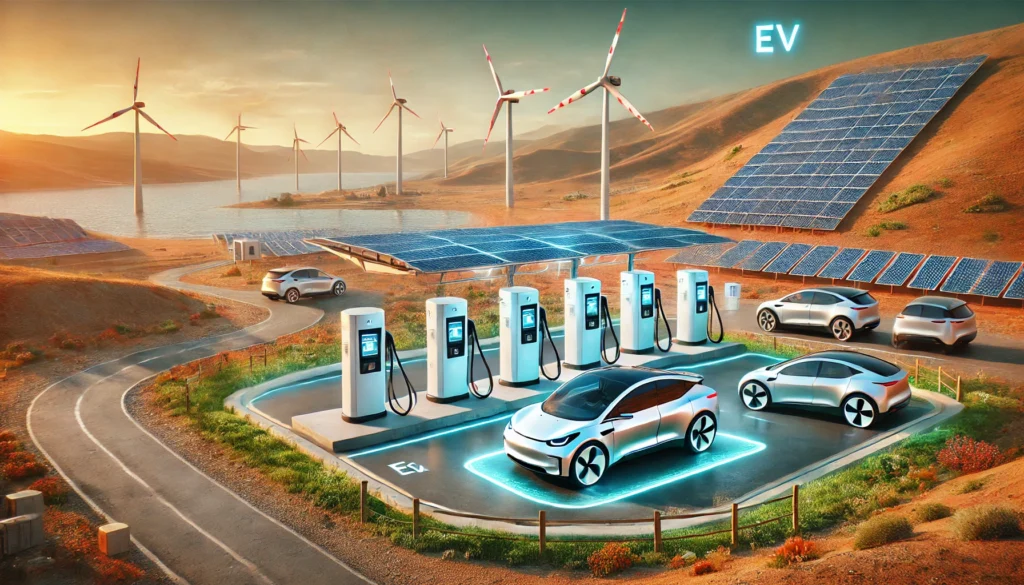
Renewable energy-powered charging hubs are standalone charging stations that generate their electricity from renewable sources such as solar panels, wind turbines, or a combination of both. These hubs often incorporate energy storage systems, like advanced batteries, to ensure a continuous supply of power even when weather conditions aren’t optimal. By operating independently of the traditional power grid, these charging hubs can be installed in locations where grid access is unreliable or nonexistent.
These charging hubs are designed to be as self-sufficient and efficient as possible. They harness renewable energy during the day, store it in battery systems, and use this energy to charge EVs whenever needed. In many cases, they are also equipped with smart energy management systems to maximize efficiency and minimize downtime.
Why Renewable Charging Hubs Matter for Remote Areas
The United States is home to vast rural landscapes, from the Great Plains to the deserts of the Southwest. While these areas often provide breathtaking scenery and opportunities for adventure, they also present unique challenges for EV drivers. The lack of charging infrastructure in remote areas is not only inconvenient but also limits the broader adoption of EVs across all demographics.
Renewable energy-powered charging hubs offer a viable solution. Since these hubs don’t rely on existing power grids, they can be deployed in the most isolated regions. This makes it possible for EV drivers to explore remote destinations without worrying about where to find their next charge. Beyond benefiting individual drivers, these hubs also play a crucial role in promoting equitable access to EV technology across rural and urban communities alike.
Environmental and Economic Benefits
One of the biggest advantages of renewable energy-powered charging hubs is their alignment with the principles of sustainability. Unlike traditional chargers that rely on electricity generated from fossil fuels, these hubs draw their power from clean, renewable sources. This significantly reduces the carbon footprint of EV charging and enhances the overall environmental benefits of driving electric vehicles.
From an economic standpoint, these hubs can also stimulate growth in remote areas. By attracting EV drivers, they create opportunities for local businesses to thrive. Travelers stopping to charge their vehicles may visit nearby restaurants, shops, and attractions, bringing much-needed revenue to rural communities.
The Road Ahead for Renewable Charging Hubs
As we move into 2024, the push for expanding renewable energy-powered charging hubs is stronger than ever. The U.S. government has introduced incentives and funding programs to accelerate the deployment of EV infrastructure, with a particular focus on underserved areas. Companies in the clean energy and automotive sectors are also stepping up, collaborating to develop innovative charging solutions tailored to the unique needs of rural regions.
While challenges like initial installation costs and energy storage limitations remain, advancements in renewable energy technology are making these hubs more practical and affordable. As the costs of solar panels, wind turbines, and battery systems continue to decline, we can expect renewable energy-powered charging hubs to become a common sight across America’s remote landscapes.
A Sustainable Solution for All
Renewable energy-powered charging hubs represent a critical step forward in making EVs accessible to everyone, regardless of where they live or travel. By bridging the gap between urban convenience and rural connectivity, these hubs empower drivers to embrace sustainable transportation without compromise. As EV adoption grows and the network of renewable charging stations expands, the dream of a zero-emissions future becomes not just a possibility, but a reality.
With renewable energy lighting the way, the journey to cleaner and greener driving can now reach every corner of the U.S.—even the most remote ones.


