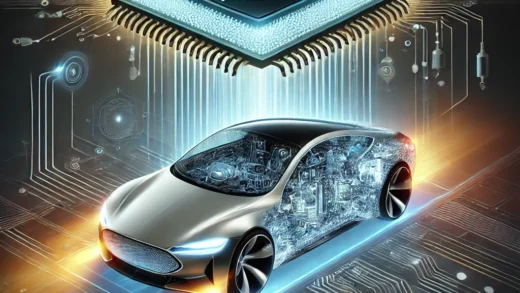
The automotive industry is entering a new era, driven by data and connectivity. Data-driven development and telematics are at the core of this transformation, enabling automakers to create smarter, safer, and more efficient vehicles. These technologies are reshaping the driving experience in the U.S. and Europe, offering solutions that benefit drivers, manufacturers, and the environment.
As the demand for connected cars and personalized mobility grows, data-driven development and telematics are becoming essential for innovation. Let’s dive into how these technologies work and why they are shaping the future of the automotive industry.

What Is Data-Driven Development?
Data-driven development refers to the process of using real-world data to design, build, and improve vehicles. By analyzing data collected from cars, manufacturers can identify patterns, solve problems, and introduce new features that meet the needs of drivers. This approach goes beyond traditional engineering by integrating artificial intelligence, machine learning, and advanced analytics into vehicle design and production.
In the U.S., where long commutes and diverse driving conditions are common, data-driven development helps automakers optimize fuel efficiency, enhance comfort, and improve safety. In Europe, where sustainability and urban mobility are top priorities, data insights guide the development of electric vehicles (EVs) and smart transportation solutions.
One of the key benefits of data-driven development is its ability to create vehicles that are not only functional but also adaptive. Cars built using this approach can respond to changing conditions, learn from user behavior, and stay updated through over-the-air software updates, ensuring a future-proof driving experience.
Telematics: Connecting Vehicles to the World
Telematics is the technology that enables vehicles to collect, transmit, and process data in real time. It serves as the foundation for connected cars, enabling features like GPS navigation, remote diagnostics, and fleet management. By integrating telematics systems, automakers can create cars that are more intelligent, efficient, and user-friendly.
In Europe, telematics is playing a significant role in the rise of shared mobility and smart city initiatives. By connecting vehicles to urban infrastructure, telematics helps reduce traffic congestion, optimize routes, and enhance public transportation systems. In the U.S., telematics is widely used in commercial fleets to improve logistics, monitor driver behavior, and reduce operational costs.
For everyday drivers, telematics offers a range of benefits. From real-time traffic updates to remote vehicle monitoring, these systems make driving safer and more convenient. For example, telematics can alert drivers to potential issues before they become serious, reducing the risk of breakdowns and improving overall vehicle reliability.
Enhancing Safety with Data and Telematics
Safety is a top priority in the automotive industry, and data-driven development combined with telematics is making significant advancements in this area. By collecting data from sensors, cameras, and connected systems, manufacturers can develop features that help prevent accidents and protect drivers and passengers.
One example is advanced driver-assistance systems (ADAS), which rely on telematics and data analysis to enable features like lane-keeping assistance, adaptive cruise control, and emergency braking. In Europe, where road safety regulations are stringent, these technologies are helping reduce accidents and improve compliance with safety standards. In the U.S., ADAS systems are gaining popularity for their ability to enhance long-distance driving and reduce driver fatigue.
Telematics also supports vehicle-to-everything (V2X) communication, enabling cars to interact with other vehicles, traffic lights, and infrastructure. This level of connectivity helps create safer driving environments by providing real-time information about potential hazards, traffic patterns, and road conditions.
Supporting Sustainability and Efficiency
Sustainability is a key focus for the automotive industry, and data-driven development and telematics play a critical role in achieving this goal. By analyzing driving behavior, fuel consumption, and energy usage, automakers can create more efficient vehicles that reduce emissions and conserve resources.
In Europe, where environmental regulations are driving the adoption of EVs, telematics helps optimize battery performance, monitor charging patterns, and integrate with renewable energy sources. In the U.S., where range anxiety remains a concern for EV drivers, telematics systems provide real-time data on charging stations and energy efficiency, making electric vehicles more practical and accessible.
Fleet operators also benefit from telematics, as it enables them to monitor vehicle performance, reduce fuel consumption, and minimize their carbon footprint. This is particularly important in industries like logistics and public transportation, where sustainability is becoming a competitive advantage.
The Road Ahead for Data-Driven Development and Telematics
The combination of data-driven development and telematics is revolutionizing the automotive industry, paving the way for smarter, safer, and more sustainable vehicles. Automakers in the U.S. and Europe are embracing these technologies to stay competitive and meet the evolving needs of consumers and regulators.
The future of data-driven development includes deeper integration with artificial intelligence, cloud computing, and edge processing. These advancements will enable vehicles to process data faster, make decisions autonomously, and deliver a more personalized driving experience. For telematics, the expansion of 5G networks and V2X communication will unlock new possibilities for connectivity and automation.
As these technologies continue to evolve, they promise to transform not only how cars are built but also how they are driven, owned, and maintained. For drivers in the U.S. and Europe, this means a future of mobility that is safer, smarter, and more connected than ever before. Data-driven development and telematics are not just tools for innovation—they are the driving force behind the automotive industry’s next chapter.